
Peak Times, Fewer Hands: How Restaurants Keep Service Flowing When Staffing Dips
Sickness, vacancies and rota gaps hit hardest at peak service. Here is how Keenon T9, T10 and T11 food-running robots absorb repetitive tray transport so the available team stays close to guests.
Quick answer
Restaurant food-running robots such as the Keenon T9, T10 and T11 carry plated food, drinks and cleared items between the kitchen pass, bar and dining room. During staffing dips they remove the long repetitive journeys that pull servers away from tables, while staff keep responsibility for greeting guests, taking orders, dietary requirements, recommendations and service recovery.
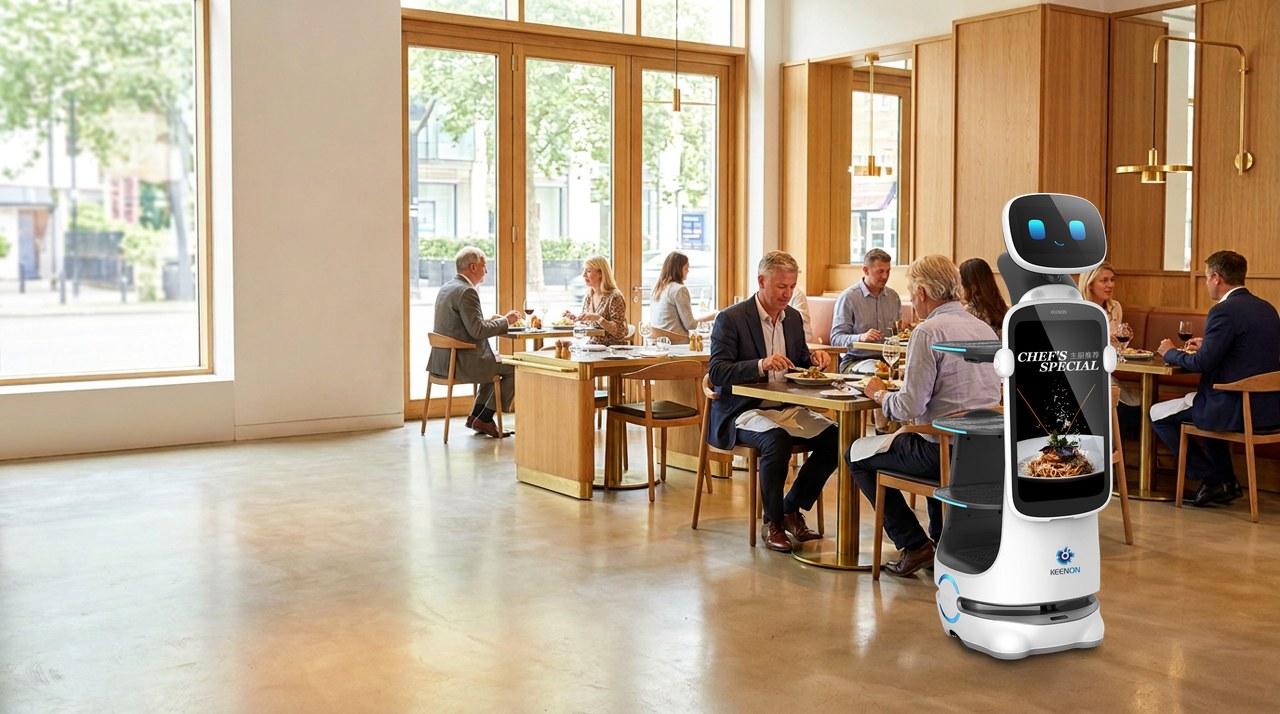
Friday evenings, Saturday nights, bank holidays and seasonal peaks all create the same operational challenge: more guests to serve, more food to move and, sometimes, fewer people available to do it.
A sickness absence, an unfilled vacancy or a rota gap can quickly pull waiting staff away from guests. Instead of greeting customers, explaining dishes and checking tables, they spend much of the shift walking between the kitchen, bar and dining room.
Keenon DINERBOT food-running robots help restaurants, pubs, hotels and cafés manage this repetitive transport work. They carry trays and plated food across the dining room while staff continue to provide the hospitality, judgement and personal service that guests expect.
The peak-time service challenge
When staffing dips, the problem is not usually a lack of effort. It is the amount of time spent on repetitive movement.
A member of staff may need to:
- Collect several plates from the kitchen pass.
- Walk across the dining room.
- Navigate between tables and guests.
- Return to the kitchen.
- Collect another order.
- Clear used plates later in the service.
On a busy shift, these journeys add up. They also create bottlenecks. Food may wait at the pass while a server is already carrying another order, or a table may remain uncleared because the team is prioritising new deliveries.
The result can be a more pressured service at exactly the time when guests are most sensitive to delays.
A food-running robot is designed to support this part of the operation. It does not take orders, recommend wine or deal with a complaint. It handles the movement of food, drinks and cleared items so the human team can spend more time with customers.
How a robotic food runner works
A successful deployment is based on a clear workflow rather than simply placing a robot on the restaurant floor.
1. Loading at the kitchen pass
When food is ready, a trained member of staff loads trays onto the robot. The team can assign a complete table order or group several nearby deliveries together, depending on the restaurant's layout and service style.
The robot's shelves are designed to carry plated food, drinks, side dishes and other suitable items. Staff remain responsible for checking presentation, temperature and the correct destination before the robot leaves the pass.
2. Setting the destination
The operator selects the relevant table, zone or delivery point using the robot's touchscreen. The robot then follows its mapped route through the dining area.
During installation, Fresh Mango Robotics configures the routes and operating zones around the restaurant's actual layout. This can include the kitchen pass, bar, dining sections and collection points.
3. Travelling through the dining room
The robot uses its navigation and sensing systems to move around furniture, staff and guests. It travels at a controlled speed and can stop when its route is temporarily blocked.
This is particularly useful during peak periods, when the dining room is busy and staff are continually moving between tables. Rather than sending a team member on every long-distance trip, the robot carries the load while the server remains close to the guest.
4. Staff interaction at the table
The robot is not intended to replace the human handover.
A member of the waiting team meets the robot at the destination, removes the plates and serves the guests. They can describe the dishes, confirm special requirements and make sure the table is happy.
This keeps the most important part of service with the people who understand the restaurant, its menu and its guests.
5. Returning and bussing
Once the delivery is complete, the robot can return to the kitchen or another programmed point. It can also be used to transport cleared plates, glassware and other suitable items back to the wash-up area.
This helps keep tables moving during busy services and reduces the number of manual carrying trips made by staff.
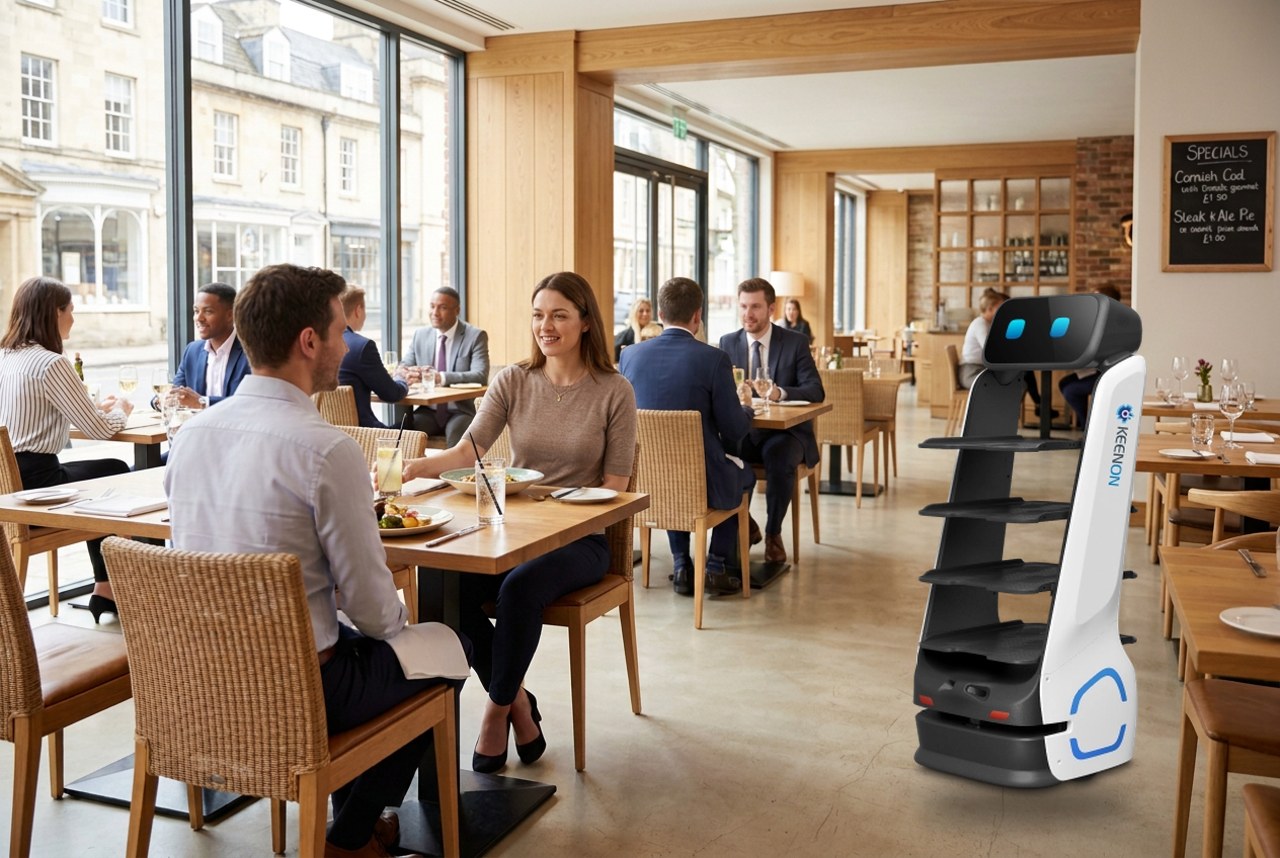
Choosing between the Keenon T9, T10 and T11
The right model depends on the restaurant's floor plan, service volume, tray requirements and available space.
| Model | Best suited to | Typical strength |
|---|---|---|
| Keenon DINERBOT T9 | Banquets, buffets and larger dining rooms | Four-tray capacity for larger food runs |
| Keenon DINERBOT T10 | Restaurants, hotels and larger hospitality venues | High-capacity delivery with digital display screens |
| Keenon DINERBOT T11 | Compact dining rooms and tighter routes | Narrower design for space-constrained environments |
The T9 is a practical choice where the priority is carrying a larger quantity of food in fewer journeys. It is well suited to banquet service, buffets and restaurants with longer distances between the kitchen and tables.
The T10 combines food delivery with customer-facing digital screens. It can carry food and drinks while displaying menus, promotions or brand content as it moves through the venue.
The T11 is designed for narrower passageways and more compact layouts. Its smaller footprint can make it suitable for cafés, restaurants and dining rooms where space between tables is limited.
Actual suitability depends on the site. A restaurant robot site survey checks aisle widths, turning areas, floor surfaces, kitchen access and the proposed delivery routes before a model is selected.
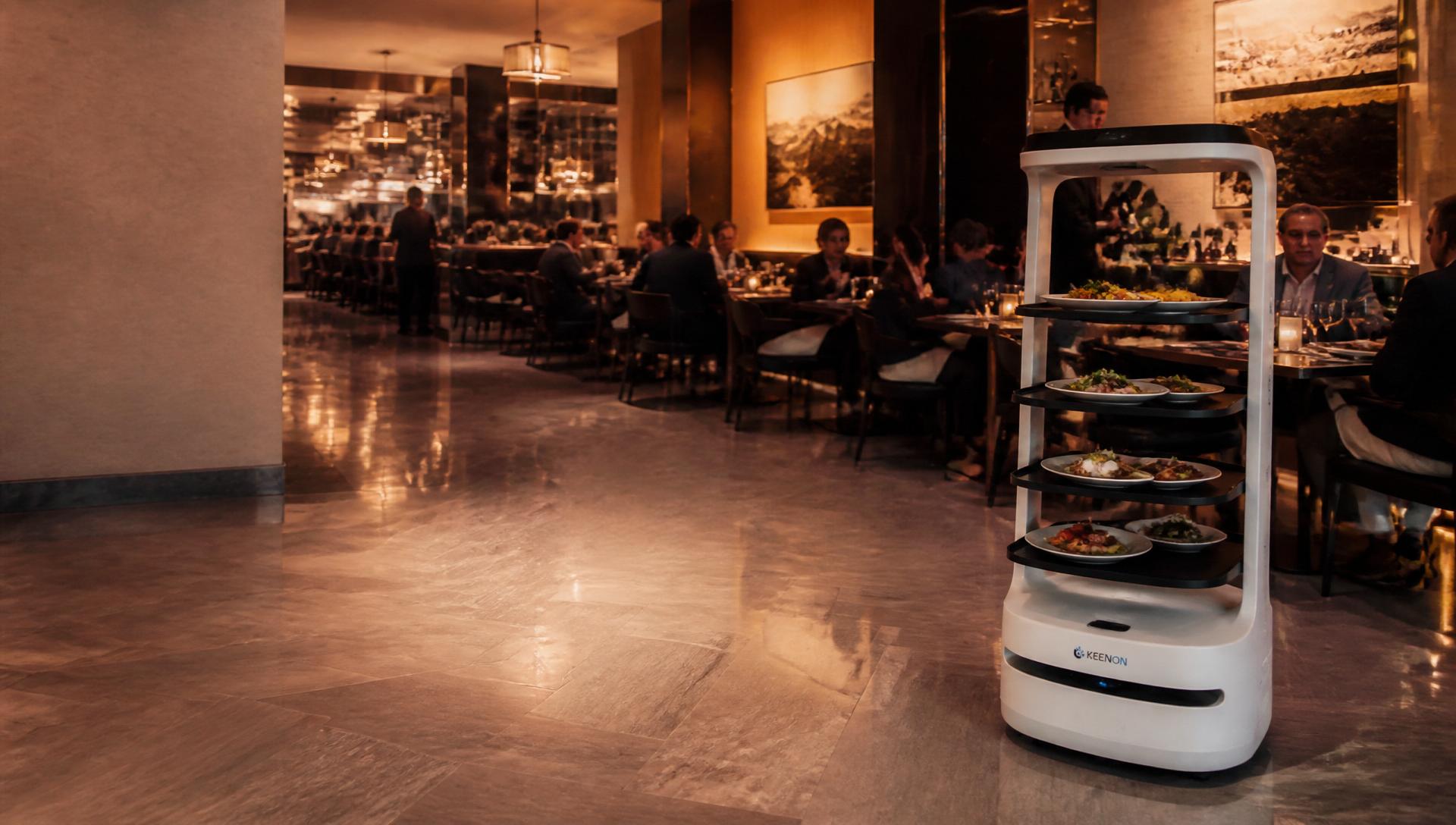
Practical examples during staffing dips
A busy Saturday evening
A restaurant has planned for six front-of-house staff but one person is unavailable. The remaining team can use a T9 or T10 to move multiple trays from the pass to different dining sections.
Servers still welcome guests, take orders and manage tables. The robot reduces the amount of time they spend walking back and forth, helping the available team maintain a more consistent service.
A hotel dining service
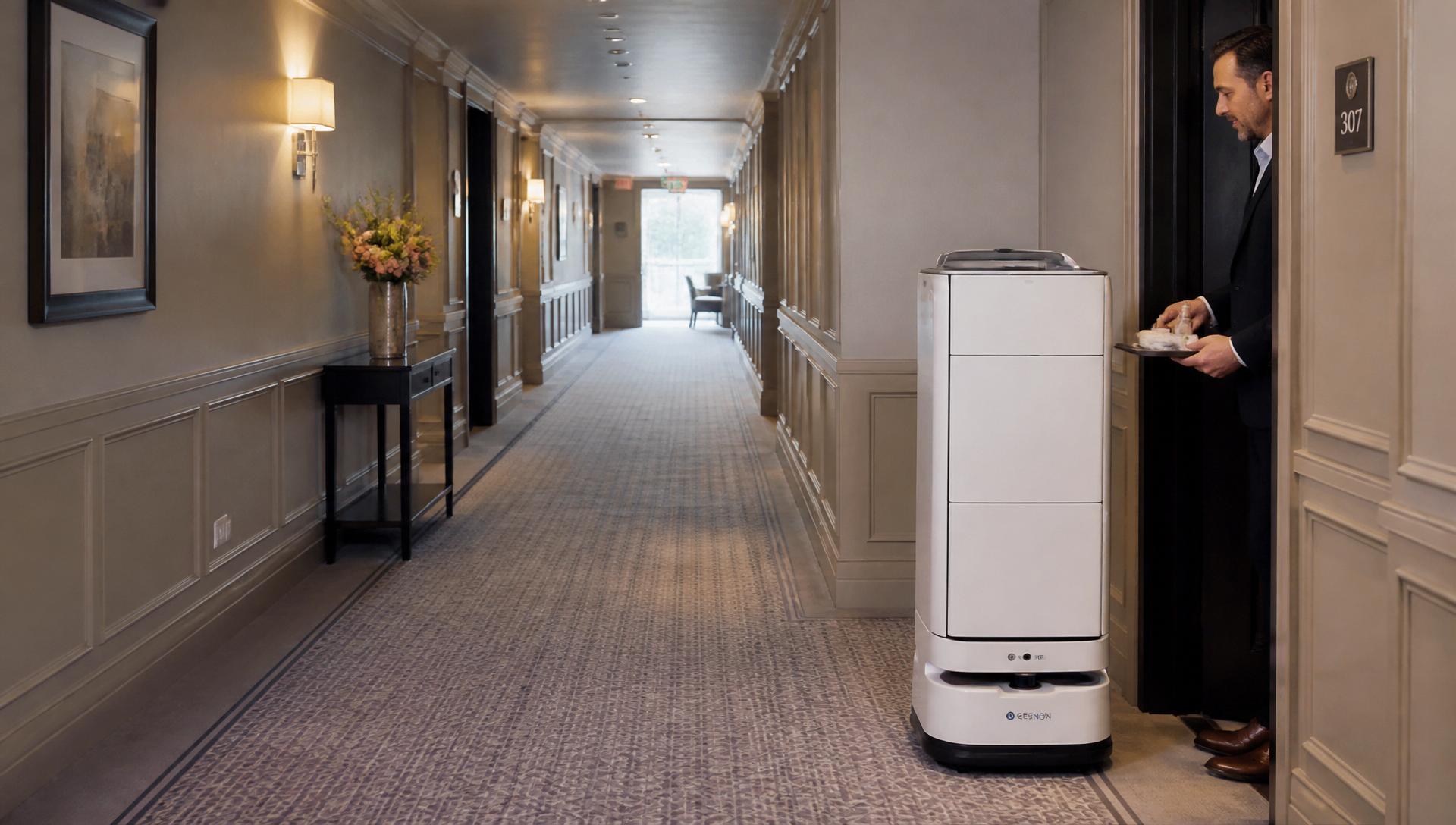
Hotel restaurants often have longer routes between the kitchen, dining room and private function spaces. A food-running robot can support breakfast, lunch or dinner service by carrying trays while staff concentrate on guests and hotel standards.
For room service deliveries between floors, a dedicated enclosed hotel delivery model may be more appropriate. The Fresh Mango hospitality team can assess whether restaurant food running or secure room delivery is the better fit.
A pub or café during a holiday weekend
Pubs and cafés may experience sharp peaks rather than a constant high volume. A robot can be used during the busiest periods, such as Sunday lunch, a bank-holiday afternoon or a major local event.
Outside those periods, the same robot can support drinks, side dishes, clear-downs or back-of-house transport.
Planning a successful deployment
Robots work best when they are introduced as part of a clear operating process. Before deployment, consider:
- Where the longest journeys happen — identify the routes that take staff away from guests for the greatest amount of time.
- Which items the robot will carry — food, drinks, side dishes and cleared crockery may be suitable, while delicate items, very hot cookware or unusual loads remain with staff.
- Who loads and unloads the robot — assign responsibility at the kitchen pass and at the delivery point so the robot does not become a waiting area for unfinished orders.
- How the robot will be used during peak windows — start with the busiest services when the benefit is easiest to see, then widen usage once the team is confident.
- How staff will interact with it — team members should understand that the robot removes repetitive carrying work rather than taking ownership of the guest relationship.
There are also practical site considerations. Robots need suitable routes, clear turning areas and appropriate access between the kitchen and dining room. Stairs, very tight corners and separated floors may require a different workflow. These points are identified during the site survey and addressed during installation.
Commercial deployment options
A restaurant does not necessarily need to make a large upfront purchase to introduce a food-running robot.
- Outright purchase: buy the robot and own it, with support arranged separately or as part of a service agreement.
- Hybrid ownership and support: purchase the hardware and keep maintenance, servicing and software updates with Fresh Mango Robotics.
- Robotics-as-a-Service (RaaS): access a Keenon robot through a managed arrangement with a predictable monthly cost rather than a capital purchase.
The RaaS approach lets an operator start without a large upfront outlay. Depending on the agreement, the service can include:
Depending on the agreement, the service can include:
- Site survey and suitability assessment.
- Robot installation and route mapping.
- Staff training.
- Maintenance and servicing.
- Software updates.
- UK-based technical support.
This gives restaurant operators a more manageable way to introduce automation during busy periods while keeping support and maintenance with the supplier. It also makes it straightforward to begin with a single robot and expand later if the volumes justify it.
Keep hospitality with your team
Staffing dips are difficult because they affect service at the busiest moments. A Keenon food-running robot helps by taking on repetitive tray and food transport, allowing the available team to stay closer to guests.
The practical approach is simple: map the right routes, choose the suitable model, train the team and use the robot where it adds the most support. With Fresh Mango Robotics' installation, training, maintenance and UK-based support, restaurants can introduce the technology without losing the human service that makes hospitality work.
Last reviewed:
Frequently asked questions
What is a robotic food runner?
A robotic food runner is an autonomous indoor service robot that transports prepared food, drinks and suitable cleared items between a restaurant's kitchen, bar, dining area and collection points.
Do food-running robots replace waiting staff?
No. They handle repetitive carrying and transport tasks. Staff continue to greet guests, take orders, serve food, answer questions, manage dietary requirements and provide service recovery when needed.
Which Keenon robot is best for a busy restaurant?
The Keenon T9, T10 and T11 suit different environments. The T9 is designed for higher-capacity multi-tray runs, the T10 combines delivery with digital display screens, and the T11 is suited to narrower routes. A site survey helps confirm the right model.
Can the robot clear tables?
Yes. Suitable cleared plates, glasses and other items can be placed on the robot and returned to a kitchen or wash-up point. The restaurant should define clear loading and unloading procedures during implementation.
Can a robot work during a busy service?
Yes. That is one of the main reasons restaurants deploy food-running robots. The robot is mapped for the venue and can support the team during busy periods, while staff remain responsible for guest-facing service.
How does Fresh Mango Robotics support installation?
Fresh Mango Robotics provides the site survey, installation, route mapping and staff training. Ongoing support includes maintenance, servicing, software updates and assistance from a UK-based support desk.
Talk to a robot supplier you can actually visit
We are based in Ripon, North Yorkshire, with engineers across the North of England. On-site demos as standard.
Related articles
How to Cut Server Walking Time in Half with a Robotic Food Runner
Busy UK dining rooms lose half their service movement to empty-handed 'dead miles'. Here is how a robotic food runner removes the heavy carries and keeps your team face-to-face with guests.
Do Guests Actually Like Robots in Hotels and Restaurants? What UK Research Says
UK research on hotel guest acceptance shows robots work best when they support staff rather than replace hospitality. Here is what the evidence says about trust, speed, privacy and accessibility.
RaaS, Not Capex: How UK Businesses Get a Commercial Robot Without Buying One
Robotics-as-a-Service turns a capital purchase into a predictable monthly operating cost, with site survey, installation, mapping, training, maintenance, software updates and UK-based support included.
Keep reading