
Do Guests Actually Like Robots in Hotels and Restaurants? What UK Research Says
UK research on hotel guest acceptance shows robots work best when they support staff rather than replace hospitality. Here is what the evidence says about trust, speed, privacy and accessibility.
Quick answer
UK research suggests guests are open to service robots when they provide a clear practical benefit — faster delivery, consistent service or convenient room-service collection. Acceptance is not automatic: guests still value human hospitality, and the best deployments use robots to support staff rather than replace personal service. Trust, ease of use, design and visible human support all influence whether guests respond positively.
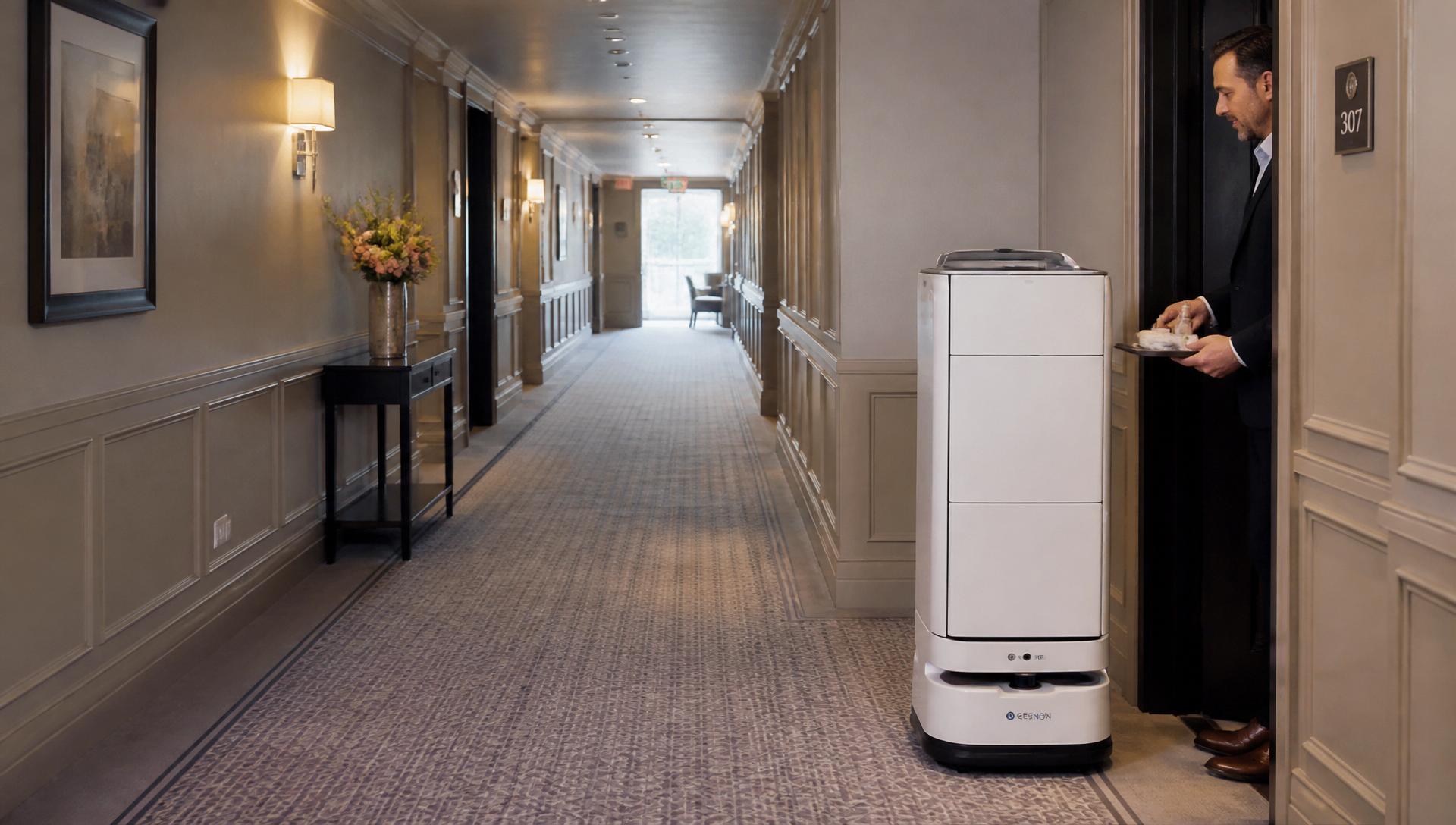
For hotel and restaurant operators considering service robots, one question matters as much as the technical specification: will our guests actually like using them?
The evidence suggests that many guests are open to service robots when they provide a clear practical benefit, such as faster delivery, consistent service or convenient room-service collection. However, acceptance is not automatic. Guests still value human hospitality, and the best deployments use robots to support staff rather than replace the personal service customers expect.
A 2025 study of 358 UK hotel guests found that trust, ease of use, design, social influence and the availability of suitable support all affected people's intention to use hotel robots. The research measured attitudes and intentions rather than long-term behaviour, so it should not be treated as proof that every guest prefers robotic service. It does, however, provide useful guidance for operators planning a real deployment.
What is guest acceptance of service robots?
Guest acceptance means the extent to which customers are willing to use, trust and feel comfortable with a robot-assisted service. It is influenced by whether the robot is useful, whether it makes service quicker or more consistent, whether it is easy to understand, whether guests trust the hotel's use of the technology, whether human staff remain available, and whether the robot fits naturally into the environment.
This is important because guests do not usually make a decision based on the robot alone. They judge the complete service around it. A room-service robot that delivers an order promptly while reception remains available may be viewed positively. A robot that creates confusion or removes helpful staff interaction may not.
What UK research tells us
The UK hotel study, published in the International Journal of Hospitality Management, surveyed hotel guests living in the UK. It found that several factors were associated with willingness to use hotel robots:
- Trust in the robot and the service provider.
- Facilitating conditions, such as clear instructions and support.
- Aesthetics, meaning whether the robot looks appropriate in the setting.
- Perceived human qualities, such as approachability.
- Social influence, including what guests believe other people think about robot use.
- Overall attitude towards the service.
The study also found that perceived usefulness influenced guests' attitudes, although usefulness alone did not directly determine intention to use a robot. This is a useful distinction for operators: explaining what a robot does is not enough. Guests must also feel comfortable with how it is introduced and supported.
The sample was an online survey rather than an observation of guests using a robot during an actual hotel stay. It therefore provides evidence about likely acceptance, not a guarantee of guest behaviour in every property.
Research into service robots more broadly shows a similar pattern. Customers tend to respond well when robots are efficient, easy to use and enjoyable, while human employees remain responsible for personal interaction and more complicated requests.
Why speed and consistency matter
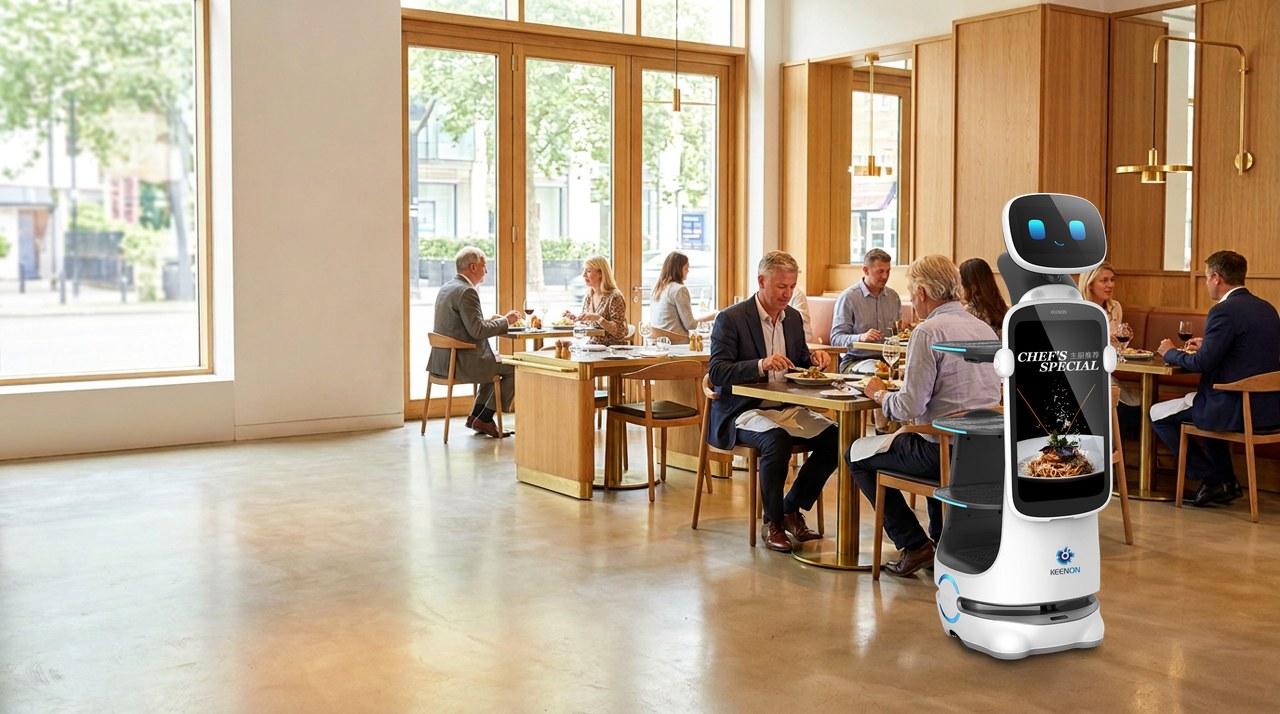
Guests are generally more accepting of robots when the benefit is obvious. In a hotel, this might mean delivering towels, toiletries, bottled water or room-service orders without taking a receptionist away from the front desk. In a restaurant, it may mean moving meals from the kitchen to the dining room while waiting staff remain with their tables.
The robot is not the service. It is part of the service process. Guests may appreciate:
- Shorter waits for routine deliveries.
- Fewer interruptions to front-of-house staff.
- Consistent delivery routes and timings.
- Better availability during late-night or busy periods.
- A more organised dining-room experience.
The practical value is particularly clear when a robot handles repetitive carrying work. Staff can spend more time greeting guests, explaining dishes, checking satisfaction and resolving requests.
Novelty helps, but it is not the whole experience
A service robot can create curiosity, particularly when guests encounter one for the first time. In restaurants and cafés, this may add an interesting element to the visit. In hotels, guests may enjoy seeing how a robot delivers an amenity or room-service order.
Novelty can encourage people to try a service, but it usually fades. Long-term acceptance depends more on whether the robot is:
- Useful.
- Predictable.
- Quiet enough for the environment.
- Simple to interact with.
- Well supported by staff.
This is why a deployment should not be justified only as a marketing feature. A robot must solve a genuine operational problem. The guest experience should improve because service is more efficient and staff have more time for hospitality, not simply because the technology attracts attention.
Human interaction still matters
Hospitality is built around human interaction. Guests often want recommendations, reassurance, problem-solving and a warm welcome. Robots are not a substitute for those things. A sensible division of work is:
| Robot-assisted tasks | Staff-led tasks |
|---|---|
| Carrying food from the pass | Welcoming guests |
| Delivering room-service orders | Taking complex requests |
| Moving amenities to guest floors | Recommendations and upselling |
| Carrying drinks and cleared items | Handling complaints |
| Repeating routine internal journeys | Personal service and conversation |
For hotels, the Keenon BUTLERBOT W3 is designed for room-service and amenity deliveries. It can operate across floors with lift integration and enclosed compartments, allowing staff to send items to guest areas without walking every delivery themselves.
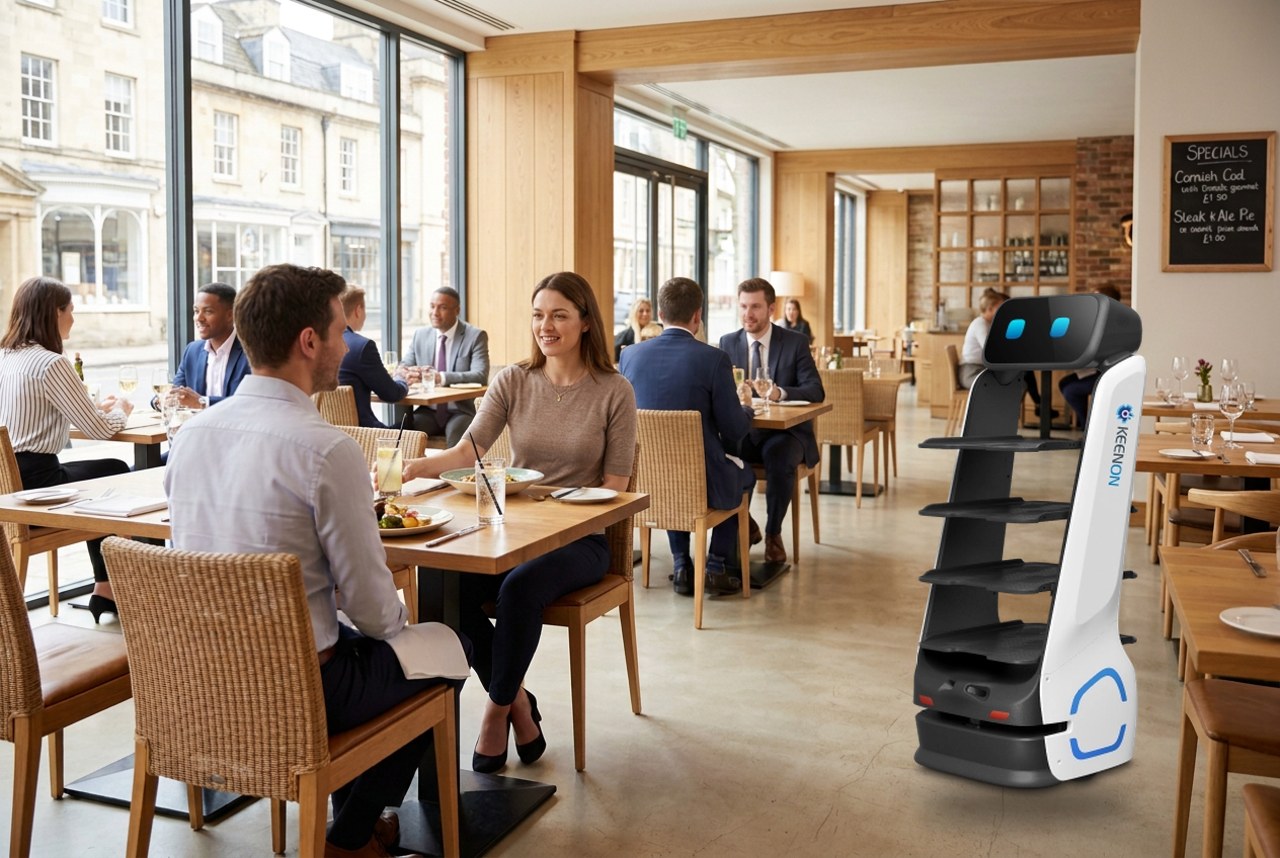
For restaurants and cafés, the Keenon DINERBOT T9, T10 and T11 can support food and drink delivery. The T9 is suited to higher-capacity service, while the T10 combines food running with a customer-facing display. The T11 is a compact indoor option for sites where passage width and floor space need careful consideration.
Guests still receive service from the hospitality team. The robot simply takes on the repetitive transport involved in delivering it.
Privacy, accessibility and ease of use
Privacy should be considered particularly carefully in hotels. Guests should understand what the robot is doing, where it is travelling and how delivery handover works. The W3's enclosed delivery approach can help keep items out of sight during transit. Operators should also provide clear information about any data collected by associated systems and avoid asking guests to use technology unnecessarily.
Accessibility is another practical consideration. A good deployment should not assume that every guest will want to interact with a touchscreen or navigate a robot independently. Hotels and restaurants should:
- Keep human assistance available.
- Use clear, readable instructions.
- Avoid making the robot the only route to service.
- Leave sufficient space around routes and delivery points.
- Consider mobility aids, luggage, prams and visual impairments.
- Train staff to assist guests who prefer a human interaction.
The goal is choice. Guests who enjoy using the robot can do so, while guests who prefer traditional service receive the same standard of care.
How to introduce a robot successfully
Guest communication can have a significant effect on acceptance. A robot should not appear without explanation or be presented as a replacement for the team. Before launch, operators should:
- Explain the purpose: tell guests that the robot is helping staff with deliveries and repetitive carrying work.
- Set expectations: explain how a room-service delivery works, how the guest is notified and how the compartment is opened.
- Keep staff visible: team members should remain available to answer questions and provide personal service.
- Start with a defined use case: begin with room-service deliveries, amenity drops or food running rather than trying to automate everything at once.
- Gather feedback: ask guests and staff what works well and adjust routes, timings and messaging.
- Demonstrate the robot in the real environment: a site survey can identify narrow routes, lift requirements, busy areas and suitable docking locations before deployment.
A site survey can identify narrow routes, lift requirements, busy areas and suitable docking locations before deployment.
Commercial deployment options
Robotics does not have to start with a large capital purchase. There are three common ways to bring a service robot into a hotel or restaurant:
- Outright purchase: buy the robot and own the asset, with maintenance and support arranged separately or through a service agreement.
- Hybrid ownership and support: purchase the hardware and keep servicing, maintenance and software updates with Fresh Mango Robotics.
- Robotics-as-a-Service (RaaS): access a Keenon robot through a managed monthly agreement rather than a capital outlay.
With RaaS, the predictable monthly cost can include the site survey, installation, route mapping, staff training, maintenance, software updates and UK-based support. That makes it easier to trial one use case, such as room-service deliveries or food running, and expand once guest feedback and operational results justify it.
Fresh Mango Robotics supports this process with site surveys, installation, staff training and ongoing UK-based support.
Conclusion
The evidence does not support a simple claim that every guest likes robots. It supports a more useful conclusion: guests are more likely to accept service robots when they are helpful, easy to understand, consistently supported and clearly positioned as tools for staff.
For hotels, the Keenon W3 can assist with room-service and amenity deliveries. For restaurants and cafés, the Keenon T9, T10 and T11 can take on repetitive food and drink transport. In each case, the strongest guest experience comes from combining efficient robotic assistance with visible, capable human hospitality.
For operators considering deployment, the practical starting point is a site survey, a defined use case and a staff-led introduction. With the right planning and support model, robotics can improve service flow without taking the human element out of hospitality.
Sources
- UK hotel guest acceptance study (2025) — International Journal of Hospitality Management (accessed 2026-09-20)
Last reviewed:
Frequently asked questions
Do hotel guests like room-service robots?
Many guests are willing to use room-service robots when they provide a clear benefit, such as convenient delivery and shorter waits. Acceptance depends on trust, ease of use, communication and the continued availability of hotel staff.
Do restaurant customers prefer robot waiters?
There is no single answer. Customers may appreciate robots for routine food running, particularly when they improve speed and consistency. Most still expect human staff to welcome them, answer questions and provide personal service.
Will guests find a service robot strange?
Some guests may be curious, while others may prefer conventional service. Clear explanations, a friendly introduction and visible staff support help the robot feel like a practical part of the operation rather than an imposed replacement for hospitality.
Are service robots accessible to all guests?
Not automatically. Operators should provide clear interfaces, enough space around the robot and human assistance for anyone who needs it. Robot-assisted service should add choice, not remove it.
Can a robot replace hotel or restaurant staff?
No. Service robots are best used for repetitive transport tasks, such as moving food, drinks, amenities or supplies. Staff remain essential for hospitality, communication, recommendations and service recovery.
How can a hotel or restaurant test guest acceptance?
Start with a focused pilot or on-site demonstration. Fresh Mango Robotics can survey the premises, map routes, train staff and help operators assess how a Keenon W3, T9, T10 or T11 would fit into the existing workflow.
Talk to a robot supplier you can actually visit
We are based in Ripon, North Yorkshire, with engineers across the North of England. On-site demos as standard.
Related articles
Why Hospitality Automation Robots Will Change the Way You Manage Your Team
How hospitality automation robots are helping UK restaurants, hotels and care homes solve the staffing crisis, reduce burnout and deliver clear ROI inside 12–18 months.
How to Cut Server Walking Time in Half with a Robotic Food Runner
Busy UK dining rooms lose half their service movement to empty-handed 'dead miles'. Here is how a robotic food runner removes the heavy carries and keeps your team face-to-face with guests.
RaaS, Not Capex: How UK Businesses Get a Commercial Robot Without Buying One
Robotics-as-a-Service turns a capital purchase into a predictable monthly operating cost, with site survey, installation, mapping, training, maintenance, software updates and UK-based support included.
Keep reading