
How to Cut Server Walking Time in Half with a Robotic Food Runner
Busy UK dining rooms lose half their service movement to empty-handed 'dead miles'. Here is how a robotic food runner removes the heavy carries and keeps your team face-to-face with guests.
Quick answer
A robotic food runner removes the long, heavy carries between the kitchen pass and the table. In a 150–200 cover UK service, waiters walk 8–10 miles per shift and up to 60% of that is empty-handed. Keenon T-series robots typically cut 4–6 km per server per shift, reducing fatigue and freeing staff for guest care.

If you run a busy restaurant, pub, or hotel dining room in the UK, you already know the physical toll of floor service. Walk behind your front-of-house team for an evening shift and you will quickly see why staff fatigue sets in early, turnover remains high, and service bottlenecks happen right when the dining room is at full capacity.
At Fresh Mango Robotics, we talk to operators every week who are fighting hard to maintain high standards of hospitality while wrestling with labour shortages and rising operational costs. The bottleneck is rarely in the kitchen. It is the transit corridor between the kitchen pass and table 14.
In this practical guide, we break down how deploying a robotic food runner — such as the Keenon T-series range — cuts server walking distance in half, protects your team from exhaustion, and keeps your staff where they actually add value: face-to-face with your guests.
The hidden cost of “dead miles” on the restaurant floor
Let us look at the hard numbers. In a standard UK restaurant service covering 150 to 200 covers, a busy waiter can easily clock up between 8 and 10 miles of walking per shift.
When your servers spend half their shift acting as pack mules, the operational damage compounds:
- Fatigue sets in: by hour four of a six-hour shift, walking slows down, energy drops, and smiles fade.
- Guest care suffers: staff rushed off their feet cannot upsell wine, check in on dietary requirements, or respond quickly to requests.
- Turnover increases: physical exhaustion is one of the leading reasons hospitality staff burn out and leave the industry.
No amount of motivational coaching fixes a structural logistics problem. You need to take the heavy lifting off your team's feet.
How a robotic food runner works in practice

A robotic food runner is not a novelty gimmick. It is an industrial-grade autonomous service tool designed specifically for hospitality environments.
Using advanced lidar and vision-based SLAM navigation, models like the Keenon T-series map your dining room layout down to the centimetre. They do not require floor tracks, magnetic strips, or complex infrastructure changes. They simply learn your floor plan, detect obstacles in real time, and yield smoothly to staff and diners.
- Loading at the pass: kitchen staff place plated meals onto the robot's multi-tier trays and tap the destination table number on the touchscreen.
- Autonomous transit: the robot navigates smoothly from the kitchen to the dining zone, bypassing chairs, diners and moving staff without hesitation.
- Tableside arrival: on arrival, the robot chimes softly or prompts the guest to take their dishes. Staff meet the robot at the table, unload the food and place it in front of the customer.
- Return and bussing: the robot returns empty to the kitchen pass, or can be loaded with dirty plates and glassware for bussing runs.
By taking over the heavy, long-distance carries, our restaurant robots typically cut a server's walking distance by 4 to 6 kilometres per shift.
Staff acceptance: an assistant, not a replacement
Whenever we speak with independent operators or group managers, the first question is almost always: how do the staff react?
Radical honesty: on day one, staff are naturally sceptical. They wonder if management is trying to replace them. However, within forty-eight hours, the narrative flips completely. Once servers realise that the robot takes away the most exhausting part of the job — hauling heavy trays across the dining room while dodging Sunday lunch crowds — they view the robot as an invaluable colleague.
"Our front-of-house team calls our Keenon runner 'colleague of the month.' It doesn't take smoke breaks, it never drops a tray, and it means our waiters finish their shift with energy left to actually talk to customers."
Crucially, robots do not serve wine with personality. They do not read the mood of a table celebrating an anniversary, and they cannot upsell desserts. That is why human staff remain irreplaceable. The robot simply removes the logistics burden, allowing your team to focus their energy on hospitality.
Choosing the right model: T9 vs T10 vs T11

Every dining space is configured differently. That is why we provide a range of specialised Keenon hardware tailored to specific operational needs:
- Keenon T9: built for heavy-duty food and drink transport with high-capacity tiers for busy restaurant environments.
- Keenon T10: combines tray delivery with an integrated digital screen for table service and on-screen promotions.
- Keenon T11: a narrow-aisle specialist designed to navigate tight cafe and restaurant layouts down to 49 cm wide.
The commercial reality: RaaS and maintenance
Let us address the financial side with complete transparency. Margins in UK hospitality are tight, and investing capital upfront in automation can be a hurdle. That is why we offer our full lineup through a straightforward Robotics-as-a-Service (RaaS) model:
- Zero capital outlay: access advanced robotic runners with predictable monthly operating expenses.
- Full support included: maintenance, software updates and UK-based service desk support are covered.
- Measurable ROI: most UK operators see a complete return on investment within 12 to 18 months through reduced labour friction, improved table turnover and lower staff turnover.
See it on your own floor
Reading specifications online only tells half the story. The best way to understand how a robotic food runner transforms your service is to see it navigate your actual dining room, dodge your actual pillars and interact with your actual team.
We offer hands-on, physical demonstrations across the UK — no sales pitches, just practical gear tested in real-world conditions. Ready to cut your servers' walking time in half?
Frequently asked questions
How much walking does a robotic food runner actually save?
In a typical 150–200 cover UK service, waiters walk 8–10 miles per shift with up to 60% of that empty-handed. Offloading the long kitchen-to-table carries to a Keenon T-series robot typically removes 4–6 km per server per shift.
Does the restaurant need building work or floor tracks installed?
No. The Keenon T-series uses lidar and vision-based SLAM navigation to map your dining room, so there are no magnetic strips, floor tracks or infrastructure changes. Mapping is done during deployment.
Will a food runner robot replace waiting staff?
No. The robot handles transit only. Staff still greet guests, take orders, present dishes, recommend wine and handle service recovery — the parts of hospitality that need people.
Which Keenon model is right for my dining room?
The T9 suits high-volume food and drink transport, the T10 adds an integrated screen for table service and promotions, and the T11 is designed for narrow aisles down to 49 cm. A site survey confirms the right fit.
Can we rent rather than buy?
Yes. Robotics-as-a-Service spreads the cost into a predictable monthly fee that includes maintenance, software updates and UK-based support, with no capital outlay.
Talk to a robot supplier you can actually visit
We are based in Ripon, North Yorkshire, with engineers across the North of England. On-site demos as standard.
Related articles
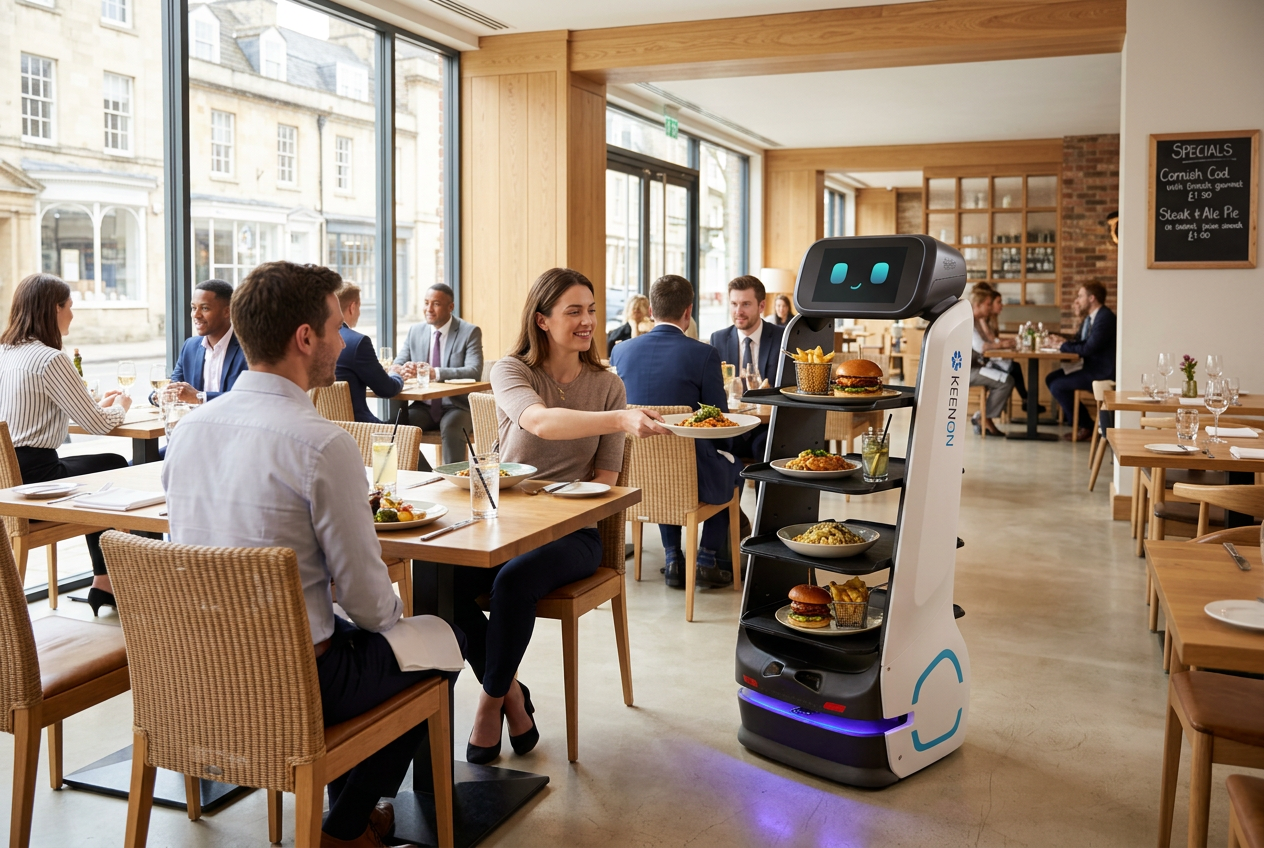
Robotic Food Runner vs. Traditional Waiter: Which Is Better For Your Restaurant?
A head-to-head comparison of robotic food runners and traditional waiters — the honest ROI, the impact on staff morale, and the efficiency numbers that actually matter.
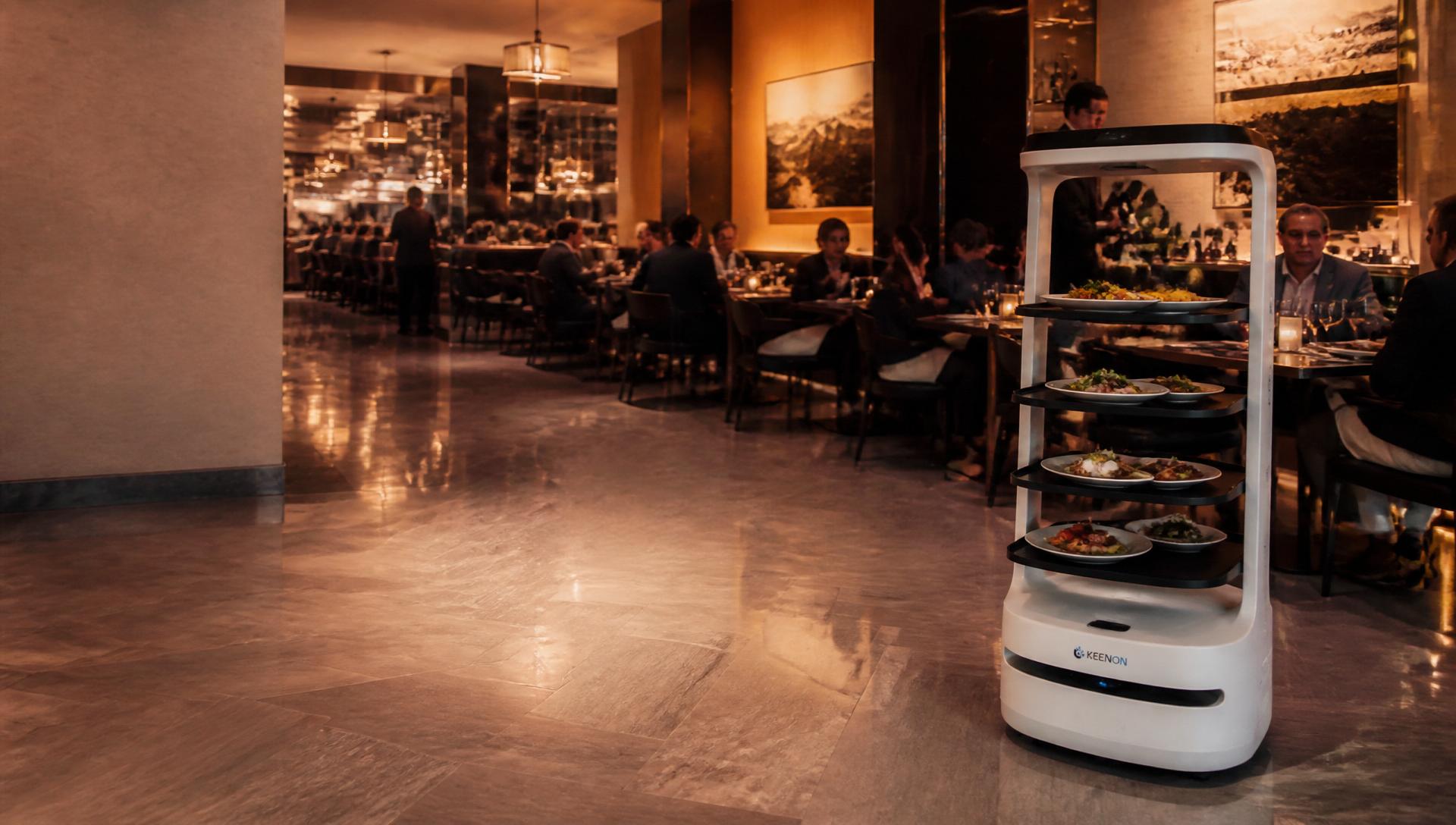
How to Choose the Best Restaurant Delivery Robot (Compared)
Honest comparison of Keenon T5, T6, T10 and W3 restaurant delivery robots for UK hospitality — specs, ROI guidance and which model actually fits your floor plan.
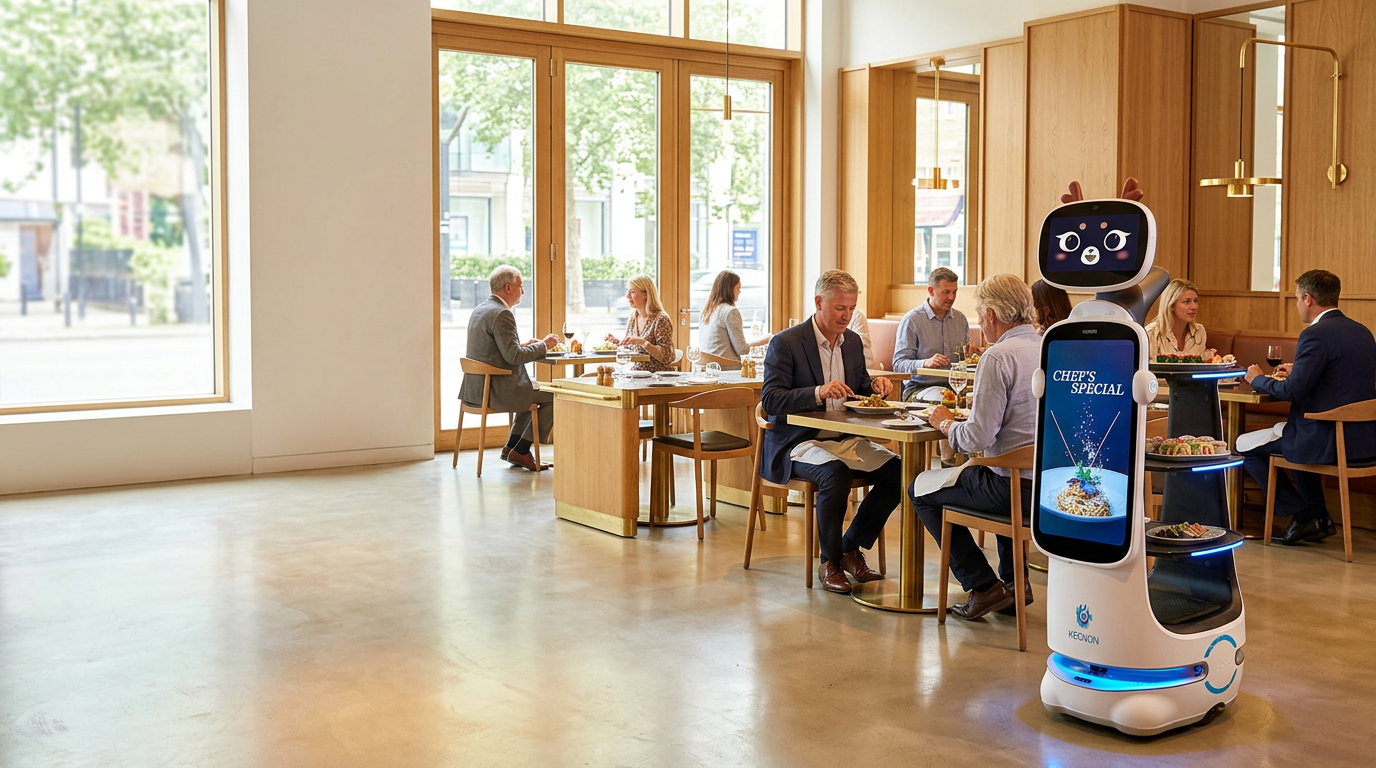
Why Hospitality Automation Robots Will Change the Way You Manage Your Team
How hospitality automation robots are helping UK restaurants, hotels and care homes solve the staffing crisis, reduce burnout and deliver clear ROI inside 12–18 months.
Keep reading