
Robotic Food Runner vs. Traditional Waiter: Which Is Better For Your Restaurant?
A head-to-head comparison of robotic food runners and traditional waiters — the honest ROI, the impact on staff morale, and the efficiency numbers that actually matter.
Quick answer
A traditional waiter is better for guest interaction, upselling and atmosphere. A robotic food runner is better for the heavy lifting, the kitchen-to-table trips and covering staff shortages. The most successful UK restaurants in 2026 run a hybrid model — robots do the grunt work so humans can do the heart work, with ROI typically landing inside 12–18 months.

If you run a restaurant in the UK today, you are likely fighting two battles: rising wage costs and a shortage of reliable front-of-house staff. You have probably seen videos of a robotic food runner gliding through a dining room and wondered if it is a gimmick or a genuine solution to your staffing headaches.
Fresh Mango Robotics does not do gimmicks. We provide autonomous tools for businesses that need to get work done. A robot will never replace the charisma of a great waiter — but carrying heavy trays for eight hours a day is not hospitality, it is manual labour. So which is better for your business: a traditional waiter or a robotic food runner?
The reality of the traditional waiter
Human staff are the soul of any hospitality business. A robot cannot recommend a wine pairing based on a guest's mood or handle a complex allergy request with a personal touch. However, relying solely on humans for every single task is becoming unsustainable for many UK operators.
- Physical fatigue — a busy waiter can walk upwards of 10 miles in a single shift; by hour seven, service quality naturally dips.
- Rising costs — with the National Living Wage and employer contributions climbing, cost per plate delivered by a human is at an all-time high.
- Consistency — humans have bad days, get stuck in traffic, catch flu and occasionally drop a tray of expensive drinks.
Enter the robotic food runner
A robotic food runner such as the Keenon Dinerbot T5 is not there to take orders or chat with guests. Its job is simple: move things from point A to point B without getting tired, complaining or dropping the cargo. By taking over the running part of the job, the robot changes the waiter's role. Instead of spending 60% of their shift walking back and forth to the kitchen, staff stay on the floor — in the service zone — where they can upsell that second bottle of wine or check the steak was cooked to perfection.
- Endurance — the robots can work 13-hour shifts, seven days a week, with zero breaks.
- Capacity — a Keenon T6 can carry five large trays at once, more than the strongest runner can handle safely.
- Precision — LiDAR and 3D sensors let it navigate a busy dining room, avoiding children, chairs and other staff with millimetre precision.
The comparison — side by side
| Feature | Traditional waiter/runner | Robotic food runner |
|---|---|---|
| Primary focus | Guest interaction & problem solving | Heavy lifting & transport |
| Shift length | 4–10 hours (needs breaks) | 12–15 hours (no breaks) |
| Reliability | Subject to illness/no-shows | ~99.9% uptime |
| Cost basis | Wage, NI, pension and cover | Purchase or monthly service agreement |
| Risk of breakage | Moderate (human error) | Low (stable tray system) |
Will my staff hate it? The morale factor
The biggest concern we hear from owners is whether the team will feel replaced. The honest answer: not if you use the robot correctly. In every UK installation we have handled, initial scepticism disappears within 48 hours because the robot takes away the part of the job the team hates — the heavy lifting and the endless dead miles between the kitchen and the floor.
When staff no longer carry four heavy plates of roast dinner across a 50-metre dining room for the 50th time that day, morale goes up. They are less exhausted, they make fewer mistakes and — crucially — they often earn more in tips because they are spending more time looking after guests.
The honest ROI — let's talk money
A robot is an investment. It is not free. Compared to the cost of a human runner in the UK, the payback period is surprisingly short.
The cost of human scenario
The full employment cost of a runner includes wages, National Insurance, pension contributions, holiday pay and cover. Use your current payroll figures for an accurate comparison.
The cost of robot scenario
- Outright purchase — quoted according to the robot model and deployment scope.
- Robotics-as-a-Service (RaaS) — a predictable monthly lease that can include maintenance and support.
- Hybrid — buy the unit and pay a small monthly fee for priority UK support.
If one robotic food runner allows you to reduce your staffing requirement by just one person (or prevents you from needing to hire an additional runner), you will hit ROI within 12 to 18 months. On the RaaS model, monthly cost is usually lower than a human runner's monthly salary — many operators are cash-flow positive from day one.
Which one is better?
There is no better — there is only better for the job.
- Choose a traditional waiter for guest interaction, upselling, handling complaints and creating atmosphere.
- Choose a robotic food runner for the heavy lifting, the repetitive kitchen-to-table trips and to bridge the gap during staffing shortages.
The most successful restaurants in 2026 run a hybrid model. Robots do the grunt work so the humans can do the heart work. It is about doing more with the team you already have, not replacing the people who make your business special.
Frequently asked questions
Can a robot completely replace waiters?
No — and it should not. Robots handle the repetitive running between kitchen and table. Waiters handle the guest interaction, upselling and problem solving that drives revenue and reviews.
How long is the payback period on a robotic food runner in the UK?
In most UK restaurant deployments, payback lands between 12 and 18 months on outright purchase. On RaaS, monthly cost is usually below the monthly cost of a human runner from day one.
How much can a Keenon T6 carry?
A Keenon T6 can carry up to five large trays at once — more than the strongest human runner can safely manage.
Talk to a robot supplier you can actually visit
We are based in Ripon, North Yorkshire, with engineers across the North of England. On-site demos as standard.
Related articles
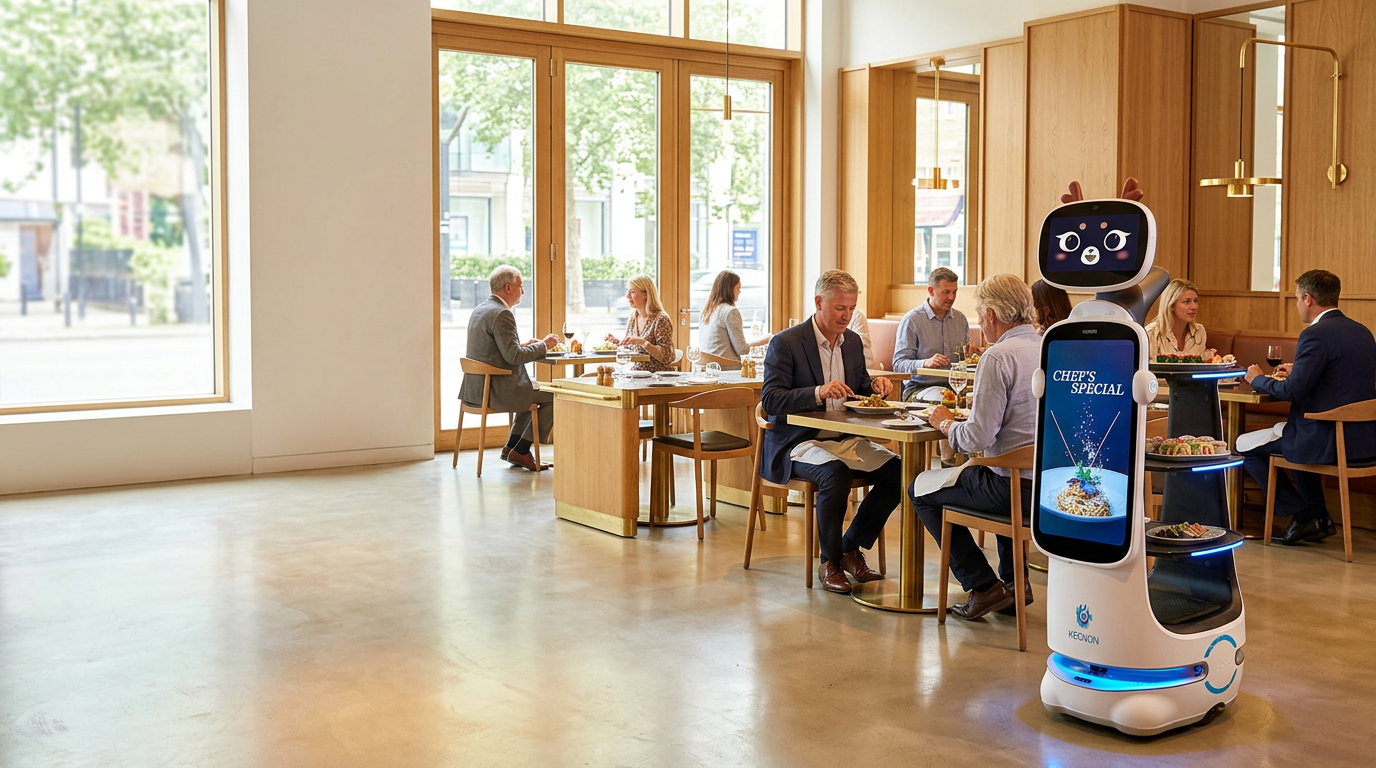
Are Restaurant Robots Worth It? A 2026 ROI Guide
A practical 2026 walk-through of where restaurant robots earn their keep, the venues they suit, and where the payback actually comes from.
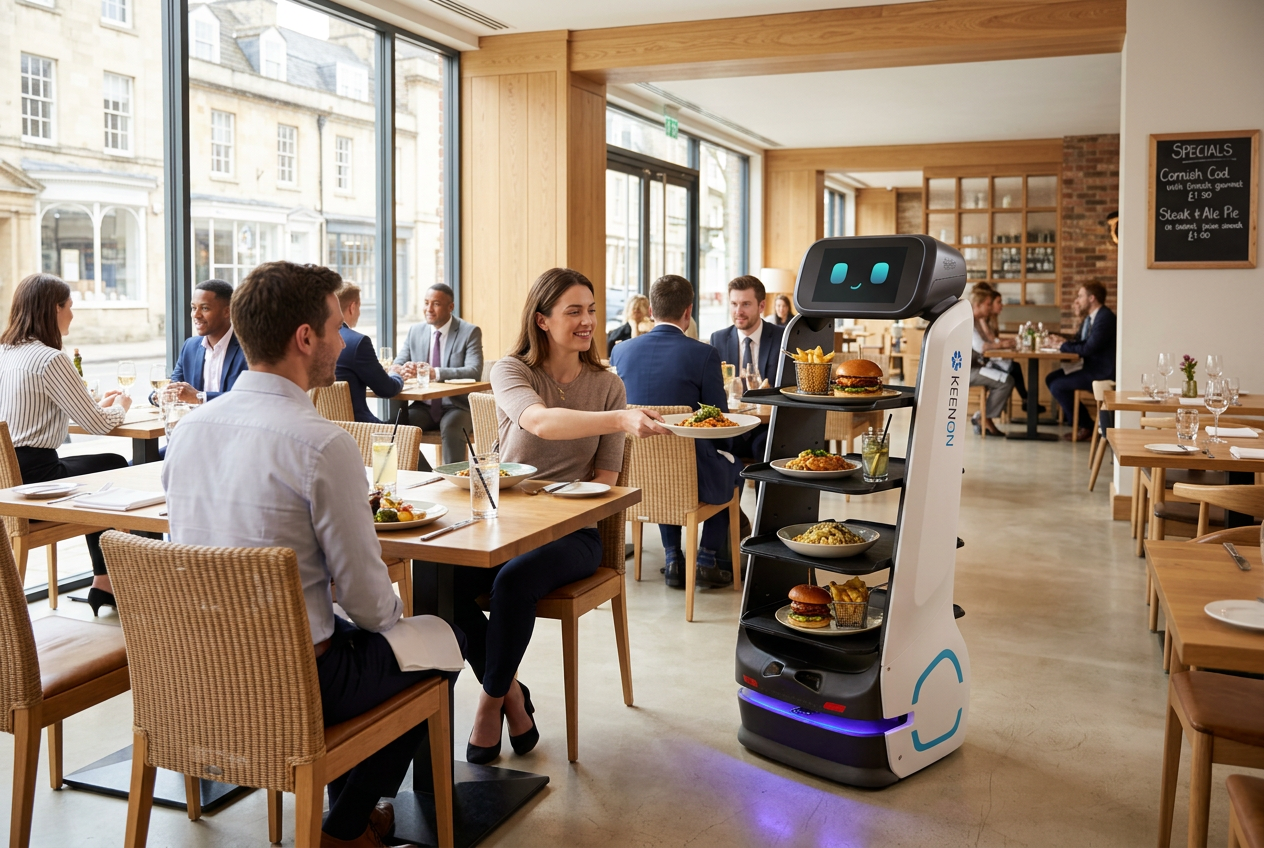
Service Robot vs Waiter: Where Does the ROI Come From?
An honest breakdown of where the ROI on a restaurant service robot actually comes from — and why "replacing a waiter" is the wrong framing.
Why Hospitality Automation Robots Will Change the Way You Manage Your Team
How hospitality automation robots are helping UK restaurants, hotels and care homes solve the staffing crisis, reduce burnout and deliver clear ROI inside 12–18 months.
Keep reading