
Hotels & serviced apartments
Room service robots for UK hotels
Secure, PIN-protected delivery of food, amenities and supplies to guest floors — with lift and access integration assessed for your building. Supplied, installed, trained and supported by our own UK team.
At a glance
How it works
A PIN-protected delivery, end to end
- 1
Order is loaded and locked
Kitchen, reception or housekeeping loads the compartment, enters the room number, and closes the door. The load is out of sight from that moment.
- 2
Robot calls the lift itself
Where lift integration has been confirmed and commissioned, the robot uses it to reach the guest floor. Otherwise, the demonstrated route remains on an accessible floor.
- 3
Guest is notified at the door
The agreed notification method alerts the guest. Staff handle non-response or arrange assistance if the guest cannot retrieve the item.
- 4
PIN releases their compartment only
The configured release method gives the recipient access to their delivery. Staff confirm compartment and recipient arrangements during setup.
- 5
Returns and docks automatically
The robot follows its mapped return route to charge. Staff check for remaining items, clean the compartments and respond to any faults.
Business outcomes
What it changes on the night shift
Less time on repeat corridor trips
Assess the journeys a robot can take on, including lift waits and staff handovers. The time released depends on your layout and request volumes.
Guest privacy protected
Closed compartments keep suitable items out of sight. Agree recipient checks and the release procedure before use.
Keep reception staff available
Suitable deliveries can reduce trips away from the desk. Staff still handle loading, guest requests and exceptions.
A repeatable delivery routine
Mapped routes support a planned routine, but lift waits, blocked corridors and guest response can change delivery time.
Recommended models
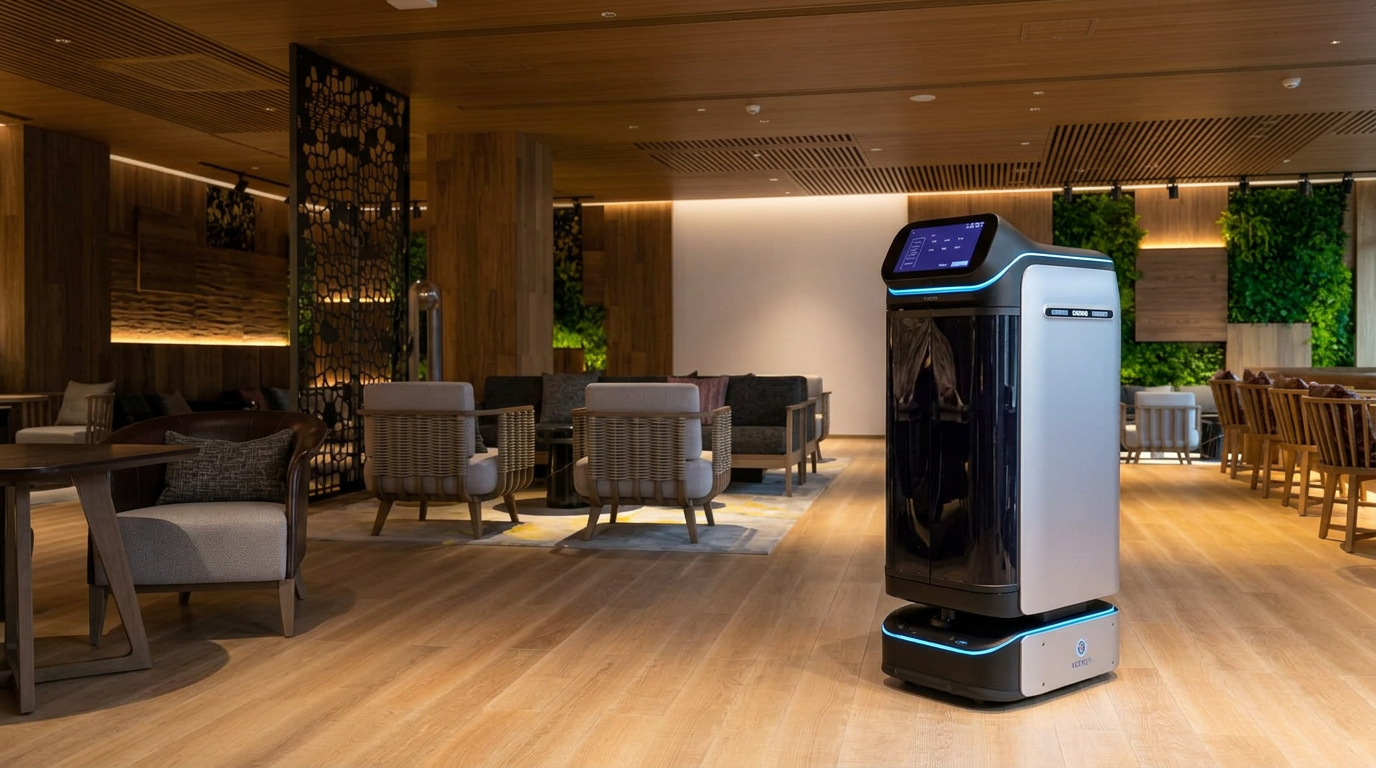
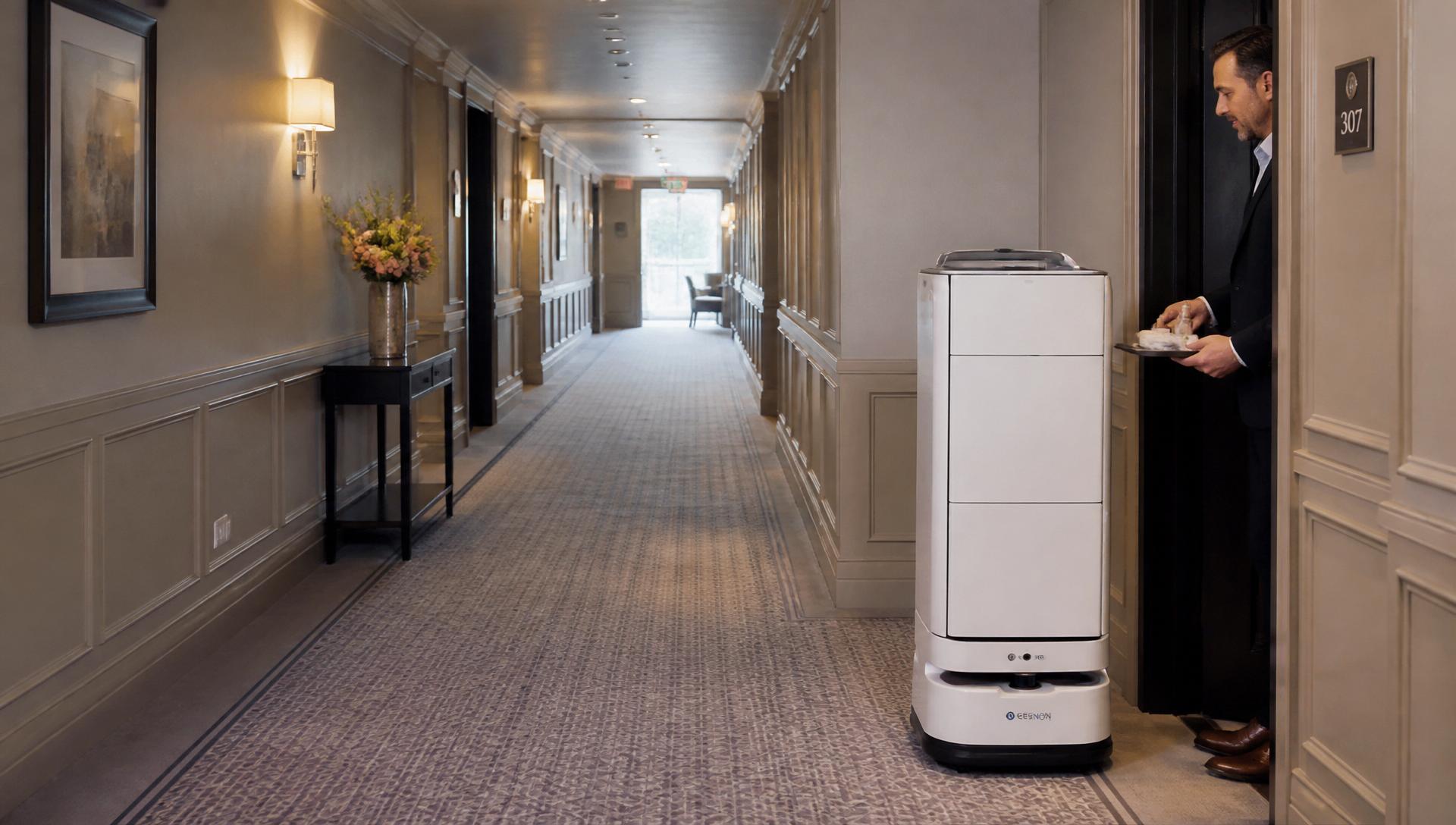
Two robots built for corridors, not dining rooms
Compare enclosed delivery models for room-door requests. Confirm lift integration where needed; open-tray food runners suit staff-assisted restaurant service instead.
Room service robot questions, answered
- Are hotel room service robots available in the UK?
- Yes. Fresh Mango Robotics supplies, installs and supports KEENON DINERBOT T3 and BUTLERBOT W3 enclosed-delivery robots for UK hotels. A site assessment checks room-door routes, compartment fit, staff handovers and any lift or door integrations. Your team can assess a representative delivery in a live demonstration before a written proposal.
- How much does a hotel service robot cost?
- The published commercial robot range starts from £6,995 + VAT for purchase and £295 per month + VAT for Robot-as-a-Service. These are indicative range-wide starting points, not a specific T3 or W3 quote. The hotel configuration, access integrations, deployment and support determine the exact price in a written proposal. A live demonstration costs £295 + VAT, fully credited against any qualifying purchase, lease or RaaS agreement placed within 90 days.
- What is a room service robot?
- A room service robot carries prepared food, drinks or suitable amenities along a mapped route to a guest room door. Staff load and dispatch it; the guest or a staff member retrieves the delivery. The DINERBOT T3 and BUTLERBOT W3 are enclosed-delivery options. Lift access, guest notification and compartment release must be confirmed for the proposed configuration.
- Do room service robots work with hotel lifts?
- They can, where the lift controller and access arrangements support integration. We check your specific installation with the relevant lift or building-system provider before confirming the scope. A demonstration of a ground-floor route does not by itself establish multi-floor compatibility.
- How does a guest receive the delivery securely?
- Enclosed, lockable compartments keep items out of sight in transit. The release method and guest notification are configured and checked for your deployment. Staff must verify the room, load and recipient instructions, explain collection to guests and have a fallback if a guest does not respond.
- How much staff time can a room service robot save?
- It depends on journey length, lift waits, request volumes and the time staff still spend preparing, loading, unloading and handling exceptions. We assess representative trips with your team; there is no guaranteed daily saving. Time released can keep staff available for reception and guest care.
- Which robot is best for hotel room service in the UK?
- Shortlist the DINERBOT T3 and BUTLERBOT W3 for enclosed room-door delivery, subject to payload, access and integration checks. Open-tray DINERBOT models such as the T9 and T10 suit restaurant food running where staff meet and unload the robot; they are not equivalent to secure room-service delivery.
- What hotel site requirements should we check?
- Check corridor and doorway clearances, turning space, thresholds, carpets, door access, lift compatibility, network coverage and a suitable charging location. Stairs cannot form part of a wheeled delivery route. We assess the selected model against your building rather than apply one clearance to every hotel.
- What do hotel staff still do?
- Staff prepare orders, check food hygiene and allergens, load and dispatch deliveries, clean and check the robot and handle non-response, faults or blocked routes. They remain responsible for guest service. Do not assume the robot cooks, replenishes itself or keeps food at a required temperature without a verified configuration and procedure.
- When is a room service robot a poor fit?
- Stair-only access, incompatible lifts or doors, narrow or obstructed routes and very few repeated deliveries can weaken the case. Guests who cannot retrieve items need staff assistance. Assess these limits before committing, and retain a manual delivery option.
- Can it deliver housekeeping items as well as food?
- Suitable towels, toiletries, bottled water and other amenities can be assessed alongside room-service orders. Check that items fit the compartments and agree separation and hygiene procedures. The robot carries items; staff still prepare requests and replenish supplies.
- What should a hotel demonstration show?
- Test loading, a representative corridor trip, guest collection and return, including the staff handover. Review blocked-route and non-response procedures. Confirm any lift, door or notification integration separately before relying on it. The recommendation and commercial scope are set out in a written proposal.
See it running your corridors
We survey the site, confirm lift compatibility, and run the robot on your real routes before you commit. No obligation.
Related reading