
RaaS, Not Capex: How UK Businesses Get a Commercial Robot Without Buying One
Robotics-as-a-Service turns a capital purchase into a predictable monthly operating cost, with site survey, installation, mapping, training, maintenance, software updates and UK-based support included.
Quick answer
Robotics-as-a-Service (RaaS) lets a UK business run a Keenon robot for a predictable monthly fee instead of a capital purchase. The agreement, typically 36 months, covers the robot plus the site survey, installation, floor mapping, staff training, maintenance, software updates and UK-based support, with an upgrade path at the end of the term.
A commercial robot can take over repetitive work without appearing as a large asset purchase on your balance sheet.
That is the purpose of Robotics-as-a-Service, or RaaS.
Instead of buying a Keenon robot outright, your business pays a predictable monthly fee for the robot and the service needed to keep it working. That can include the site survey, installation, floor mapping, staff training, maintenance, software updates and UK-based support.
You get the capability.
You do not have to manage the hardware ownership risk.
There is no formal presentation and no vague promise that automation will “transform” your business. We bring the robot to your premises, run it on your floors and explain the honest advice, real results and honest payback periods.
RaaS turns a robot purchase into an operating cost
Buying outright means paying for the hardware at the start. You own the asset. After the warranty period, you also carry more of the responsibility for maintenance, repairs and future upgrades.
RaaS works differently.
The robot is provided on an agreed term, typically 36 months. You pay a monthly operating cost. The agreement includes the equipment and the support package required to deploy it properly.
The exact commercial structure depends on the robot, site, fleet size and support level. But the basic principle is straightforward:
- No large capital outlay.
- One predictable monthly payment.
- Installation and staff training included.
- Maintenance and servicing included.
- Software updates included.
- UK-based support.
- An upgrade path at the end of the term.
- The option to scale across more departments or sites.
The monthly cost should be compared with the work the robot is taking on. That might be food running, room service, floor cleaning, meal transport, linen movement or heavy internal logistics.
It is not simply a finance agreement for a machine. It is a service arrangement designed to keep the machine useful and working.
What Fresh Mango Robotics includes
RaaS only works if the deployment is handled properly. Sending a robot in a box is not a deployment.
Our process starts with the physical site.
1. Site survey
We assess the actual premises. That includes:
- Floor layout.
- Door widths.
- Thresholds.
- Traffic patterns.
- Lift access.
- Wi-Fi coverage.
- Charging locations.
- Routes and no-go zones.
- The work currently being done by staff.
The survey determines whether a robot is suitable and which model fits the task.
A restaurant with narrow service routes may need a different robot from a large banqueting venue. A care home may need quiet corridor delivery. A warehouse may need a KEENON S100 or S300 rather than a lighter service robot.
2. Physical demonstration
We bring a working Keenon robot to your premises.
No PowerPoint. No stock footage. No theoretical route on a conference-room screen.
Your team sees the robot move across the actual floor. They can load it, send it to a destination and watch how it handles people, corners and working conditions.
That matters because every site is different.
3. Installation and mapping
We install the robot, map the floor and configure its routes. Modern Keenon robots use sensors and LiDAR-based navigation rather than fixed tracks or floor magnets.
We set:
- Delivery points.
- Charging positions.
- Speed settings.
- No-go zones.
- Operating schedules.
- Safety behaviours.
- Staff access and controls.
For multi-floor deployments, lift integration is assessed during the survey. Not every lift is compatible without modification. If a lift controller is required, that is identified and quoted separately.
4. Staff training
The robot works alongside your existing team.
Staff need to know how to start a route, load trays or compartments, empty tanks where relevant, respond to alerts and handle basic exceptions.
Training usually takes around 30 to 60 minutes, depending on the model and the operation. We train the people who will actually use the robot on each shift. We also provide written guidance and UK-based support for new starters or refresher training.
5. Ongoing support
The RaaS fee includes support and maintenance for the agreed term.
That means your team has a UK service desk to contact when something needs attention. Remote diagnostics can resolve many issues quickly. If an engineer is required, the deployment can be escalated for on-site support under the agreed service level.
Software updates are also included. The robot does not become your problem when the software changes or a newer model becomes available.
RaaS gives each sector access to the right robot
RaaS is not one robot for every business. The useful question is not “Do we want a robot?”
It is:
Which repetitive task should the robot take over first?
Hospitality
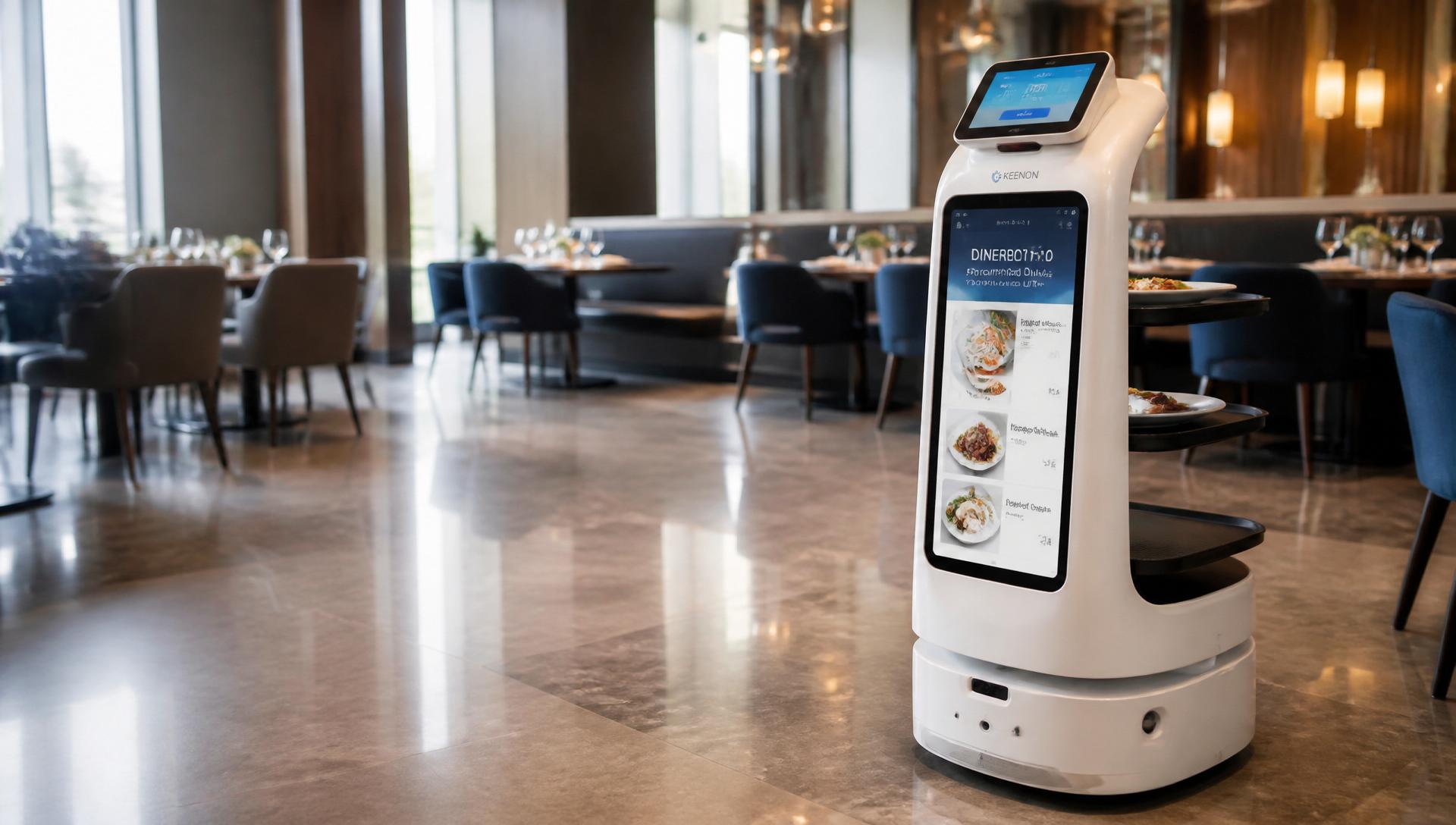
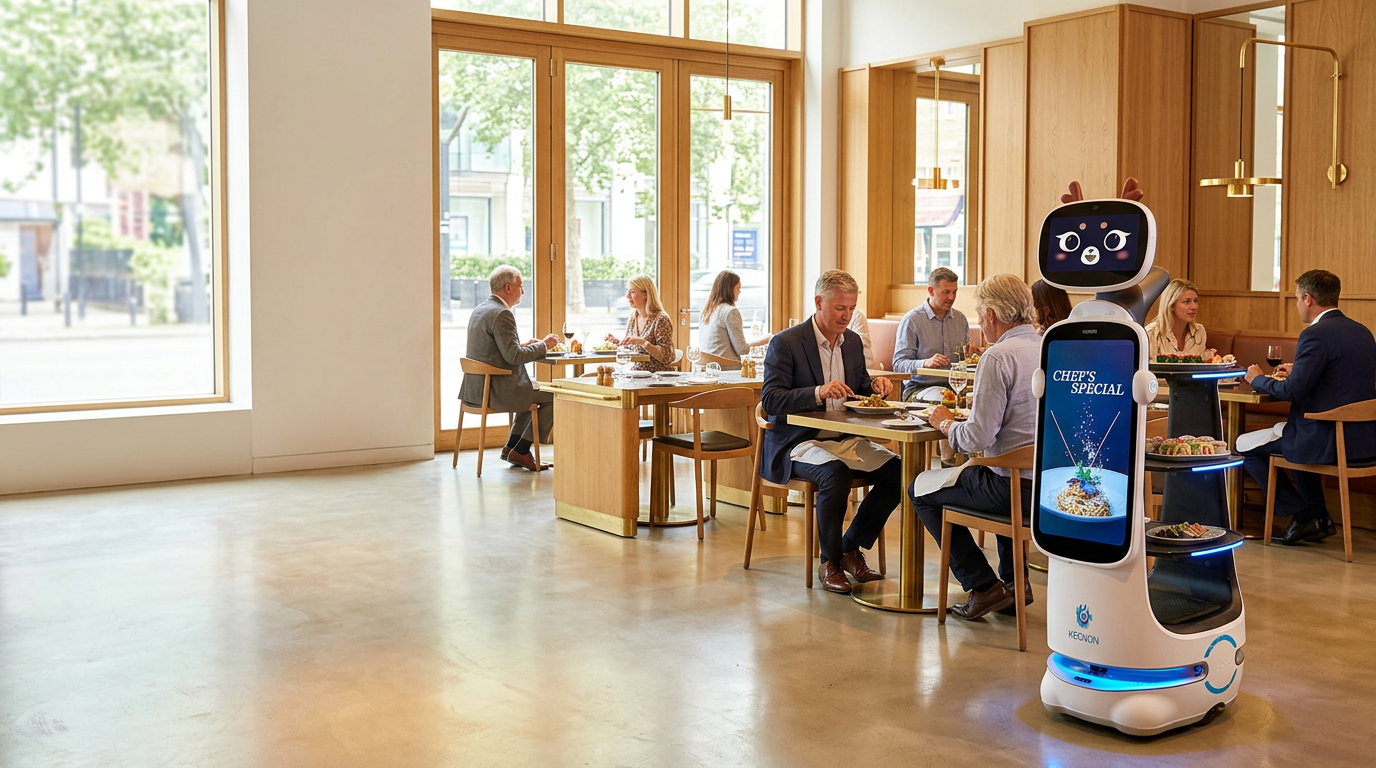
A Keenon DINERBOT T9 or T10 can carry food and drinks from the pass to tables. This reduces the walking and carrying that takes servers away from guests.
The T9 is suited to larger multi-tray runs. The T10 adds high-capacity service with digital display capability.
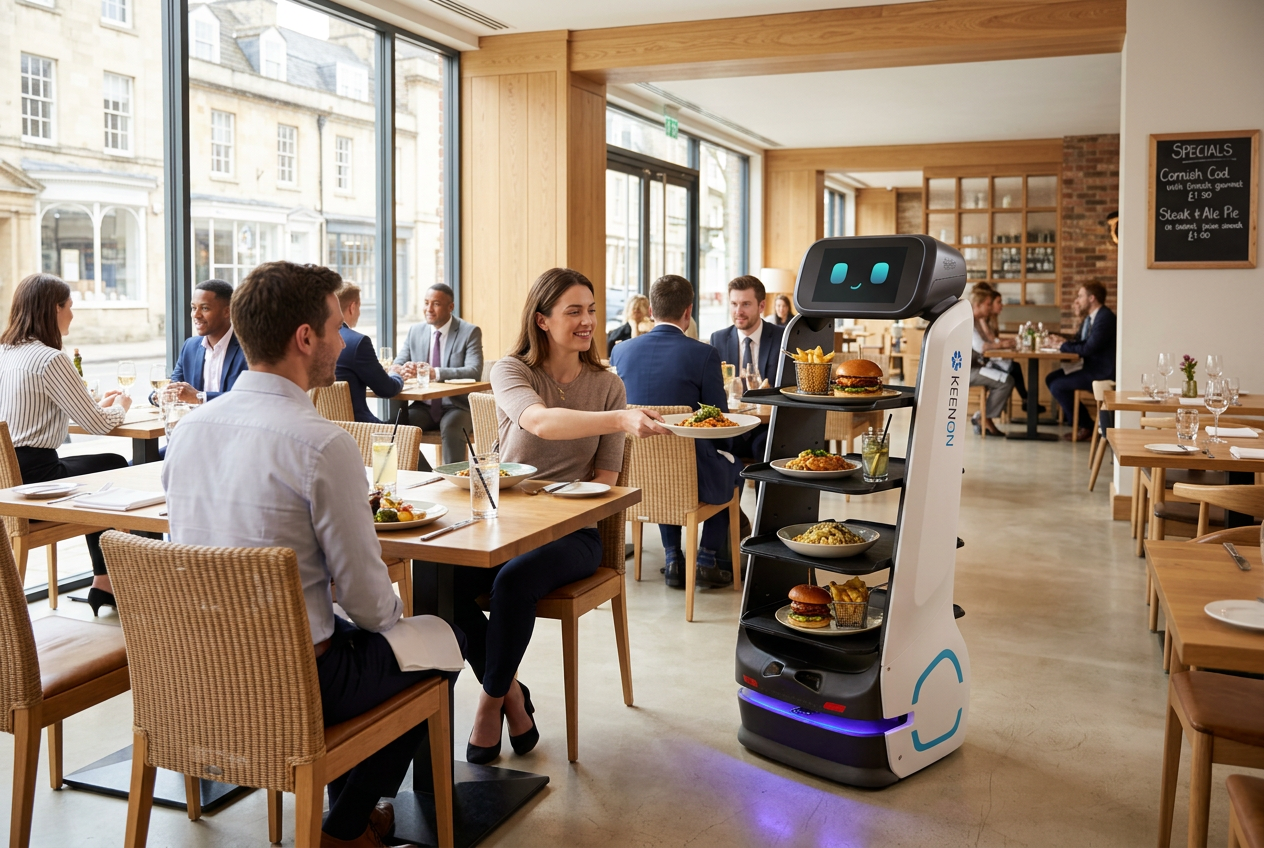
The robot does not replace hospitality judgement. It handles the physical legwork. Your team still welcomes guests, explains the menu, deals with requests and provides the service customers remember.
Hotels and healthcare
The Keenon BUTLERBOT W3 is designed for room, corridor and amenity deliveries. It can support hotel room service, care home meal delivery, linen movement and internal ward logistics.
It can also be configured for multi-floor operation where lift integration is suitable.
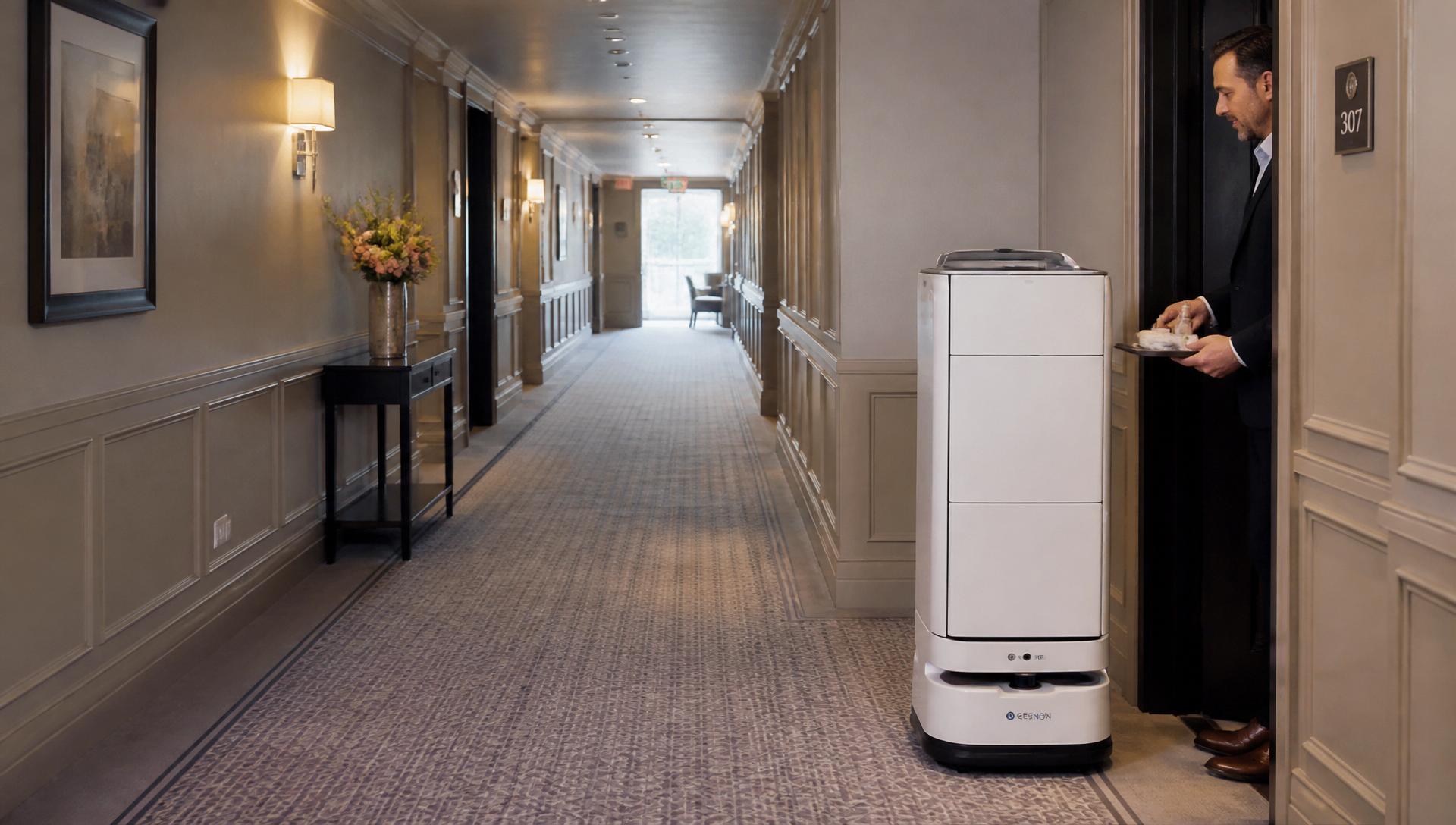
This is useful for operators who need coverage outside standard daytime hours. A hotel can send room service or amenities without asking a member of staff to leave the desk or walk the full building.
Retail, gyms and garden centres
Large public floors create a recurring cleaning requirement.
The Keenon KLEENBOT C30 or C40 can take on scheduled floor-cleaning work across retail premises, gyms, garden centres, business parks and other large commercial environments.
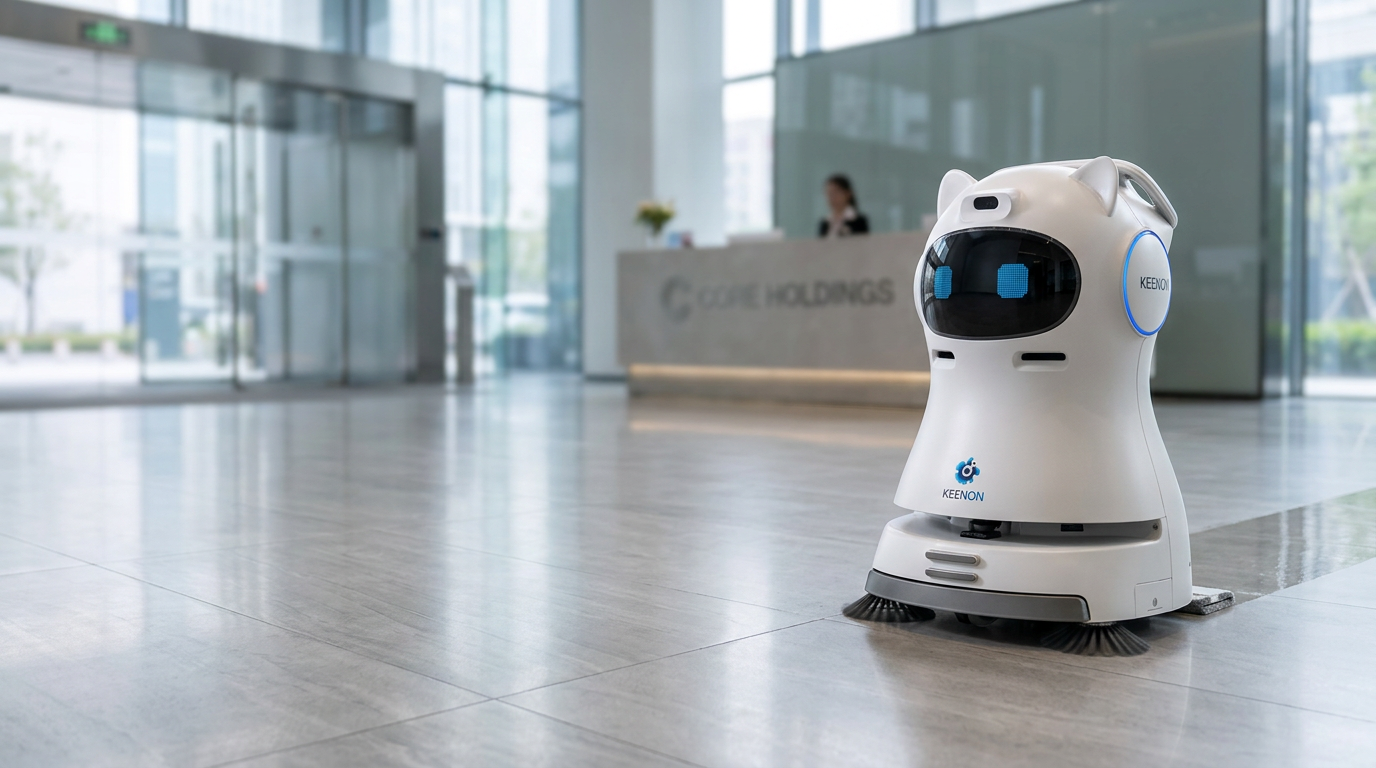
Your team remains responsible for detail cleaning, spills, edges and areas the robot cannot reach. The robot handles the repeatable floor work to a consistent schedule.
That gives managers clearer coverage and less dependence on finding people for the least popular shifts.
Warehousing and logistics
The KEENON S100 can move loads up to the 100 kg class. The S300 is designed for heavier loads up to the 300 kg class.
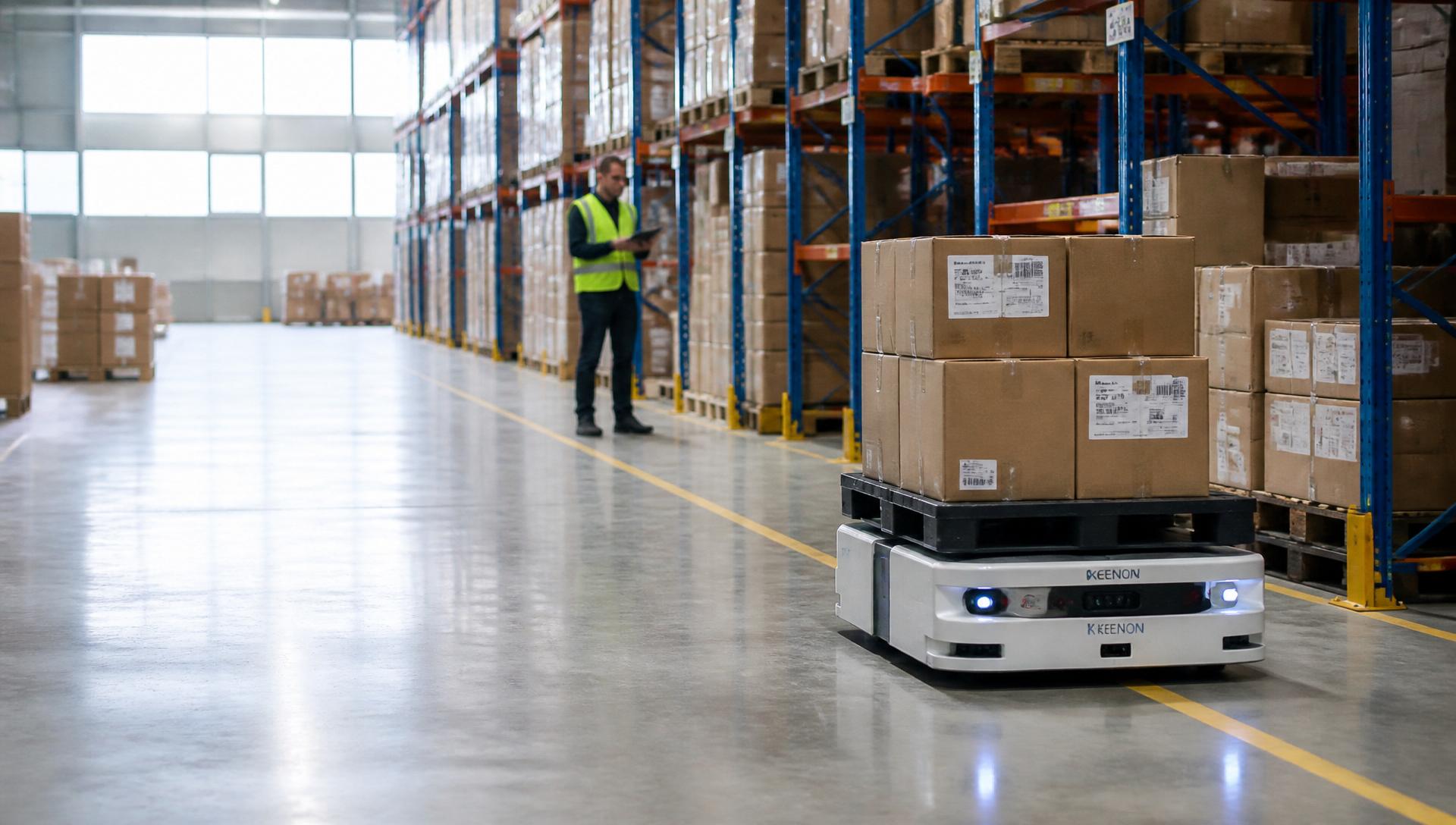
These robots can support internal point-to-point transport, stock movement, kit-to-cart work and back-of-house transfers.
The goal is not to automate every warehouse process. It is to remove unnecessary walking, pushing and carrying so your team can spend more time on picking, inventory control and order fulfilment.
You still need to understand the trade-offs
RaaS reduces risk. It does not remove every commercial decision.
A responsible proposal should make the following clear:
- The contract term.
- What happens if the site changes.
- What support level is included.
- Response times for faults.
- Whether consumables are included.
- How accidental damage is handled.
- What happens at the end of the agreement.
- Whether you can upgrade or add robots.
- Any additional infrastructure requirements.
- The total cost over the full term.
Consumables such as cleaning solution, brushes, pads and filters may be charged separately because usage depends on the site and operating hours. Electricity is also a normal operating cost.
RaaS can cost more over a five-year period than buying outright. That is the honest advice. In return, you get lower initial risk, predictable costs, included maintenance and a clearer route to future upgrades.
The right choice depends on how your business spends money and how long you expect to use the equipment.
RaaS makes scaling more manageable
One robot can be a controlled first step.
You might begin with a DINERBOT in one restaurant, a C30 in one store or an S100 in one warehouse zone. Once your team has used it in practice, you have better information for the next decision.
You can then:
- Add another robot to the same premises.
- Extend the service to another department.
- Roll out the same model across multiple sites.
- Add different models for different jobs.
- Upgrade at the end of the term.
- Align deployments with contracts, leases or budget cycles.
This is particularly useful for groups with several hotels, care homes, stores or warehouses. A predictable monthly cost per site is easier to plan than a new capital request for every machine.
The site still needs assessing. A robot that works well in one branch may need a different route, model or support level elsewhere.
How long does deployment take?
Most hospitality and care home deployments can be live within one to two weeks of the survey. Installation itself usually takes one to two days.
The work includes mapping, route configuration, safety checks and staff training.
The timing depends on the building. A single-floor restaurant is simpler than a multi-floor hotel. A busy warehouse may need more planning around traffic and loading areas.
The practical test is your own floor
RaaS is not about buying into a technology trend.
It is about getting a repeatable task done with less manual effort and more operational certainty.
The useful test is physical:
- How far does the robot travel?
- What does it carry?
- How often does the task happen?
- Where does staff time go today?
- Can the robot work safely around customers, residents or colleagues?
- What happens when the layout changes?
- Who supports it when there is a problem?
We answer those questions through a site survey and live demonstration. We show the robot on your premises, not just in a formal presentation.
If RaaS is not suitable, we will say so. If a purchase or hybrid model makes more sense, we will explain that too.
Ask us anything or book a site survey.
No hard sell. Just a working robot, an honest conversation and clear numbers for your operation.
Last reviewed:
Frequently asked questions
What is Robotics-as-a-Service (RaaS)?
RaaS is a monthly service agreement rather than a capital purchase. Your business pays a predictable monthly fee for the Keenon robot plus the site survey, installation, floor mapping, staff training, maintenance, software updates and UK-based support needed to keep it working.
How long is a typical RaaS agreement?
Terms are typically 36 months. The exact structure depends on the robot, the site, fleet size and the support level required, and there is an upgrade path at the end of the term.
What is included in the monthly fee?
The robot, installation and mapping, staff training, maintenance and servicing, software updates and UK-based service desk support for the agreed term. Consumables such as cleaning solution, brushes, pads and filters may be charged separately, and electricity is a normal operating cost.
Is RaaS cheaper than buying a robot outright?
Not always. Over a five-year period RaaS can cost more than an outright purchase. In return you avoid the capital outlay, get predictable monthly costs, included maintenance and a clearer route to future upgrades. Our pricing page sets out purchase, RaaS and hybrid options.
How quickly can a robot be deployed?
Most hospitality and care home deployments go live within one to two weeks of the site survey, with installation itself taking one to two days. Multi-floor hotels and busy warehouses need more planning around lifts, traffic and loading areas.
Can we scale up later?
Yes. You can add robots at the same premises, extend to another department, roll the same model out across multiple sites, mix models for different jobs, or upgrade at the end of the term. Each new site still needs its own survey.
Will a robot replace members of staff?
No. The robots take on repetitive transport and floor-cleaning work. Your team still handles guest interaction, clinical and care judgement, detail cleaning, picking, inventory control and everything that needs a person.
Talk to a robot supplier you can actually visit
We are based in Ripon, North Yorkshire, with engineers across the North of England. On-site demos as standard.
Related articles
Robotics-as-a-Service (RaaS): A Practical Guide for UK Businesses
Robotics-as-a-Service explained in plain English — what is in the monthly fee, who owns the robot, who insures it and how to budget for it.
Choosing the Right Commercial Robot Model: Buy, Hybrid or Robotics-as-a-Service?
Every organisation is different. Some prefer to own their robot outright, others want to spread costs, and many prefer a fully managed Robotics-as-a-Service model. Here is how each option works, who it suits and how to choose.
How a Commercial Robot Deployment Works: From Demonstration to Go-Live
What actually happens between the first demo and the robot going live in your operation — the deployment process used by Fresh Mango Robotics across the UK.
Keep reading