
Do You Really Need a Hotel Room Service Robot? Here's the Truth
Not every hotel needs a room service robot. An honest guide to when one makes sense, when it does not, and what to check about lifts, corridors, handovers, staff training and Robotics-as-a-Service.
Quick answer
A hotel room service robot can carry a prepared order along a mapped route, including between floors if the robot and the building's lift system are compatible. Staff still prepare and load the order, and remain responsible for guest service and any handover.
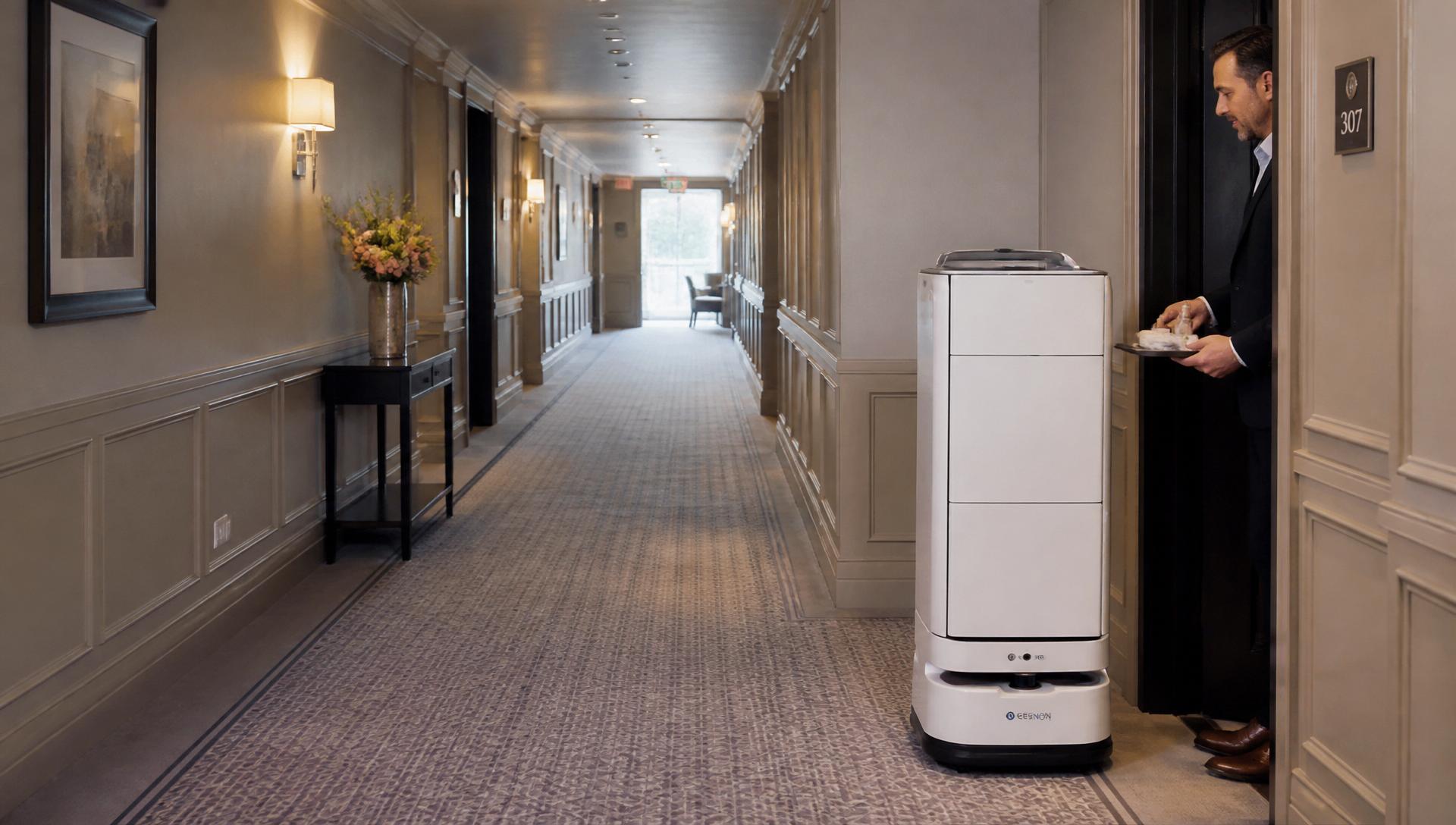
But not every hotel needs one. If you have few room-service requests, short routes or a building that makes autonomous movement difficult, a robot may add complexity without solving a meaningful problem. The right decision starts with the work your team actually does, not the novelty of the machine.
What is a hotel room service robot?
A hotel room service robot is an autonomous mobile robot used to transport prepared orders or amenities from a service point towards a guest room. Depending on the model and setup, it may travel along corridors, use a compatible lift and alert a guest or staff member when it reaches a handover point.
It does not cook, check an order, open every hotel door or provide hospitality. A useful way to think about the division of work is: robots carry; staff serve.
When does a room service robot make sense?
A robot is worth assessing when it can take on a recurring, time-consuming journey without making the service harder to manage. The case may be stronger when:
- Room-service or amenity deliveries happen regularly, including during quieter or overnight shifts.
- Staff are often pulled away from other duties to walk long corridors or wait for lifts.
- Routes are accessible, and there is a practical place to load, charge and hand over deliveries.
- The delivery can be made securely and guests understand how to collect their order.
- Your team has a clear procedure for delays, blocked routes and guest non-response.
Count real deliveries across representative shifts before deciding. Consider when requests occur, how much time the full trip takes, and what staff must still do at both ends. A low number of journeys, or short trips that fit easily into existing duties, may not justify adding a robot.
When it may not be a good fit
A robot may be a poor fit if it cannot reliably reach the intended handover points or if there is too little repetitive work for it to take on.
Lifts are a key dependency. A lift that is large enough for a robot is not necessarily one the robot can call and use. Compatibility needs checking with the building's lift system and any required interface. If that integration is not practical, a multi-floor deployment may not work as planned.
Corridors and doorways need to be tested in real conditions. Narrow passages, tight turns, thresholds, carpets, luggage, housekeeping trolleys and doors left open can affect routes. A clear route on a floor plan may be much less clear during a busy shift.
Small boutique hotels should be especially selective. If the property has few deliveries, short walking distances or limited space for a charging point, staff may already be able to handle the work efficiently. A robot is not automatically useful just because it can move autonomously.
If the route depends on stairs, the handover needs a person to accompany every delivery, or frequent interruptions make the journey unreliable, those are reasons to reconsider or redesign the task, not details to leave until after installation.
Which Keenon robot is relevant?
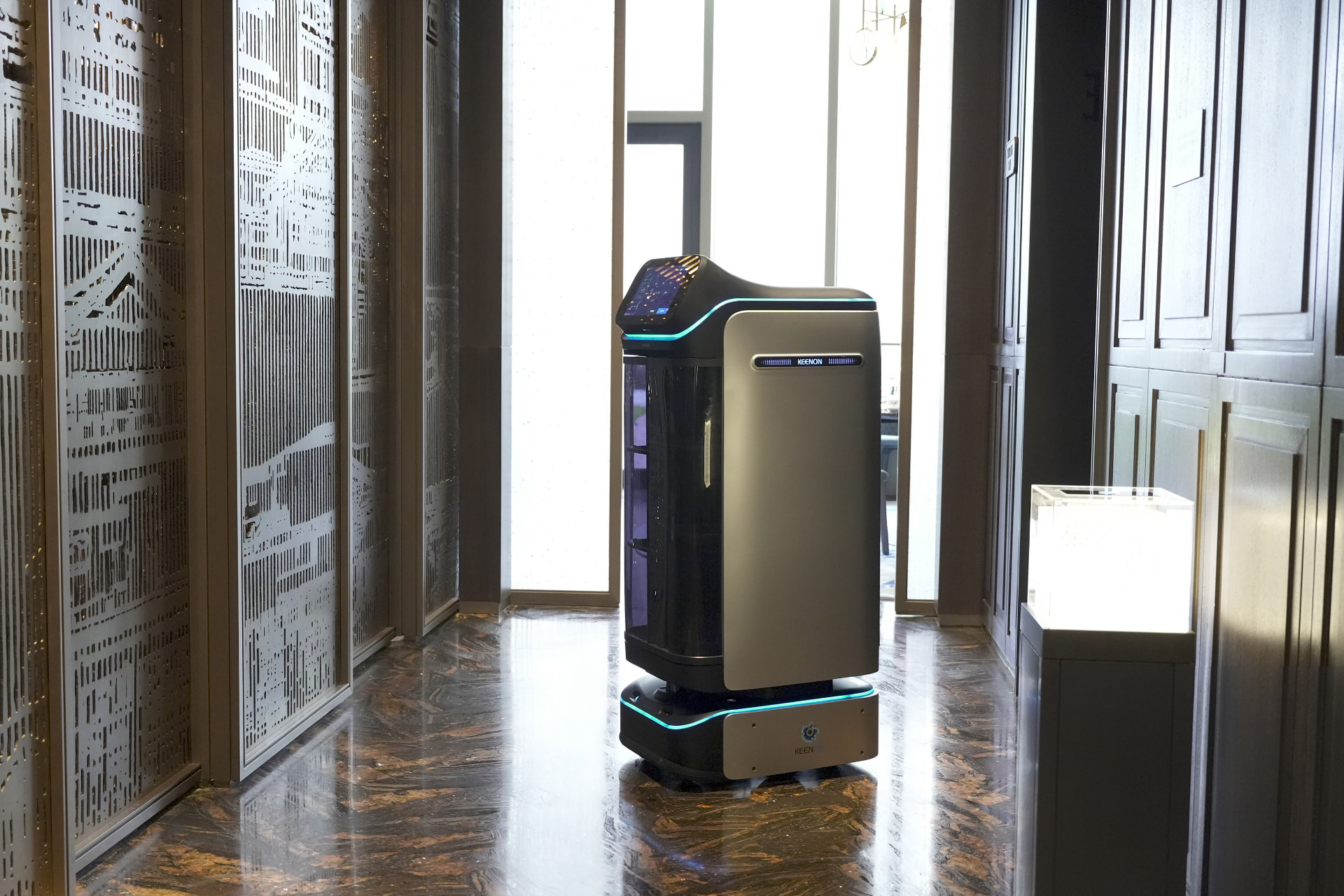
For hotel room-door deliveries, the Keenon BUTLERBOT W3 is designed for hospitality delivery and can be assessed for multi-floor use where the building's lift system supports integration. Its enclosed compartments are intended for carrying items along guest-facing routes. Find out more about the Keenon BUTLERBOT W3.
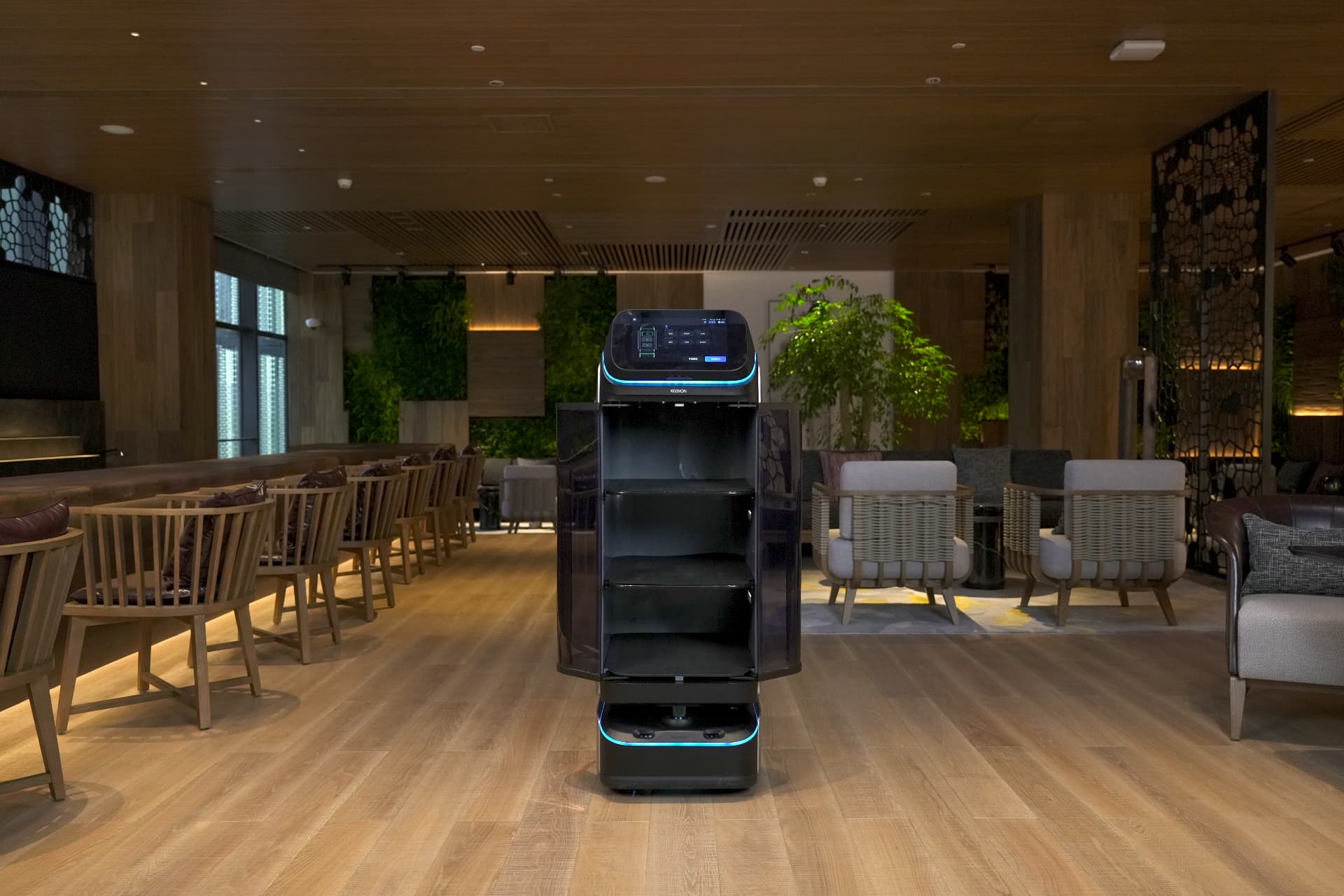
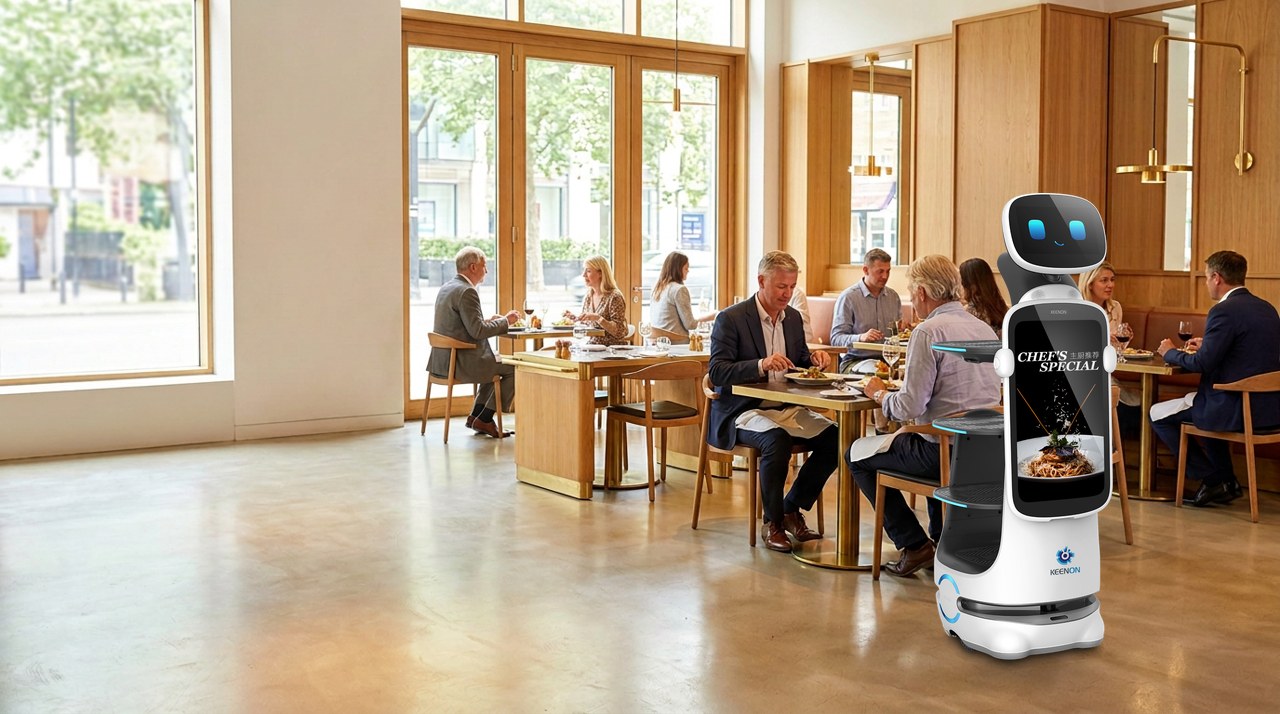
The Keenon DINERBOT range has a different role. The DINERBOT T3 has enclosed, lockable compartments and may suit secure deliveries in the right layout. The DINERBOT T8 is an open-tray service robot for food running in hotel restaurants; it is not the same thing as an enclosed robot delivering an order to a guest-room door. Compare the DINERBOT T3 with the DINERBOT T8.
Choosing between these hospitality automation robots depends on the delivery, route, access requirements and handover, not simply the hotel setting.
What does a realistic deployment involve?
A responsible deployment checks the whole service journey, not just whether a robot can move across a lobby. Fresh Mango Robotics' process includes a site survey, installation, mapping, staff training and ongoing support. For a hotel, planning should cover:
- The route and floors: Check corridors, turning space, doorways, floor surfaces, thresholds and the location of loading and charging points. Map each floor the robot is intended to serve.
- Lift integration: Confirm that the specific lift system can work with the proposed robot and integration. Agree what happens if the lift is busy, unavailable or in a different operating mode.
- The guest handover: Decide who loads the order, how the guest is notified, how the order is collected and what happens if nobody responds. Test the process with staff before relying on it during service.
- Staff training and fallback: Train the people who will load, dispatch and monitor the robot. Give them a clear way to handle interruptions, faults and deliveries that need a person.
- Support arrangements: Understand how to get help, what maintenance is included and how service issues are handled. Fresh Mango Robotics provides ongoing support through its UK-based desk.
A survey and demonstration on your own routes can reveal practical obstacles that a brochure or model of the building cannot. Fresh Mango Robotics can assess the proposed use before recommending a setup.
How can a hotel deploy a robot without buying it outright?
There are three common commercial options:
| Option | How it works | May suit |
|---|---|---|
| Outright purchase | The hotel buys and owns the robot. Support and maintenance can be arranged separately. | Operators with capital budget who want to own the equipment. |
| Hybrid ownership | The hotel owns the robot, with support and maintenance covered through an agreed ongoing arrangement. | Operators who want ownership but prefer help managing service and upkeep. |
| Robotics-as-a-Service (RaaS) | The robot is provided through a subscription over an agreed term. The package includes installation, training, maintenance and support, as set out in the proposal. | Operators who want to avoid upfront capital outlay and have predictable monthly costs. |
RaaS can make it possible to start using a robot without an upfront capital purchase. Check the written proposal for exactly what is included, the service terms and what happens at the end of the agreement. Read more about RaaS and deployment options, or see how RaaS differs from buying.
Frequently asked questions
Do hotels need a room service robot?
No. A robot is worth considering when repeated deliveries take a meaningful amount of staff time and the route, building access and handover process are suitable. For a small property with few requests or short routes, staff delivery may be simpler.
Can a hotel delivery robot use lifts?
Some deployments can use lifts, but compatibility must be confirmed for the robot and the hotel's lift system. A lift's physical size alone does not establish that it can be called and operated by the robot.
Is the DINERBOT T8 a room-service robot?
The DINERBOT T8 is an open-tray robot for food running in a dining area. For enclosed guest-room delivery, assess a model designed for that task, such as the BUTLERBOT W3 or, where appropriate, the DINERBOT T3.
Will a room service robot replace hotel staff?
No. Staff prepare and load orders, oversee the service and deal with guest needs and exceptions. The robot supports the team by carrying suitable deliveries; hospitality stays in human hands.
What does RaaS include?
Robotics-as-a-Service is a subscription arrangement rather than an outright purchase. Fresh Mango Robotics' RaaS offer can include the robot, installation, training, maintenance and support. The exact inclusions and service terms are set out in a written proposal.

The truth: decide on the job, not the novelty
A hotel room service robot is not right for every property. It is most useful to investigate when your team regularly makes repetitive deliveries, the route is suitable, and the handover can be managed clearly. Lift compatibility, corridor conditions, guest communication and staff fallback arrangements all matter.
Start by measuring the work and testing the route. If those checks show a genuine fit, Fresh Mango Robotics can support the site survey, installation, mapping, staff training and ongoing UK-based support. Explore the wider restaurant and hospitality robot range to compare options.
Last reviewed:
Talk to a robot supplier you can actually visit
We are based in Ripon, North Yorkshire, with engineers across the North of England. On-site demos as standard.
Related articles

5 Ways Hotels Are Using Service Robots
Five practical, money-saving ways UK hotel groups are deploying service robots in 2026 — from room service to overnight cleaning.
What Happens in a Robot Site Survey? A Fresh Mango Engineer Walks You Through It
A Fresh Mango Robotics engineer explains how a real site is assessed for routes, floors, lifts, utilities, safety, installation and staff training.
RaaS, Not Capex: How UK Businesses Get a Commercial Robot Without Buying One
Robotics-as-a-Service turns a capital purchase into a predictable monthly operating cost, with site survey, installation, mapping, training, maintenance, software updates and UK-based support included.
Keep reading