
What Happens in a Robot Site Survey? A Fresh Mango Engineer Walks You Through It
A Fresh Mango Robotics engineer explains how a real site is assessed for routes, floors, lifts, utilities, safety, installation and staff training.
Quick answer
A robot site survey is a structured assessment of a building, its working environment and the task a commercial robot is expected to perform. An engineer checks the operational problem, floors, routes, access, footfall, utilities, connectivity, obstacles, safety and accessibility before recommending a suitable model, a revised workflow or, where appropriate, no robot at all.
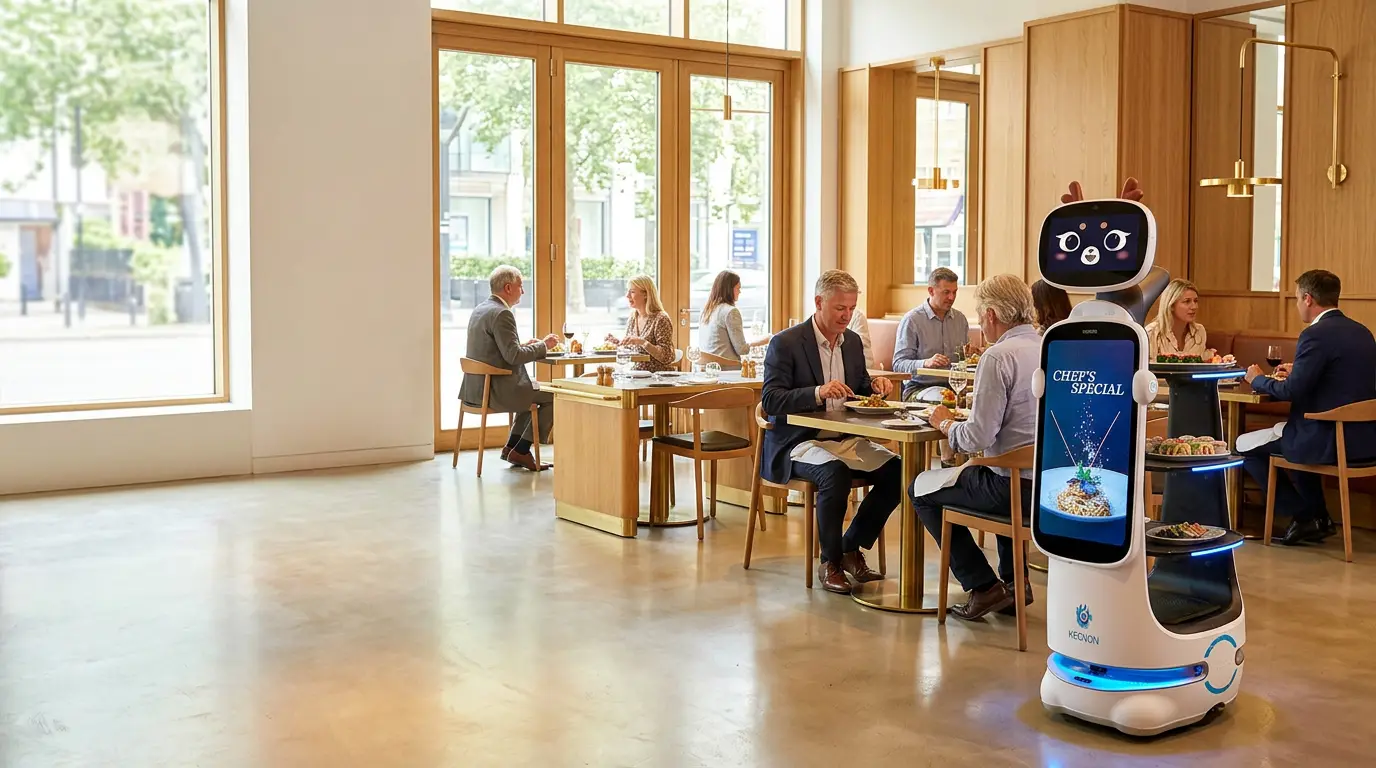
When a business asks about commercial service robots in the UK, the first question is rarely about the robot itself.
It is usually: Will this work in our building, with our people, our floors and our daily routines?
That is what a robot site survey is designed to answer.
I am a Fresh Mango Robotics engineer, and my role during a survey is not to push a particular model. It is to understand the operation, identify the practical obstacles and establish whether automation will deliver useful value.
Sometimes the survey confirms that a Keenon C30, C40, W3, DINERBOT or S100 is a strong fit. Sometimes a different model is more suitable. Occasionally, we conclude that a robot is not the right answer for that site.
That is not a failure. An honest suitability assessment is one of the most valuable outcomes of a survey.
What is a robot site survey?
A robot site survey is a structured assessment of a building, its working environment and the task a robot is expected to perform.
It helps us answer five questions:
- What operational problem are you trying to solve?
- Can a robot physically travel the required routes?
- Can it work safely around people, equipment and changing conditions?
- Which model and deployment method are most suitable?
- What needs to happen before the robot can go into service?
The survey applies to different types of commercial service robots, including:
- Autonomous floor scrubbers, such as the Keenon KLEENBOT C30 and C40.
- Restaurant delivery robots, such as the DINERBOT T9, T10 and T11.
- Hotel and care delivery robots, such as the BUTLERBOT W3.
- Warehouse logistics robots, such as the Keenon S100.
The checks vary slightly by application, but the principle remains the same: we assess the robot against the real building, not an idealised floor plan.
Step 1: Understanding the operational problem
I start by asking what the team wants to change.
A restaurant may be losing time because staff are walking repeatedly between the kitchen and dining room. A hotel may need to reduce the number of room-service and amenity trips made by reception staff. A warehouse may have operators spending too much of their shift moving cartons between work areas.
For cleaning deployments, the issue may be inconsistent floor coverage, difficulty recruiting night cleaners or too much manual scrubbing on a large site.
We discuss:
- Which tasks are repetitive or physically tiring.
- How often the task happens each day.
- How long each journey or cleaning routine takes.
- Which staff currently carry out the work.
- Where staffing gaps or peak-time pressure occur.
- What a successful deployment would look like.
This conversation is important because the best robot is not necessarily the one with the longest list of features. It is the one that fits the job you need to improve.
Step 2: Checking floors and surfaces
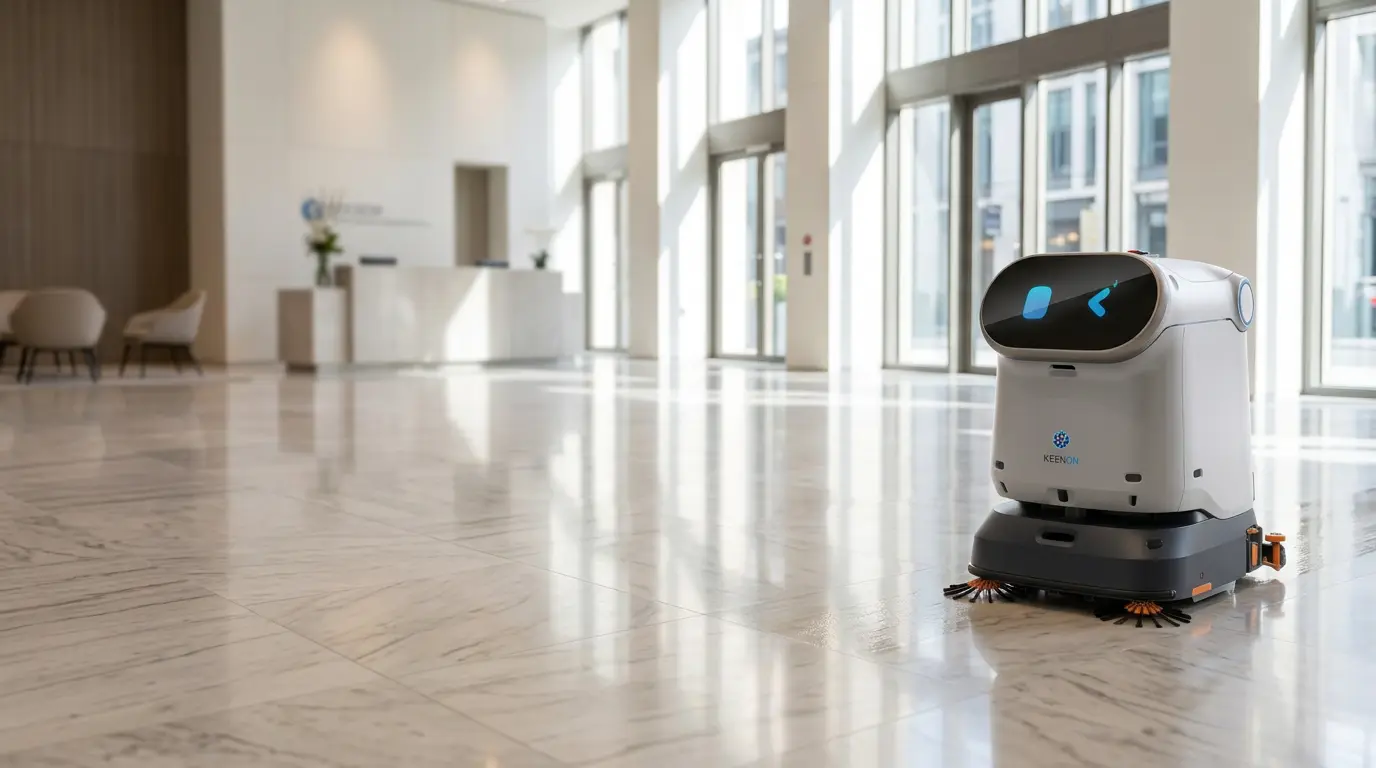
The building’s surfaces affect which robots are suitable and how they can operate.
For a cleaning robot, I look at:
- Hard floor materials.
- Carpeted areas.
- Floor condition and uneven sections.
- Grout lines, drainage channels and mats.
- Wet areas and areas requiring different cleaning methods.
- Whether the floor can support the required cleaning process.
The Keenon C30 and C40 are designed for commercial floor-cleaning work, but the right choice depends on the size and nature of the area. A smaller site may benefit from the C30, while a larger building may be better suited to the C40.
For delivery and logistics robots, the important questions are slightly different. We check whether the surface is smooth enough for reliable movement and whether thresholds, joints or damaged flooring could affect routes.
Step 3: Measuring routes, doorways and turning areas
Robots need enough space to travel, turn and stop safely.
I measure or assess:
- Corridor and aisle widths.
- Doorway clearances.
- Tight corners.
- Turning areas at the end of routes.
- Space around tables, shelving and service counters.
- Access to kitchens, wards, stockrooms or loading points.
- Whether routes change during busy periods.
A route that looks straightforward on a plan may be more complicated in practice. A restaurant might have enough room during the morning but become difficult to navigate when chairs, highchairs and temporary tables are in position.
A warehouse may have clear aisles most of the time, but regular pallet staging or picking activity could change the available route.
This is where we determine whether the proposed robot can use the route consistently or whether the workflow needs to be adjusted.
Step 4: Looking at ramps, thresholds, lifts and floor transitions
Changes in level are a key part of a robot site survey.
We check:
- Ramps and their gradients.
- Door thresholds.
- Changes between floor materials.
- Small steps or raised edges.
- Automatic and manual doors.
- Lift access.
- Lift controls and call systems.
- Whether the robot needs to operate across multiple floors.
The Keenon BUTLERBOT W3, for example, may need to travel between hotel floors or deliver items in a care environment. That means lift access and reliable stopping points must be considered before installation.
If a route includes stairs, unsuitable thresholds or inaccessible areas, we may recommend a different route, a different model or a human handover point.
Step 5: Observing footfall and peak periods
Robots operate alongside people, so I need to see how the building behaves when it is busy.
Where possible, the survey considers:
- Staff movement.
- Customer, resident or patient footfall.
- Delivery and collection times.
- Restaurant service peaks.
- Cleaning windows.
- Forklift and pallet-truck traffic.
- Queues and temporary obstructions.
- Events, meetings or seasonal changes.
A robot may be suitable for a quiet overnight cleaning schedule but not for a busy daytime period. Equally, a DINERBOT may be most useful during a restaurant’s busiest service, when long food-running journeys create the greatest pressure.
The aim is not simply to find an empty route. It is to understand whether the robot can work reliably during the period when it is most valuable.
Step 6: Checking charging, docking and utilities
A robot needs a practical home when it is not travelling.
We identify suitable locations for:
- Charging docks.
- Cleaning docks.
- Water filling and waste-water drainage, where relevant.
- Loading and unloading points.
- Safe overnight parking.
- Staff access for routine checks.
For an autonomous floor scrubber, water supply and drainage may be important. A cleaning robot should not have to cross a customer area every time it needs to refill or discharge waste water.
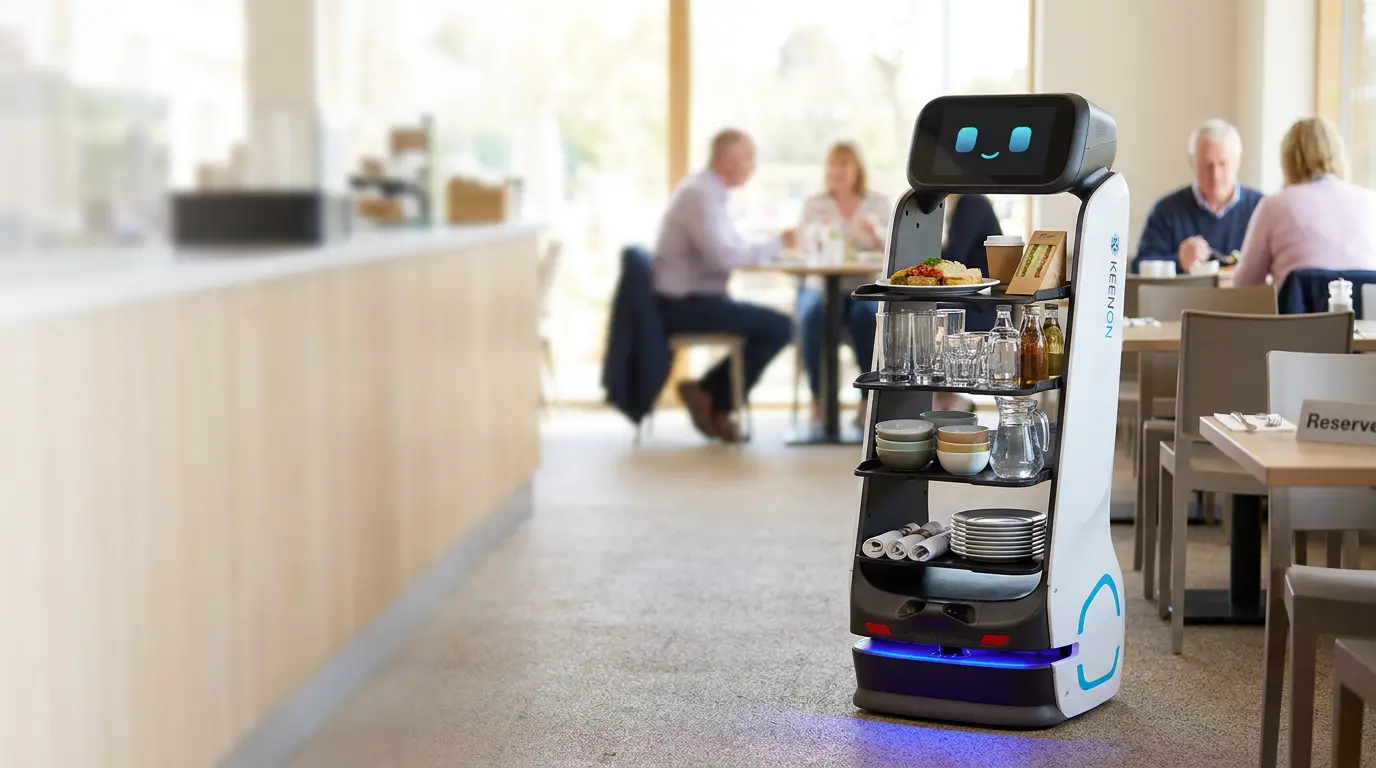
For a restaurant delivery robot, the charging point may need to be close to the kitchen without obstructing the pass or creating a trip hazard.
The best docking point is usually convenient for the operation but outside the main flow of people.
Step 7: Checking Wi-Fi and connectivity
Not every robot route depends on the same type of connectivity, but we still assess the site’s network environment.
We look at:
- Wi-Fi coverage along operating routes.
- Areas with weak or interrupted signal.
- Network access near lifts and loading points.
- Whether the customer’s IT team needs to approve a connection.
- How remote support and software updates will be handled.
Because Fresh Mango Robotics is part of a UK IT support and cyber security business, connectivity and network considerations are treated as part of the deployment rather than left until the robot arrives.
Step 8: Identifying obstacles and restricted areas
Commercial buildings change throughout the day.
We look for permanent and temporary obstacles, including:
- Display stands.
- Promotional signs.
- Delivery cages.
- Pallets and stock.
- Waste bins.
- Portable barriers.
- Furniture that is regularly moved.
- Cleaning equipment.
- Fire doors and restricted areas.
We also identify emergency routes, fire exits and areas the robot must never enter. These zones are built into the operating plan and, where appropriate, the robot’s map.
The goal is to make the robot fit the operation, while also agreeing simple housekeeping rules. For example, staff may need to keep a particular docking area clear or move deliveries away from a defined route.
What happens after the survey?
After the visit, the customer receives a practical deployment recommendation. This normally includes:
- A summary of the operational problem.
- Proposed robot routes and working areas.
- Route maps or floor-plan notes.
- Recommended model and reasoning.
- Any limitations or changes needed.
- Requirements for charging, water, drainage or connectivity.
- Safety and restricted-area considerations.
- Estimated installation timescales.
- Commercial deployment options.
The recommendation may be for a C30, C40, W3, DINERBOT T9, T10, T11 or S100. It may also conclude that a different model is better suited to the building.
If the site is not suitable, we will explain why. It is better to identify that before a purchase than after a robot has been delivered.
What happens during installation and mapping?
Once the deployment is approved, installation normally includes:
- Positioning the charging or docking equipment.
- Confirming the agreed operating routes.
- Mapping the building.
- Setting destinations, cleaning zones and restricted areas.
- Testing doors, lifts and route transitions where required.
- Running safety and obstacle checks.
- Completing trial journeys or cleaning runs.
- Training the staff who will use and supervise the robot.
The robot is not simply switched on and left to find its own way. We configure it around the customer’s agreed workflow and test the important routes before handover.
What do the first weeks look like?
The first few weeks are about building confidence and refining the routine.
Staff learn:
- How to start and stop the robot.
- How to load or unload it safely.
- How to respond when a route is blocked.
- How to clean sensors and carry out basic checks.
- When to contact support.
- How the robot fits into the existing staffing pattern.
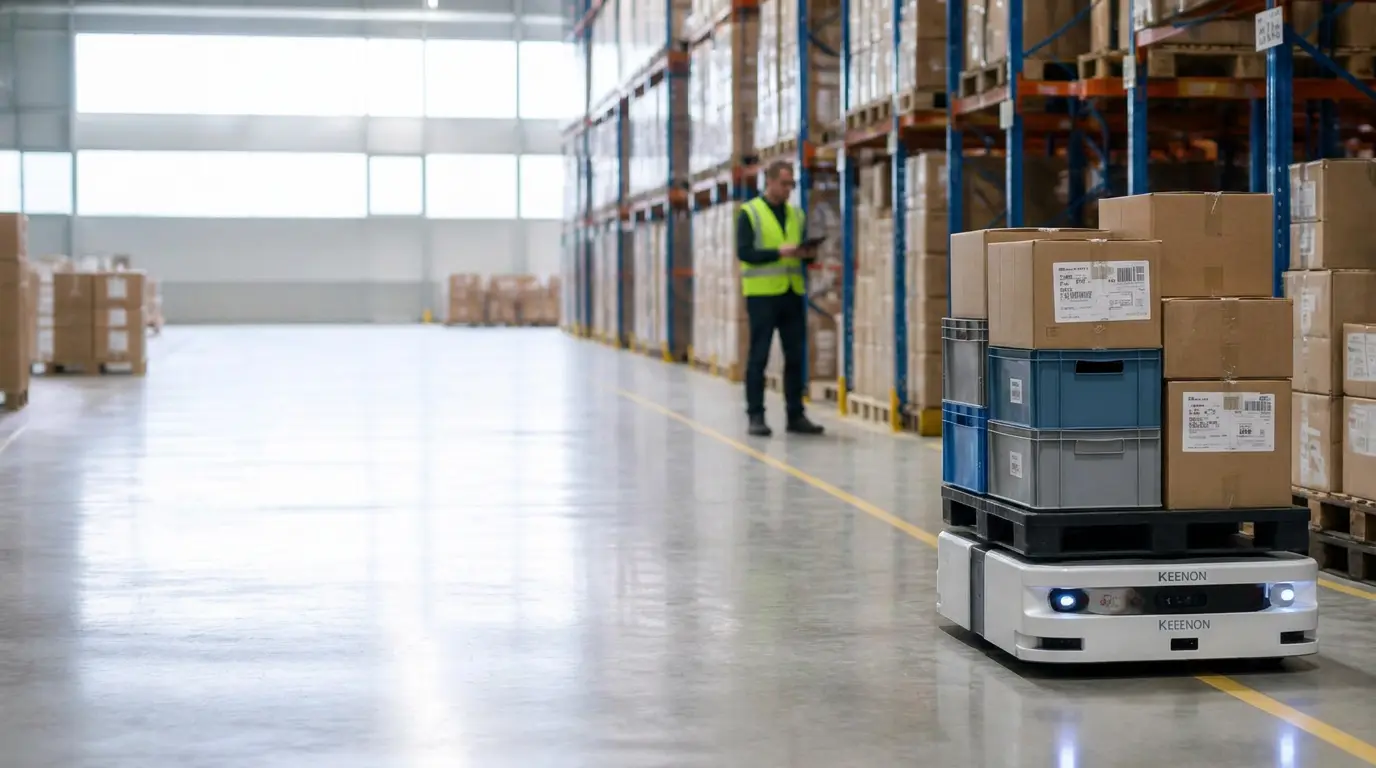
We also look at whether the original route remains effective once the robot is in daily use. A restaurant may decide to add a second food-running destination. A warehouse may identify another regular transport loop. A cleaning team may adjust schedules around opening hours.
This is why ongoing support matters. Deployment is not complete simply because the robot has arrived.
Commercial deployment options
Fresh Mango Robotics offers three main ways to deploy commercial service robots in the UK:
- Outright purchase: buy the robot as a business asset and arrange support through a service agreement.
- Hybrid ownership: purchase the hardware while Fresh Mango manages maintenance, software updates and ongoing support.
- Robotics-as-a-Service (RaaS): access the robot through a predictable monthly cost without a large capital outlay.
A RaaS arrangement can include the site survey, installation, mapping, staff training, maintenance, software updates and UK-based support. It can be a practical way to start with one robot, prove the workflow and expand later if the results justify it.
A site survey is where the real answer starts
A robot site survey is not a formality before delivery. It is the point where an idea is tested against the real operation.
We check the floors, routes, doors, lifts, utilities, connectivity, footfall, safety arrangements and staffing patterns. We identify what needs to change and what should remain with the human team.
The outcome may be a clear recommendation for a Keenon C30, C40, W3, DINERBOT or S100. It may be a different model, a revised workflow or a decision not to proceed.
That practical honesty is what helps commercial robotics work in the real world.
Last reviewed:
Frequently asked questions
How long does a robot site survey take?
The time depends on the building and the complexity of the proposed routes. A small restaurant may be assessed relatively quickly, while a hotel, hospital, warehouse or multi-floor site requires more detailed checks.
Do I need to provide floor plans?
Floor plans are useful, but they are not essential. We still need to inspect the real environment because furniture, doors, storage, footfall and temporary obstacles are not always shown on drawings.
What if my building has lifts?
We check lift access, lift controls, waiting areas and the handover process. Models such as the BUTLERBOT W3 may be suitable for multi-floor delivery, subject to the building’s access arrangements.
Can a robot work around customers and staff?
Potentially, yes. The route, speed, operating times and surrounding environment all matter. The survey helps establish whether the robot can work safely during busy periods or whether it should operate at quieter times.
What if the survey shows that a robot is not suitable?
We will explain the reason and may recommend a different model, a revised route or a non-robotic alternative. Honest advice prevents unsuitable deployments and protects the customer’s investment.
Can I use Robotics-as-a-Service after the survey?
Yes. The survey can inform an outright purchase, hybrid ownership arrangement or RaaS deployment. The commercial option is discussed alongside the technical recommendation.
Talk to a robot supplier you can actually visit
We are based in Ripon, North Yorkshire, with engineers across the North of England. On-site demos as standard.
Related articles
Coffee Robots in UK Venues: What They Actually Do and Where They Fit
Read articleHospitalityPeak Times, Fewer Hands: How Restaurants Keep Service Flowing When Staffing Dips
Read articleCleaningWhat UK Retail Can Learn from Tesco's 600-Store Autonomous Floor-Cleaning Rollout
Read articleKeep reading