
What UK Retail Can Learn from Tesco's 600-Store Autonomous Floor-Cleaning Rollout
Tesco's 600-store autonomous cleaning programme shows how robotic floor cleaning is moving into everyday retail operations. Here are the practical lessons for UK retailers.
Quick answer
Autonomous floor cleaning uses a self-navigating robot to complete routine floor coverage on a mapped route, while cleaning staff handle spills, edges, fixtures and detail work. Tesco's 600-store Express rollout shows the value comes from treating the robot as part of the cleaning process, supported by scheduling, training, maintenance and reporting.
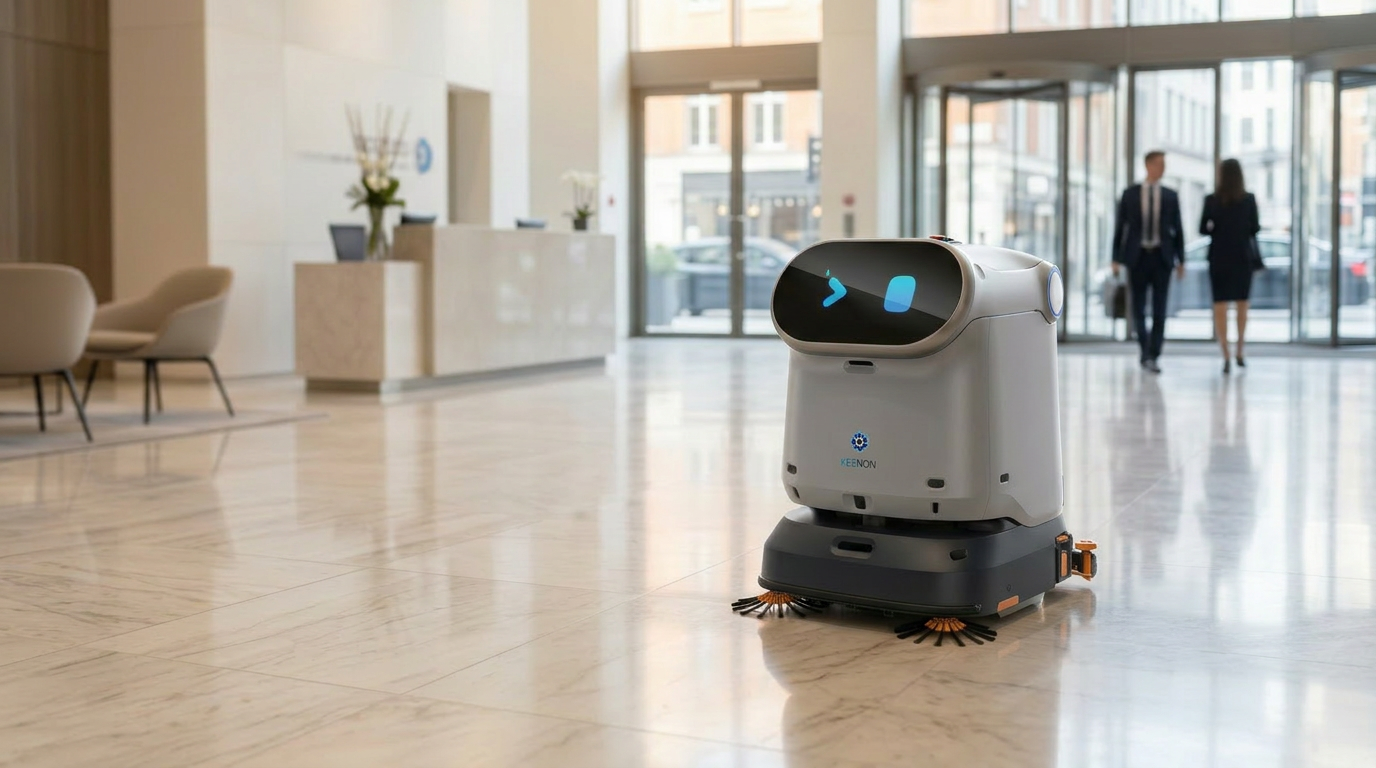
Tesco's rollout of autonomous cleaning robots across 600 Express stores is a clear sign that robotic floor cleaning is moving from isolated trials into everyday retail operations.
The programme was reported in June 2026 and reached its 600-store milestone by the end of July. The robots were intended to work alongside store colleagues rather than replace them. Their role is to handle routine floor cleaning, provide cleaning data and help teams maintain consistent standards across multiple locations.
What happened in Tesco's 600-store rollout?
According to Retail Gazette, Tesco introduced autonomous cleaning robots across 600 Express stores.
A later report confirmed that the initial phase had been completed and described the deployment as one of the largest of its kind in the UK convenience sector. The programme involved:
- Routine autonomous floor cleaning across 600 stores.
- Robots working alongside Tesco colleagues.
- Cleaning data and performance reporting.
- Training, maintenance and ongoing support.
- Feedback from store employees using the technology.
The important point is not simply the number of robots involved. It is the operational model behind the rollout: the robot is treated as part of the cleaning process, not as a standalone technology experiment.
For retailers considering automation, that is the first practical lesson.
Lesson one: Start with a repeatable operational problem
Autonomous floor cleaning is most useful when it addresses a task that is:
- Repetitive.
- Carried out frequently.
- Time-consuming for staff.
- Important to customer experience.
- Suitable for a predictable route.
Retail floor cleaning fits these criteria particularly well. The same aisles, concourses, entrance areas and open floor spaces need to be cleaned repeatedly, often within a limited overnight or early-morning window.
Manual cleaning remains essential for spills, edges, corners, fixtures, toilets and detailed work. However, routine floor coverage can take up a large part of a cleaning shift. A robot can handle that repeatable work while staff concentrate on tasks that require judgement and attention.
This is the practical meaning of a “co-bot”: technology that supports the team rather than replacing it.
Lesson two: Choose the robot according to the floor
Not every retail floor needs the same type of cleaning robot. The right choice depends on the surface, the cleaning method required and the size of the area.
Keenon KLEENBOT C30: dry cleaning for mixed retail environments
The Keenon KLEENBOT C30 is a three-in-one dry floor cleaner. It sweeps, vacuums and dust-mops in a single pass.
It is suited to:
- Hard floors such as tile, vinyl, stone and wood.
- Short-pile carpet, subject to the manufacturer's limits.
- Retail stores with mixed flooring.
- Department store areas where dry cleaning is preferred.
- Smaller or medium-sized commercial floor areas.
- Overnight cleaning where water use is unsuitable.
The C30 is not a replacement for a heavy-duty wet scrubber. It is a dry-cleaning model designed to remove dust, debris, crumbs and everyday floor contamination consistently.

Keenon KLEENBOT C40: wet and dry cleaning for larger hard floors
The Keenon KLEENBOT C40 is designed for larger commercial spaces and combines sweeping, scrubbing, vacuuming and drying.
It is more suitable for:
- Supermarket and large-store floors.
- Shopping centre concourses.
- Retail parks and food courts.
- Large hospitality and leisure venues.
- Hard floors that need regular scrubbing.
- Sites with a defined overnight cleaning window.
The C40 can clean at up to 1,100 square metres per hour, according to Fresh Mango Robotics' product information. It can scrub for up to approximately five hours or sweep for longer, depending on the selected cleaning mode and operating conditions.
The figures are useful for initial planning, but actual coverage depends on the floor layout, obstacles, cleaning settings, traffic and the amount of detail work required.
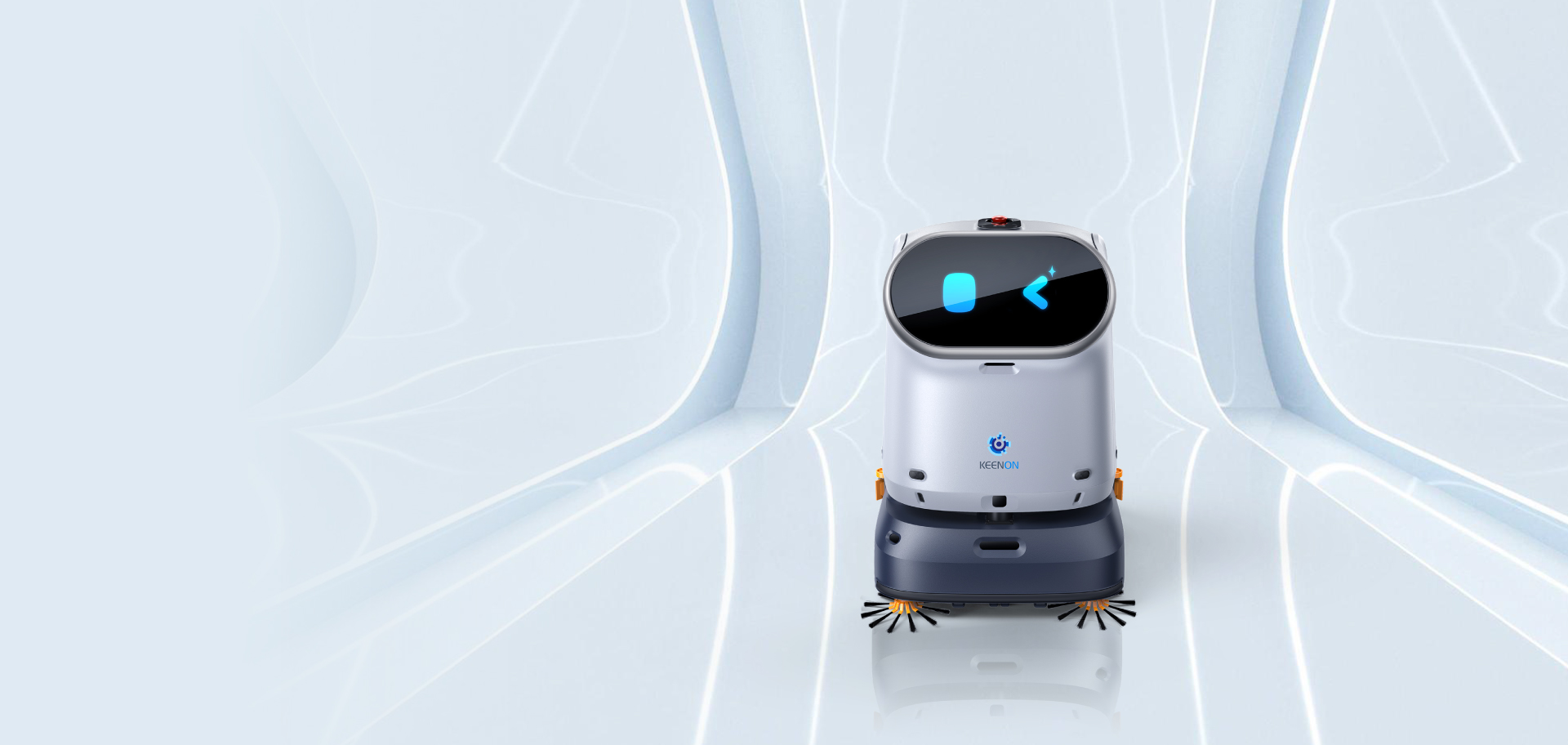
| KLEENBOT C30 | KLEENBOT C40 | |
|---|---|---|
| Cleaning method | Dry: sweep, vacuum, dust-mop | Wet and dry: sweep, scrub, vacuum, dry |
| Best suited to | Small to medium mixed-floor retail areas | Large hard-floor areas and concourses |
| Carpet | Short-pile carpet within manufacturer limits | Hard floors |
| Water use | None | Clean and recovery tanks required |
| Typical use | Overnight dry cleaning where water is unsuitable | Regular scrubbing within a defined cleaning window |
| Planning note | Not a wet-scrubber replacement | Up to 1,100 m² per hour; coverage varies by site |
Lesson three: Customer traffic must shape the schedule
A retail robot should not simply be switched on and left to operate without a plan. Scheduling is one of the most important parts of a successful deployment.
Most retailers will schedule cleaning:
- After closing.
- Before opening.
- During quieter trading periods.
- In sections of the store that can be temporarily managed.
- Around deliveries, replenishment and maintenance activity.
Some robots can operate safely around people using sensors, LiDAR navigation and obstacle detection. Even so, customer traffic can slow the route and make cleaning less efficient. A busy store may also require the robot to pause more frequently.
A site survey should therefore consider:
- Opening and closing times.
- Busy and quiet periods.
- Delivery schedules.
- Stock replenishment routes.
- Checkout and queue areas.
- Promotional displays.
- Temporary obstacles.
- Emergency exits and restricted areas.
- Charging and storage locations.
The objective is not necessarily to clean while customers are present. Often, the most effective approach is to use the robot during a defined out-of-hours window and keep staff available for spot cleaning and exceptions.
Lesson four: Safety depends on deployment, not just sensors
Autonomous navigation is an important part of a cleaning robot, but safety also depends on how the site is prepared and how staff are trained.
Before installation, the retailer and supplier should agree:
- Where the robot can operate.
- Which areas are excluded.
- How spills and obstructions are handled.
- What happens if the route is blocked.
- How staff stop or redirect the robot.
- Where the robot docks and charges.
- How cleaning chemicals and consumables are stored.
- How the system is monitored during its operating window.
Retail staff should understand that the robot is a working piece of commercial equipment. They need simple instructions for starting a route, pausing the machine, clearing minor obstacles and reporting issues.
Good training also helps the team see the robot as part of their workflow rather than an unfamiliar machine competing for space on the shop floor.
Lesson five: Consistency matters as much as labour efficiency
The strongest reason to consider autonomous floor cleaning is not always a headline cost saving. For many retailers, the more valuable benefit is consistency.
A robot can be programmed to follow the same route and cleaning schedule repeatedly. This can help reduce variation between shifts and locations.
Useful operational outcomes include:
- Clean and dry floors before opening.
- Fewer routine cleaning tasks on the staff rota.
- More consistent coverage across departments.
- Better use of cleaning staff time.
- Recorded routes and cleaning activity.
- A clearer standard for multi-site operations.
For a retailer with multiple stores, consistency can be particularly valuable. A defined cleaning routine is easier to review, improve and replicate than an informal process that depends entirely on who is working that night.
Maintenance and support should be part of the plan
A cleaning robot is not maintenance-free. Brushes, filters, squeegees, batteries, tanks and other components need regular attention.
The supplier should explain:
- What staff need to clean after each shift.
- How often consumables are replaced.
- How faults are diagnosed.
- What response times apply.
- Whether spare parts are held in the UK.
- How software updates are delivered.
- Who provides on-site engineering support.
- What happens if a robot is temporarily unavailable.
Fresh Mango Robotics supplies and supports the Keenon C30 and C40 with site surveys, installation, mapping, staff training, software updates, maintenance and UK-based support.
That ongoing service is important because the value of a cleaning robot comes from regular operation. A machine that is difficult to maintain or left unused after a minor issue will not deliver the expected operational benefit.
Robotics as a Service can make adoption easier
Retailers do not necessarily need to purchase a cleaning robot outright.
Fresh Mango Robotics offers the Keenon C30 and C40 through:
- Outright purchase.
- Robotics as a Service (RaaS).
- Hybrid ownership and support arrangements.
With RaaS, the retailer avoids a large initial capital outlay and pays a predictable monthly operating cost. Maintenance and servicing are included, along with software updates and UK-based support.
This can make it easier to test autonomous cleaning at one store before considering a wider rollout. It also allows cleaning automation to be budgeted alongside other operational services rather than treated solely as a major equipment purchase.
RaaS is not automatically the cheapest option over the full life of a robot. Its value is in reducing upfront risk, simplifying support and making costs more predictable.
A practical checklist for retailers
Before choosing an autonomous cleaning robot, ask:
- What floor types need cleaning?
- Is dry cleaning or wet scrubbing required?
- How many square metres need to be covered?
- What is the available cleaning window?
- How busy is the site during that period?
- Are aisles and access routes wide enough?
- Where can the robot charge and, if required, refill?
- Who will manage daily checks?
- How will spills, displays and temporary obstacles be handled?
- What maintenance and support package is included?
A supplier should be able to answer these questions through a site survey and live demonstration, rather than relying only on a product brochure.
Conclusion
Tesco's 600-store rollout shows that autonomous floor cleaning is becoming a practical operational tool for UK retail.
The technology is not about removing people from the cleaning process. It is about assigning repetitive floor coverage to a reliable machine so retail teams can spend more time on customers, replenishment, detail work and the tasks that require human judgement.
For retailers considering the next step, the priorities are straightforward:
- Match the robot to the floor type.
- Plan around customer and delivery traffic.
- Complete a proper site survey.
- Train staff before deployment.
- Build maintenance and support into the commercial model.
- Start with a manageable pilot if required.
- Choose between purchase, hybrid support and RaaS based on your budget and operating model.
Sources
- Tesco sends robot cleaners into 600 Express stores — Retail Gazette (accessed 2026-09-20)
Last reviewed:
Frequently asked questions
What can retailers learn from Tesco's cleaning robot rollout?
The main lesson is that autonomous cleaning works best when it is integrated into normal store operations. Tesco's programme combined robot deployment with staff collaboration, training, cleaning data, maintenance and ongoing support.
Did Fresh Mango Robotics supply Tesco's robots?
No. Fresh Mango Robotics did not supply the Tesco rollout; it is referenced solely as relevant UK retail market context.
Which Keenon robot is better for a retail store?
The C30 is suited to dry cleaning across hard floors and suitable short-pile carpet. The C40 is designed for larger areas where wet scrubbing and drying are required. A site survey is the best way to confirm the correct model.
Can cleaning robots work around customers?
Yes, autonomous cleaning robots are designed to navigate around people and obstacles. However, most retailers schedule the main cleaning programme outside peak trading periods for better efficiency and a less intrusive customer experience.
Do cleaning robots replace retail cleaning staff?
No. They take over repeatable floor-cleaning tasks while staff continue to manage detail cleaning, spills, edges, customer-facing work and exceptions.
Can a retailer use RaaS instead of buying a robot?
Yes. Fresh Mango Robotics offers Robotics as a Service, with predictable monthly costs, maintenance and servicing included, plus software updates and UK-based support.
Talk to a robot supplier you can actually visit
We are based in Ripon, North Yorkshire, with engineers across the North of England. On-site demos as standard.
Related articles
The Best Commercial Cleaning Robots for Hotels
A practical 2026 UK guide to picking the right hotel floor cleaning robot — C30 vs C40 by floor area, overnight cycle time, noise, and the housekeeping hours you get back.
RaaS, Not Capex: How UK Businesses Get a Commercial Robot Without Buying One
Robotics-as-a-Service turns a capital purchase into a predictable monthly operating cost, with site survey, installation, mapping, training, maintenance, software updates and UK-based support included.

Looking For an Autonomous Floor Scrubber? Here Are 10 Things You Should Know
A practical UK buyer's guide to autonomous floor scrubbers — ten honest things to know about ROI, floor types, runtime, water, noise, safety and support before you commit.
Keep reading