Coffee Robots in UK Venues: What They Actually Do and Where They Fit
A practical guide to what commercial coffee robots do, where they fit in UK venues and which parts of service remain with people.
Quick answer
A coffee robot is an automated commercial station that accepts an order, prepares a defined menu of espresso-based drinks to programmed recipes and presents each drink for collection. It can support repeatable self-service, but people remain responsible for replenishment, cleaning, food safety, faults, refunds, complaints, speciality drinks, recommendations and bespoke service.
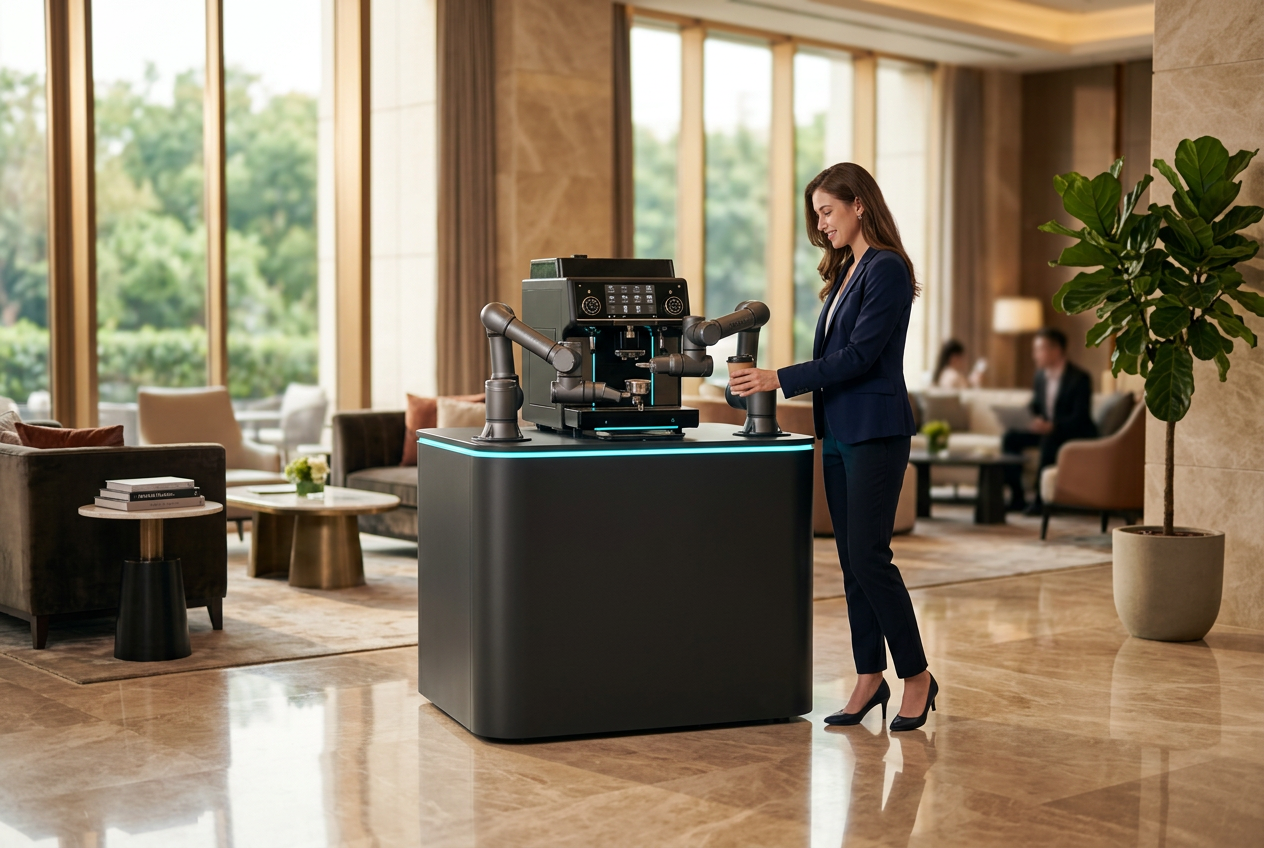
A coffee robot is an automated coffee station that accepts an order, prepares a drink to a programmed recipe and presents it for collection. Depending on the model, it may grind beans, extract espresso, heat or texture milk and finish the drink through a robotic mechanism.
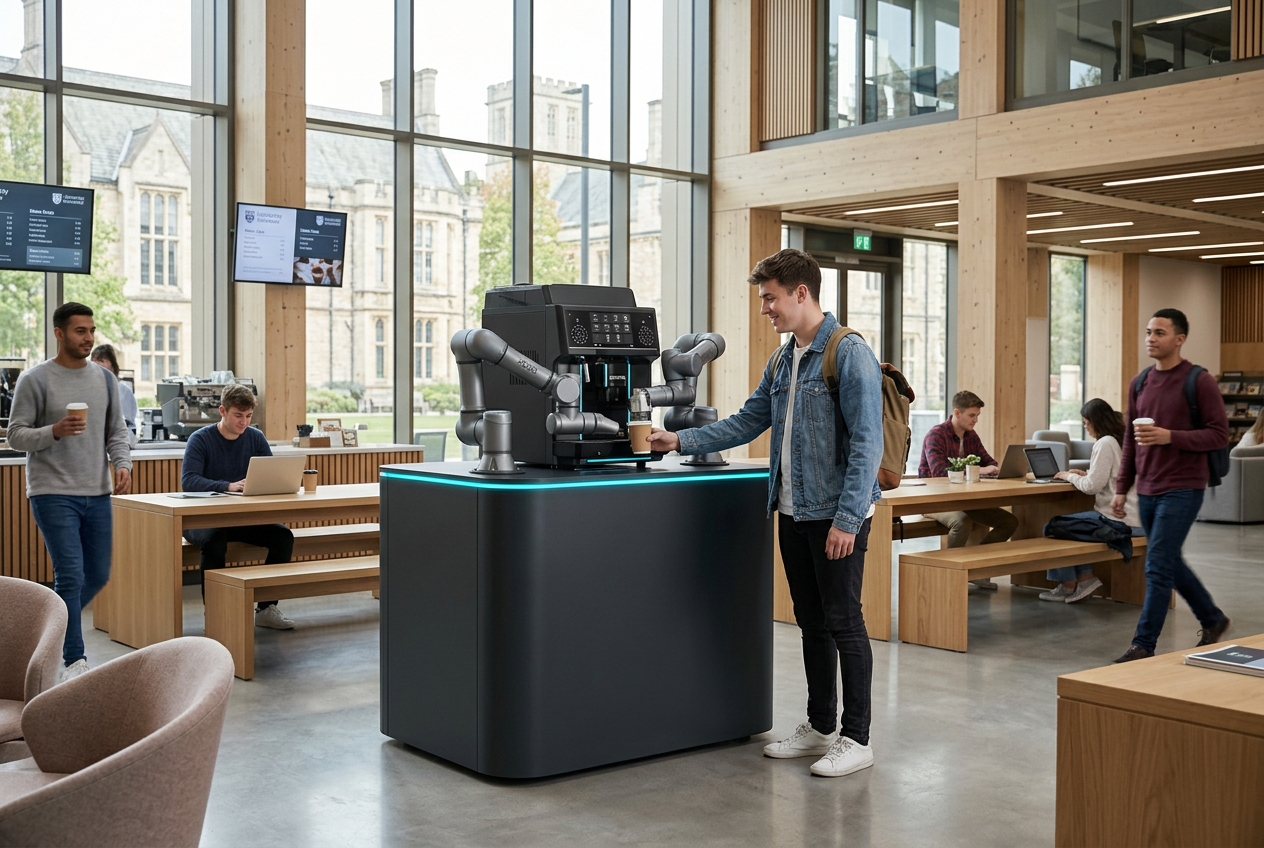
In the UK, these systems are also described as robotic baristas, coffee vending robots or automated coffee machines. The terminology can be confusing because not every machine offers the same level of automation. Some are essentially bean-to-cup vending machines. Others, such as the Keenon XBOT S PRO, combine a self-service touchscreen with commercial coffee equipment and a robotic arm.
The practical question for a venue is not whether a coffee robot looks impressive. It is whether it can provide a useful, reliable coffee service in the space, at the times and for the customers you serve.
What does a commercial coffee robot actually do?
A commercial coffee robot typically handles five parts of the coffee process:
- Accepting the order — customers select a drink using a touchscreen or another self-service ordering interface.
- Preparing the drink — the machine follows a fixed recipe for drinks such as espresso, americano, latte, cappuccino, flat white or mocha.
- Managing ingredients — beans, milk, cups and other consumables are stored within or alongside the unit and require regular replenishment.
- Presenting the drink — the finished drink is made available at a collection point for the customer.
- Reporting operating information — depending on the system, operators may be able to monitor drink volumes, ingredient levels, errors and machine status remotely.
The main benefit is repeatability. If the recipe, ingredients and settings remain the same, the machine can produce a consistent drink without depending on which member of staff is on shift.
Fresh Mango Robotics describes the XBOT S PRO as a self-contained robotic coffee machine designed for locations including hotels, offices, retail centres, universities and transport hubs. Its product information lists approximately 30 cups per hour, remote monitoring and a range of espresso-based drinks.
Coffee robot, robotic barista or vending machine?
These terms should not be treated as interchangeable.
A traditional vending machine usually dispenses a limited range of drinks through an automated internal process. A robotic barista system may offer more visible preparation, fresh grinding, milk-based drinks and a wider menu. The exact quality depends on the equipment, ingredients, recipes and maintenance routine.
A coffee robot does not automatically equal a speciality coffee shop. It is better understood as a reliable, self-service coffee operation with a defined menu.
That makes it suitable for venues where customers value:
- Convenient access to coffee
- Consistent recipes
- Shorter queues
- Extended opening hours
- Self-service ordering
- A compact alternative to a staffed counter
It is less suitable where the main value comes from a barista adjusting every drink individually, discussing origin and flavour profiles or creating highly bespoke beverages.
What can the XBOT S PRO make?
The XBOT S PRO is designed for a set menu of espresso-based and hot coffee drinks. Depending on the configuration, this may include:
- Espresso
- Americano
- Latte
- Cappuccino
- Flat white
- Mocha
- Other programmed hot beverages
The important point is that the machine works to recipes. Drink size, ingredients, milk options and preparation settings can be configured for the venue, but the service remains structured rather than fully bespoke.
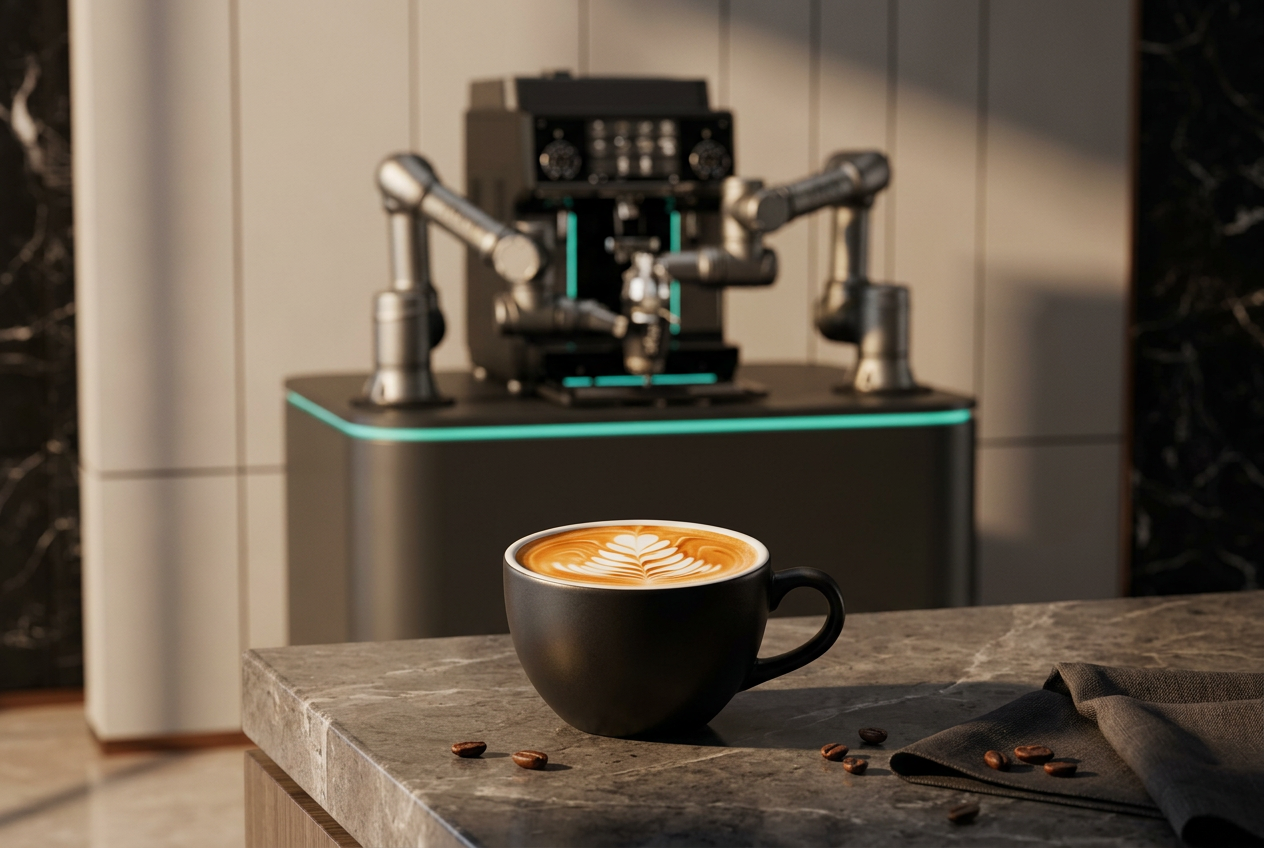
Some automated coffee systems also offer programmed latte-art designs. The XBOT S PRO product page describes AI-powered tulip, heart and swan finishes. These are repeatable programmed outputs rather than the same creative, conversational process as a human barista making an individual design for a customer.
What remains human?
A coffee robot can automate preparation and ordering, but it does not replace every part of a coffee operation.
Human staff may still be needed for:
- Replenishing beans, milk, cups and other consumables
- Cleaning the machine and surrounding area
- Checking food safety procedures
- Managing faults or unusual orders
- Answering customer questions
- Handling refunds and complaints
- Supporting customers who do not want to use self-service
- Preparing speciality drinks outside the programmed menu
- Providing recommendations and conversation
- Creating bespoke latte art or adjusting a drink by eye
This distinction matters in customer-facing venues. A robot may handle the routine drink order, while a member of staff remains available for hospitality and exceptions.
The strongest deployment is often not “robot instead of people”. It is a coffee robot handling repeatable orders while the team focuses on customers, more complicated drinks and the wider operation.
Where coffee robots fit in UK venues
Cafés and coffee shops
An automated coffee station can support an existing café during busy periods, provide a second ordering point or cover a smaller satellite location.
For example, a café could use a robot to handle standard americanos and lattes while baristas concentrate on speciality drinks, food orders and customer interaction.
A coffee robot is less likely to suit a café whose entire proposition is personal service and highly customised coffee preparation. It may also be difficult to justify where the existing counter already has spare capacity.
Hotel lobbies and breakfast service
Hotels often have demand for coffee outside the hours of a fully staffed café. A coffee robot in a lobby, lounge or breakfast area can provide drinks early in the morning, during conferences or later in the evening.
It may also reduce pressure on reception or breakfast staff during peak periods. Staff can assist guests and maintain the wider service while the machine handles routine coffee orders.
Garden centre cafés
Garden centres often experience concentrated weekend and seasonal footfall. A coffee robot can provide an additional service point in a foyer, retail area or outdoor visitor zone, subject to suitable power, protection from the environment and replenishment arrangements.
It may be particularly useful where the venue wants to extend coffee availability without building a full second café counter.
Retail stores and shopping centres
Retail environments can use coffee robots in entrance areas, food courts, waiting zones or underused floor space. The machine can act as both a service point and a visible retail attraction.
The business case depends heavily on footfall, opening hours, customer demand and the availability of a team member to keep the unit clean and stocked.
Offices and business parks
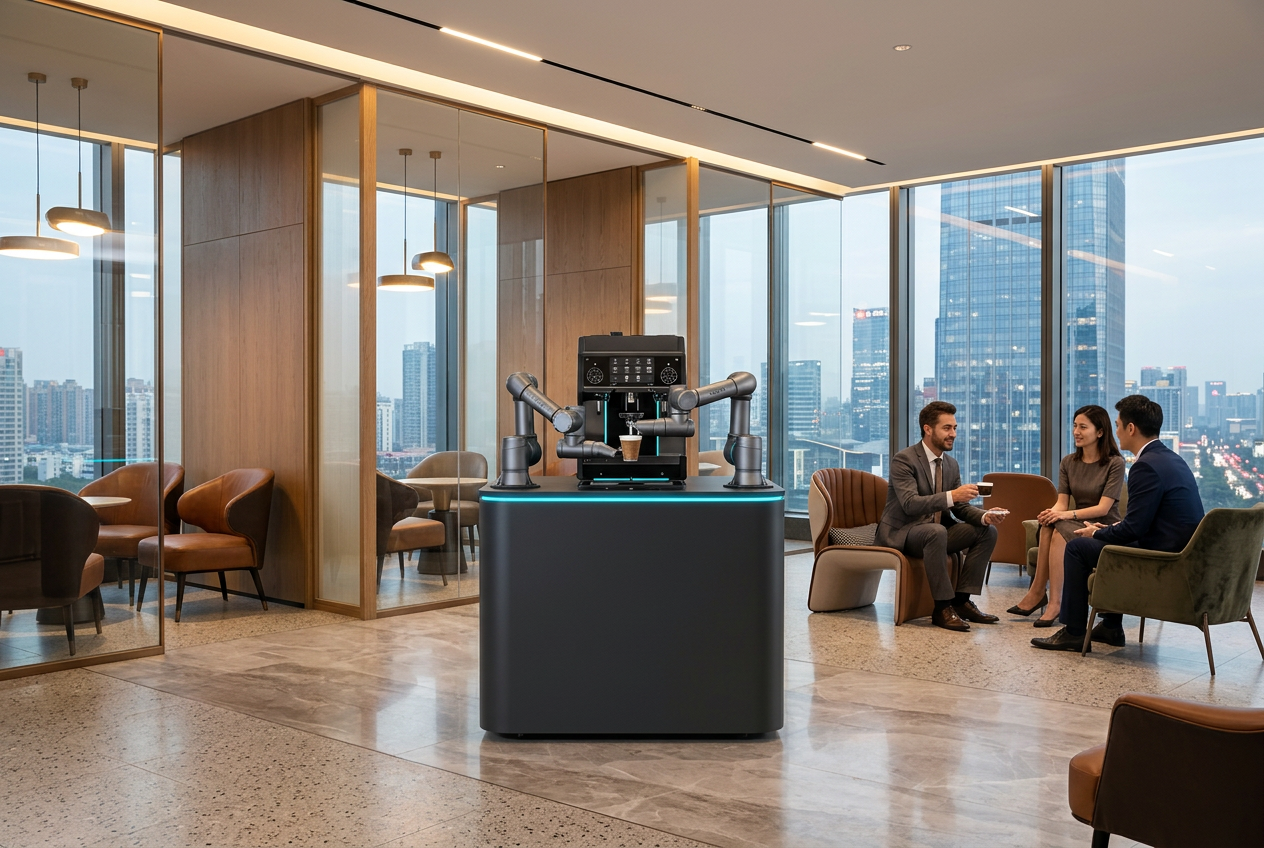
An office coffee robot can provide a paid or subsidised coffee service for employees, visitors and tenants. It may be useful in a reception, shared kitchen, business lounge or communal area.
In a large office, the machine can provide service before reception or catering staff arrive and during periods when a staffed coffee bar would not be economical.
Care homes and hospitals
Healthcare and care environments may use automated coffee provision in staff areas, visitor spaces or public receptions. The machine should not be treated as a replacement for catering teams or a solution for every resident or patient requirement.
Accessibility, hygiene, supervision and the needs of people who require assistance should be considered before deployment.
Conference and event venues
A coffee robot can support conferences, exhibitions and business events where demand rises sharply at breaks. It may reduce queues at a staffed refreshment point or operate as a branded feature in an exhibition area.
Event use requires careful planning around transport, setup, power, staffing, cleaning and the expected number of drinks per hour.
Where the technology does not suit
A coffee robot may not be the right choice when:
- Footfall is too low to support the equipment and consumables
- Customers expect highly personalised barista service
- The venue has no suitable power, water or operating space
- There is no team member available for replenishment and cleaning
- The menu changes constantly
- Customers need extensive advice before ordering
- The location is exposed to weather, vandalism or contamination risks
- A staffed coffee counter already has excess capacity
- The customer experience depends primarily on conversation and personal recommendation
A site survey and commercial assessment should come before choosing a model. The correct answer may be a robot, a staffed counter, a conventional coffee machine or a combination of approaches.
Practical deployment: what a site survey checks
A coffee robot needs more than floor space. During a site survey, Fresh Mango Robotics can assess:
- Available floor area and access routes
- Electrical supply and socket locations
- Water supply or the proposed refill arrangement
- Drainage and waste handling, where required
- Customer approach and collection space
- Queuing space
- Footfall at different times of day
- Visibility and branding opportunities
- Ingredient and cup storage
- Cleaning and replenishment routines
- Wi-Fi or connectivity requirements
- Safe access for installation and servicing
The survey should also establish who will carry out daily cleaning, how often ingredients are replenished and what happens if the machine reports a fault.
Commercial deployment options
A UK venue can usually consider three ways to deploy a commercial coffee robot:
- Outright purchase: the business buys and owns the equipment, with installation and support provided under the agreed arrangement.
- Hybrid ownership and support: the business purchases the machine while Fresh Mango Robotics provides maintenance, servicing, software updates and technical support.
- Robotics-as-a-Service (RaaS): the venue accesses the machine through a managed agreement covering the selected equipment and support services.
Depending on the agreement, RaaS can include:
- Site survey
- Installation and commissioning
- Menu and recipe configuration
- Staff training
- Planned maintenance
- Software updates
- Remote monitoring
- UK-based support
This allows a venue to begin with one machine, test demand and expand if the operating results justify it.
Pricing depends on the venue, the configuration, the support requirements and the commercial model selected. Fresh Mango Robotics will set out the options in a written proposal.
Conclusion
Commercial coffee robots are most useful when they solve a clear operational problem.
They can provide consistent espresso-based drinks to a set recipe, accept self-service orders, support peak periods and extend opening hours when staffing a coffee counter is difficult. They can work in hotels, offices, garden centres, retail stores, healthcare environments, cafés and event venues.
They cannot replace the judgement, conversation and flexibility of a skilled hospitality team. The right deployment combines automated routine service with human support for speciality drinks, advice, accessibility and problems.
Fresh Mango Robotics can assess the site, recommend a suitable setup, install the equipment, train staff and provide ongoing UK-based support.
Last reviewed:
Frequently asked questions
What is a coffee robot?
A coffee robot is an automated commercial coffee station that accepts customer orders and prepares drinks to programmed recipes. It may include a touchscreen, grinder, espresso equipment, milk system and robotic mechanism.
Can a coffee robot make speciality coffee?
It can make a defined menu of espresso-based drinks consistently. It is less suitable for highly bespoke speciality drinks that require a barista to adjust every preparation individually.
Can a coffee robot make latte art?
Some systems can produce programmed designs such as hearts, tulips or swans. This is different from a human barista creating bespoke latte art for each customer.
Do coffee robots replace baristas?
Not completely. They automate routine ordering and drink preparation, but people are still needed for replenishment, cleaning, customer support, fault handling and speciality drinks.
How many drinks can the XBOT S PRO make?
Fresh Mango Robotics lists the XBOT S PRO at approximately 30 cups per hour. Actual output depends on the drink menu, order mix, replenishment and operating conditions.
How is coffee robot pricing provided?
Pricing depends on the venue, configuration, support requirements and commercial model selected. Fresh Mango Robotics sets out the options in a written proposal following the site survey.
Is a coffee robot suitable for a hospital or care home?
It may suit staff areas, visitor spaces or public receptions, provided the site has appropriate hygiene, accessibility, supervision and replenishment arrangements. A site assessment is essential.
Talk to a robot supplier you can actually visit
We are based in Ripon, North Yorkshire, with engineers across the North of England. On-site demos as standard.
Related articles
Do Guests Actually Like Robots in Hotels and Restaurants? What UK Research Says
Read articleHospitalityPeak Times, Fewer Hands: How Restaurants Keep Service Flowing When Staffing Dips
Read articleCommercial modelsRaaS, Not Capex: How UK Businesses Get a Commercial Robot Without Buying One
Read articleKeep reading