
5 Ways Hotels Are Using Service Robots
Five practical, money-saving ways UK hotel groups are deploying service robots in 2026 — from room service to overnight cleaning.
Quick answer
UK hotels deploy service robots for five main jobs: room service and amenity drops with the BUTLERBOT W3, overnight hard-floor cleaning with the KLEENBOT C30, banquet and event F&B running with the DINERBOT T9 or T10, inter-floor linen and minibar runs, and late-night room service when only one receptionist is on duty. Properties over 80 keys typically see the strongest case.
Hotels have become the fastest-adopting commercial sector for service robots in the UK. The reason is unromantic: hotel operations are full of repetitive carrying — and carrying is exactly what robots are best at.
1. Room service and amenity drops
A BUTLERBOT W3 calls the lift itself, travels to the floor and rings the room directly. Front desk despatches; a runner does not need to leave reception. Particularly effective in hotels over 80 keys with multiple floors.
2. Overnight hard-floor cleaning
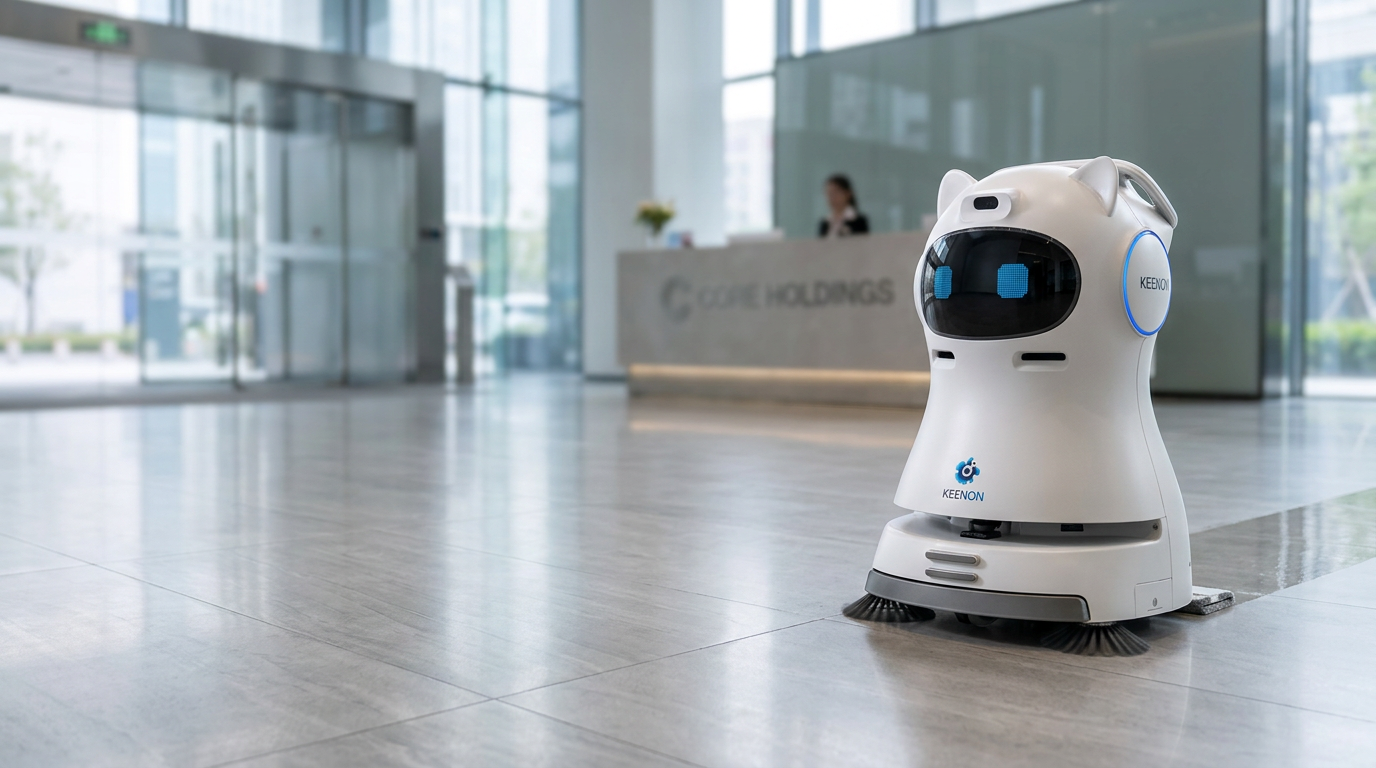
Lobbies, ballrooms, corridors, F&B back-of-house. A KLEENBOT C30 covers 800–2,000 m² of hard floor on a single overnight cycle, quietly and consistently, freeing the cleaning team for detail work.
3. F&B running during banquet and event service
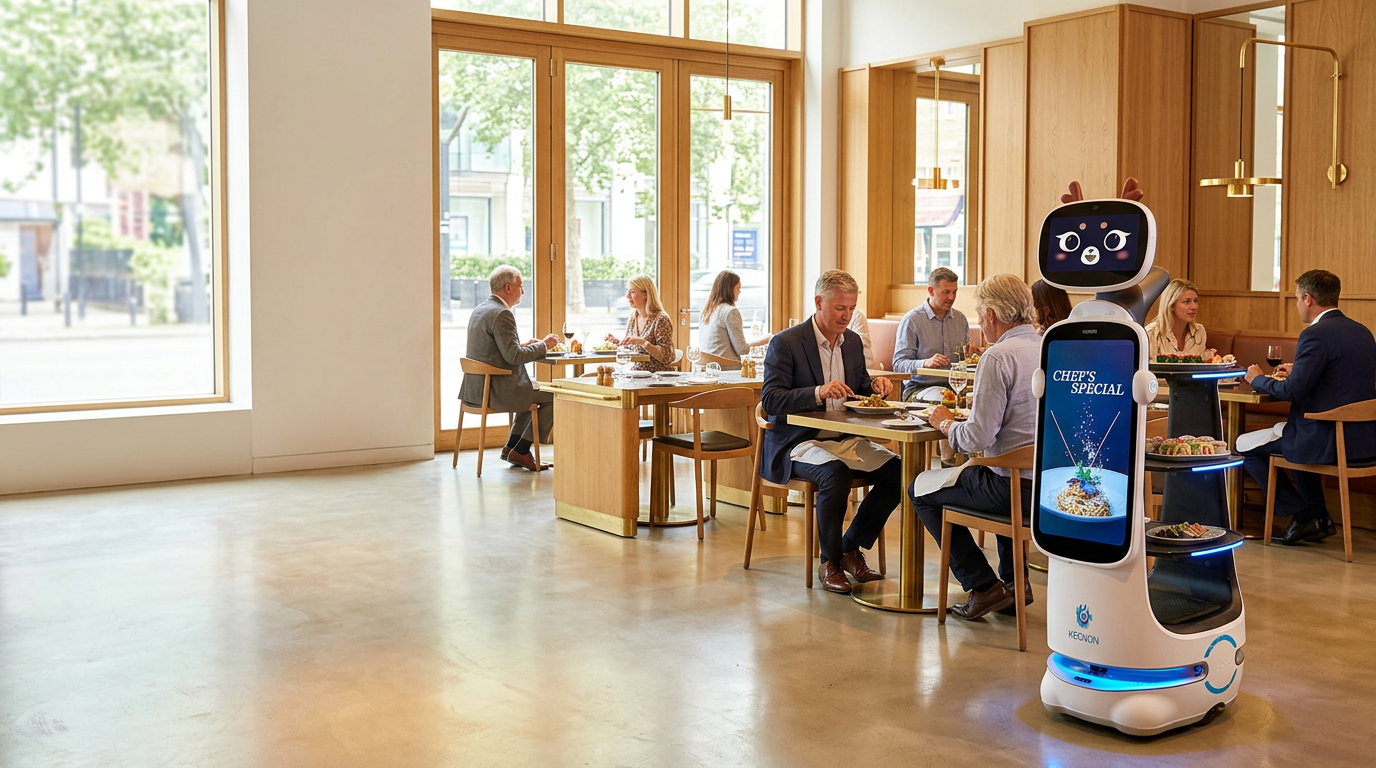
A DINERBOT T9 or T10 between the kitchen and the room cuts agency requirement on large events and removes a significant amount of carrying from your existing team.
4. Linen, towel and minibar runs
Housekeeping is one of the highest-mileage roles in any hotel. A delivery robot doing inter-floor shuttling lets your team stay on the floor they are working rather than walking the building.
5. Late-night and out-of-hours service
11pm room service order, single night-duty receptionist. A robot delivers without leaving the desk unattended — a meaningful upgrade in both guest experience and front-desk safety.
Day-one deployment in a UK hotel
Hotel deployments are quick because the work is well-rehearsed. A Fresh Mango Robotics engineer arrives on site, surveys the routes the robot will run — lobby, F&B corridor, lift access, guest floors — and maps the building inside an hour. Lift integration, where required, is configured with a small controller fitted at the lift control panel. Exclusion zones are added around the host stand, the bar pass and any guest-only areas. Reception, F&B and night-duty teams are trained on day-one operation, dispatch and manual override at the tablet. Standard target is robot in live operation before the next service. The first two weeks are a tuning window with route, dwell and charging adjusted from real operational data.
Frequently asked questions
What types of hotels benefit most from service robots?
UK hotels above around 80 keys with multiple floors, banqueting or events trade, F&B departments and a night-duty desk see the strongest case. Smaller properties with one floor and limited F&B usually do not generate enough repetitive carrying to justify a dedicated robot.
Can hotel robots use the lifts on their own?
Yes. The Keenon BUTLERBOT W3 integrates with most modern UK hotel lifts via a small controller, allowing it to call the lift, board, select the floor and exit autonomously between reception, kitchen and guest floors.
Do hotel cleaning robots replace the housekeeping team?
No. The cleaning robot handles hard-floor cleaning overnight on a defined route; the housekeeping team focuses on guest rooms, soft furnishings, detail cleaning, glass and bathrooms. Robots take the repetitive mopping work out, not the skilled work.
Is a robot suitable for a fine-dining hotel restaurant?
Yes. Keenon DINERBOT models run well below restaurant ambient noise and are used in award-winning UK hotel restaurants. They typically handle drinks, plate runs and banquet service rather than table-side interaction, which stays with the team.
How long does it take to deploy a service robot in a hotel?
A typical UK hotel deployment is mapped, configured and in live operation inside one day — including floor mapping, lift integration where required, exclusion-zone setup and staff training on day-one operation.
Can robots help with overnight room service safety?
Yes. A single night-duty receptionist can dispatch a late room service order to the robot without leaving the desk unattended, which is a measurable improvement in both guest service and front-desk safety on a quiet overnight shift.
Talk to a robot supplier you can actually visit
We are based in Ripon, North Yorkshire, with engineers across the North of England. On-site demos as standard.
Related articles
The Best Commercial Cleaning Robots for Hotels
A practical 2026 UK guide to picking the right hotel floor cleaning robot — C30 vs C40 by floor area, overnight cycle time, noise, and the housekeeping hours you get back.
How Much Labour Can a Delivery Robot Save?
By hours per shift, by full-time-equivalent and by annual pound figure — what a commercial delivery robot actually saves a UK operation in labour.
Are Restaurant Robots Worth It? A 2026 ROI Guide
A practical 2026 walk-through of where restaurant robots earn their keep, the venues they suit, and where the payback actually comes from.
Keep reading