
How Much Labour Can a Delivery Robot Save?
By hours per shift, by full-time-equivalent and by annual pound figure — what a commercial delivery robot actually saves a UK operation in labour.
Quick answer
A single commercial delivery robot can offset repetitive carrying time in UK hospitality and care settings. The financial effect depends on shift patterns, agency use, overtime and the rental package, so the business case should be built from the operator’s own figures.
A delivery robot does not literally replace a member of staff. What it does is absorb a particular category of work — repetitive, high-mileage carrying — and free that time for higher-value tasks. The labour saving is real, but it needs to be measured in the right unit.
Hours per shift saved
- Restaurant runner role: 2.5–4 hours per shift
- Hotel night-duty receptionist (room service): 1.5–3 hours per shift
- Care home meal and medication trolleys: 2–3 hours per shift
- Banquet / event service: 4–6 hours per event
Full-time-equivalent offset
Across a typical week of trading, a single delivery robot can offset 0.4–0.8 FTEs in hospitality and 0.5–1.0 FTEs in care environments. The value of that time depends on each operator’s wage, agency and overtime costs.
Annual financial impact
Compare the annual rental, including support, with the value of time released plus agency, overtime and turnover costs. We calculate the net labour-cost effect from your own shift and staffing data.
Labour offset by sector — at a glance
| Sector | Hours saved per shift | FTE offset | Commercial impact |
|---|---|---|---|
| Restaurant runner role | 2.5–4 hours | 0.4–0.7 FTE | Model from current labour costs |
| Hotel night-duty receptionist | 1.5–3 hours | 0.3–0.5 FTE | Model from current labour costs |
| Care home meals & trolleys | 2–3 hours | 0.5–1.0 FTE | Model from current labour costs |
| Banquet & event service | 4–6 hours per event | Agency offset | Model from current agency costs |
Maintenance, support and consumables — the operating reality
Labour offset is the headline number, but UK operators should size a delivery robot against its operating profile too. A BUTLERBOT W3 needs roughly fifteen minutes of housekeeping a day — wipe-down, tray check, battery dock inspection — and a quarterly engineer visit for wheel, sensor and battery health. Software updates are pushed over the network and applied during charging windows so there is no service downtime. Support is UK-based and answered in your timezone, with first-line response inside the working day and an engineer on site within 24–48 hours for anything the team cannot resolve remotely. Consumables are limited to trays and the occasional silicone bumper.
Frequently asked questions
How many hours per shift can a delivery robot save?
In UK hospitality and care settings a single Keenon BUTLERBOT W3 typically saves 2–4 hours of carrying work per shift, depending on layout, distance and shift pattern. The saving comes from removing repetitive trips between kitchen, store, reception and guest or resident rooms.
What is one FTE of robot offset worth in pounds?
The value of one full-time-equivalent varies with wage rate, employer NI, pension and holiday provision. A delivery robot rarely offsets a full FTE on its own; model the value of the released time against your actual employment costs.
Does a delivery robot remove the need for night-shift staff?
No. It removes some of the carrying work that night-shift staff would otherwise have to leave the desk to do — late room service, store runs, linen drops. The receptionist or carer stays on point while the robot moves the items.
How long does a delivery robot battery last?
The Keenon BUTLERBOT W3 runs for approximately 8–10 hours of normal operation on a single charge and auto-docks to recharge between trips, so it is available across a full overnight shift or a busy event service without manual intervention.
Can a delivery robot operate in a multi-storey building?
Yes. The BUTLERBOT W3 integrates with most modern UK lifts via a small controller installed at deployment, allowing it to call the lift, board, select the destination floor and exit autonomously.
What is the realistic payback period for a delivery robot in the UK?
Most UK hospitality and care operators see payback inside 6–14 months on a delivery robot when measured against the labour hours, agency cover and overtime it actually offsets — well below the headline rental cost.
Talk to a robot supplier you can actually visit
We are based in Ripon, North Yorkshire, with engineers across the North of England. On-site demos as standard.
Related articles
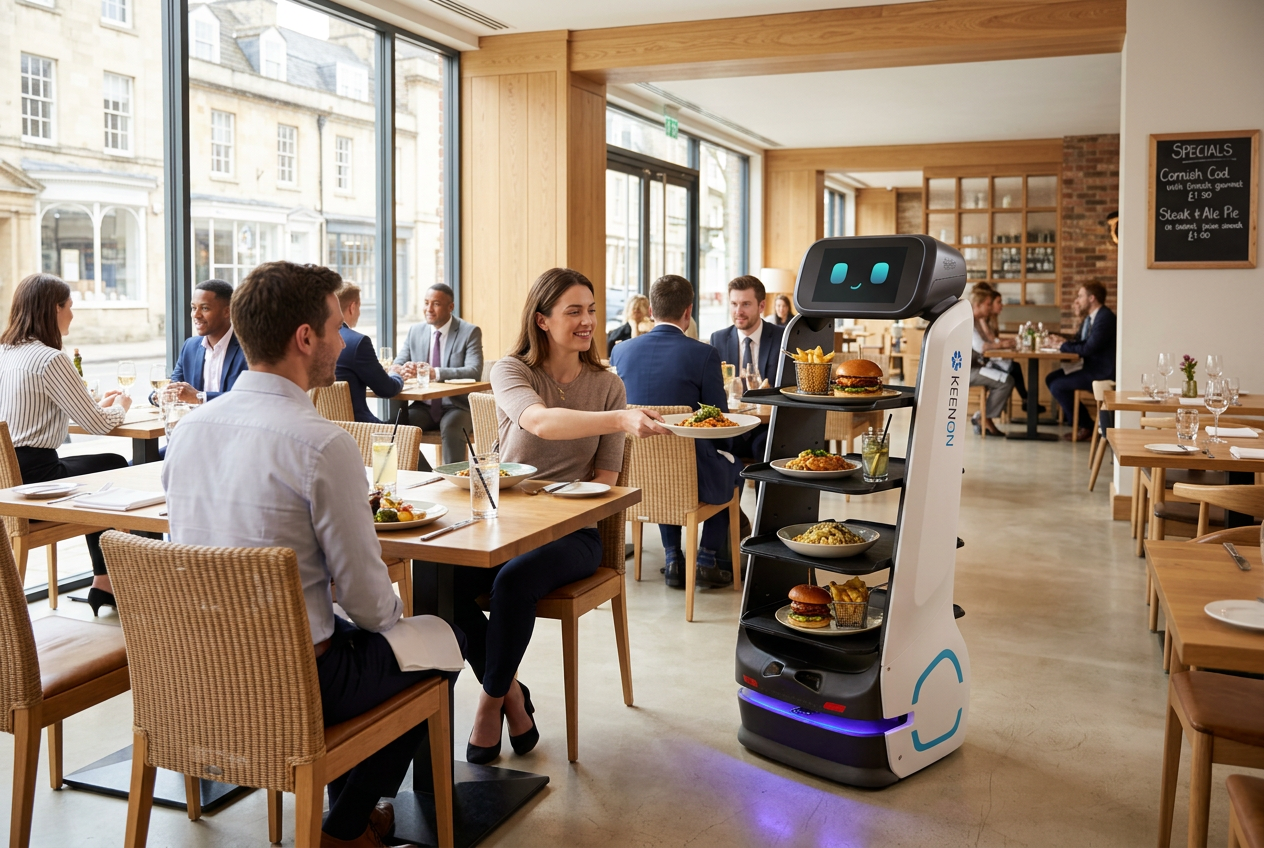
Service Robot vs Waiter: Where Does the ROI Come From?
An honest breakdown of where the ROI on a restaurant service robot actually comes from — and why "replacing a waiter" is the wrong framing.
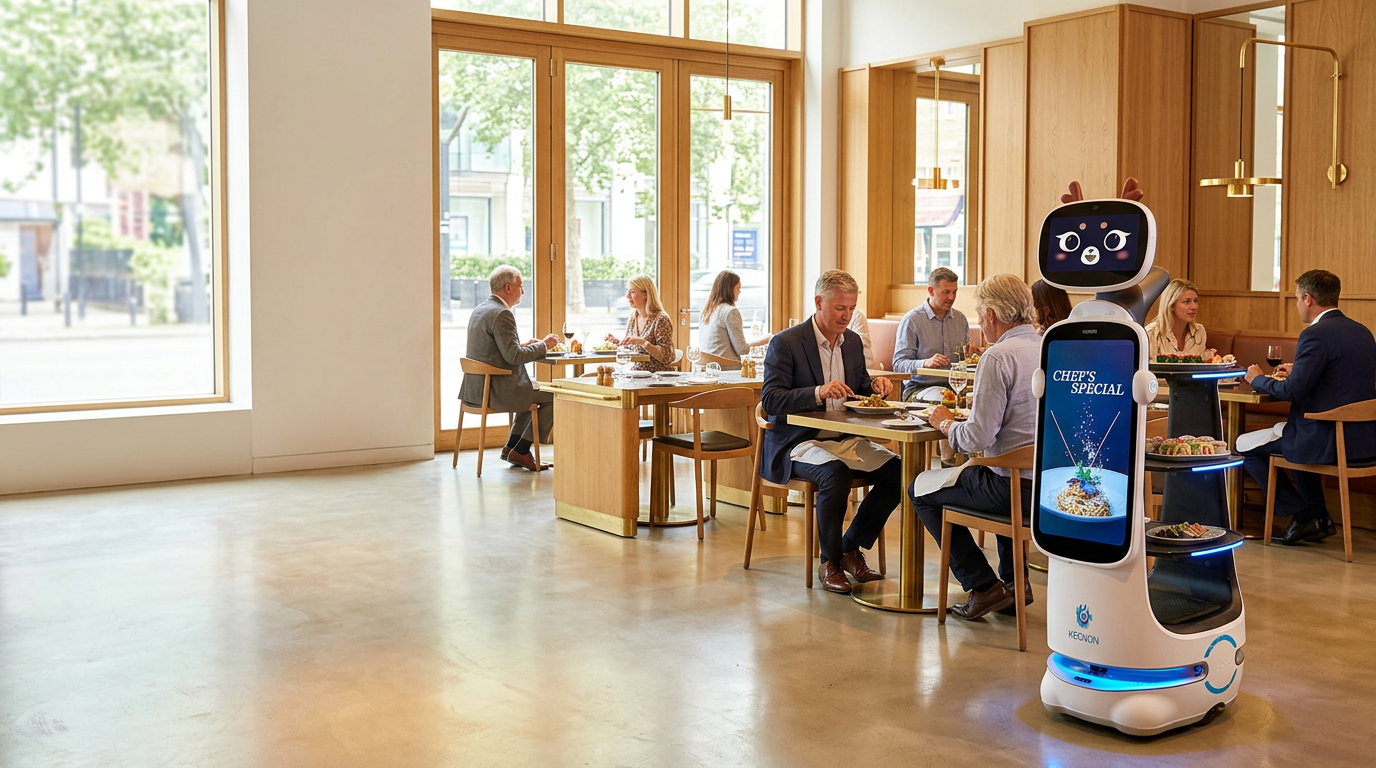
Are Restaurant Robots Worth It? A 2026 ROI Guide
A practical 2026 walk-through of where restaurant robots earn their keep, the venues they suit, and where the payback actually comes from.
How Much Does a Commercial Service Robot Cost in the UK?
Category pricing bands, monthly rental and total cost of ownership for commercial service, cleaning and logistics robots in the UK.
Keep reading