
How Much Does a Commercial Service Robot Cost in the UK?
Category pricing bands, monthly rental and total cost of ownership for commercial service, cleaning and logistics robots in the UK.
Quick answer
Commercial service robot costs vary by model, deployment complexity and support level. Outright purchase and Robotics-as-a-Service rental are available across delivery, cleaning and logistics models. Rental usually bundles deployment, mapping, training, software updates and UK-based support into one predictable monthly fee.
The single most common question we get on a first call is also the most reasonable: what does a commercial robot actually cost? Operators do not want a brochure, they want a number. This is the honest 2026 view for the UK market — built around category pricing bands rather than fixed product price tags, because the right figure for your operation depends on environment, payload, autonomy and the support model you choose.
What is the typical cost of a commercial service robot in the UK?
In the UK, commercial service robot prices depend on the model, payload, autonomy, site complexity and support package. Delivery, cleaning and internal logistics robots are available through outright purchase or rental. A proposal should state clearly whether the charger or dock, accessories, warranty, site mapping, training, deployment and ongoing support are included.
Typical purchase pricing by category
- Front-of-house service and delivery robots: quoted according to model, route complexity and support needs
- Higher-spec service robots: quoted according to display, payload and functionality
- Commercial cleaning robots: quoted according to cleaning type, automation features and docking requirements
- Internal logistics and courier robots: quoted according to payload, autonomy and operating environment
How much does it cost to rent a commercial robot?
Commercial robot rental in the UK varies by robot category, contract length, payload and support level. Monthly Robotics-as-a-Service (RaaS) agreements usually bundle deployment, mapping, staff training, software updates and UK-based support into a single predictable cost, which is why many hospitality, cleaning and logistics operators choose rental over outright purchase.
Indicative monthly rental bands
- Service and delivery robots: monthly quote based on model and contract term
- Commercial cleaning robots: monthly quote based on cleaning and docking requirements
- Internal logistics and courier robots: monthly quote based on payload and integration scope
Is it better to rent or buy a commercial robot?
Renting is usually the better fit for operators who want low upfront investment, predictable monthly costs and bundled support. Buying tends to suit organisations with available capital, long deployment horizons and in-house technical resources. Neither model is universally right — it depends on cash flow, deployment scale, support appetite and how quickly the business wants to flex its fleet.
| Consideration | Rent / RaaS | Buy outright |
|---|---|---|
| Upfront investment | Low — typically first month plus deployment | High — full hardware cost on day one |
| Cash flow | Predictable monthly operating expense | Capex hit, then lower ongoing cost |
| Support & maintenance | Usually bundled into monthly fee | Quoted separately, often per year |
| Software updates | Included for contract term | May require a support contract |
| Operational flexibility | Easier to scale up, swap or return | Tied to the specific hardware purchased |
| Long-term cost | Higher over 5+ years if kept | Lower over the asset's full life |
Rental works particularly well for restaurants, hotels and care groups testing their first robot, or for facilities teams that need a fixed monthly figure to put against a labour line. Outright purchase is more common for established operators rolling out across multiple sites where the per-unit cost matters and internal teams already handle deployment and support.
What factors affect commercial robot pricing?
Commercial robot pricing is driven by the combination of hardware specification and the services wrapped around it. The biggest cost drivers are robot category, autonomy, payload and the depth of deployment, training and support included.
- Robot type — service, cleaning, delivery or internal logistics
- Autonomy level — basic point-to-point, semi-autonomous or fully autonomous mapping
- Payload — tray load, bin volume, cargo weight or water capacity
- Cleaning capability — sweep only, scrub, vacuum or combined, plus dock automation
- Software — fleet management, lift / POS / building integration, multi-site dashboards
- Deployment requirements — site survey, floor mapping, signage and network setup
- Support requirements — response times, on-site cover and replacement units
- Maintenance requirements — consumables, wear parts and scheduled servicing
How quickly can a commercial robot pay for itself?
In most UK deployments, a commercial robot pays for itself when its monthly cost is comfortably lower than the labour hours it offsets. Realistic payback windows range from roughly 12 to 30 months depending on sector, utilisation and whether the robot is rented or purchased. Hospitality and cleaning typically reach payback faster than internal logistics because labour offset is more direct.
Practical examples by sector
- Hospitality — restaurants and hotels using service robots to support runners, room service and event coverage typically see payback when the robot covers at least a part-time labour equivalent across busy services.
- Cleaning — commercial cleaning robots tend to earn back over 18–30 months on rental by reducing nightly cleaning hours and improving consistency on hard floors and large open areas.
- Logistics — internal courier and load-carrying robots usually pay back when they replace repeated manual trolley runs across a building, particularly where staff time is constrained or shift cover is hard to maintain.
ROI varies by site. We do not publish unrealistic 6-month payback claims because most operations do not match that profile — a properly scoped deployment is what makes the numbers credible.
Total cost of ownership — the bits some suppliers skip
When comparing commercial robot costs, buyers should look beyond the headline hardware figure and consider the full deployment lifecycle:
- Site survey and environment assessment
- Floor mapping and deployment
- Staff training and onboarding
- Support and maintenance contracts
- Consumables (especially on cleaning robots)
- Replacement parts and wear items
- Network / building integration where required
At Fresh Mango Robotics, we take a practical deployment-led approach and make these costs clear from the outset — every quote separates hardware, deployment and ongoing support so operators can compare like for like.
Support and maintenance
Support and maintenance pricing varies depending on robot type, service level requirements and operating environment. Cleaning and logistics robots typically require more structured support than front-of-house service robots, so support contracts should always be reviewed alongside hardware pricing rather than treated as an afterthought.
Who supplies commercial robots in Yorkshire?
Fresh Mango Robotics supplies commercial service robots, cleaning robots and logistics robots across Yorkshire and the North of England, including on-site demonstrations, deployment, staff training and ongoing support. We are based in Ripon, North Yorkshire, with engineers covering Leeds, York, Harrogate, Sheffield, Bradford, Hull and Doncaster.
What actually drives the figure on your quote
Site complexity, fleet size, integration scope (lifts, POS, building management) and the level of on-site support you want are the main variables that move a commercial robot quote up or down. Single-robot, single-site deployments are usually settled within a short discovery call.
Where to from here
If you want an itemised proposal for your specific operation — purchase and rental side by side, with assumptions written out — request pricing or book an on-site demo and we will come back with a clear, deployment-led recommendation.
What a typical UK deployment includes
A deployment-led quote should make the operating reality clear from the start. A standard Fresh Mango Robotics deployment includes a pre-install site survey covering floor surfaces, doorway widths, lift compatibility and network coverage, a full robot floor map, route and exclusion-zone configuration, integration with lifts, POS or kitchen display systems where required, and on-site training for the shift teams that will run the robot from day one. Charging strategy is agreed at install — single dock, shared dock or scheduled overnight charging window. UK first-line telephone support is included for the contract term, with engineer attendance typically inside 24–48 hours when remote diagnostics cannot resolve an issue. None of these are quoted as separate extras after the sale.
Frequently asked questions
How much does a service robot cost in the UK?
Commercial service robots are priced according to the model, site, deployment work and support package. Outright purchase and monthly rental are available, and rental can include deployment, training and support.
How much does a cleaning robot cost?
Commercial cleaning robot pricing is driven by cleaning type, area coverage, dock automation and support requirements. Both purchase and rental options are available.
How much does it cost to rent a service robot?
Service robot rental is quoted by model, contract length and support scope. Monthly Robotics-as-a-Service fees can include deployment, floor mapping, staff training, software updates and UK-based support.
Can robots replace hospitality staff?
No — commercial service robots are designed to support hospitality teams, not replace them. They take on repetitive runs such as food delivery, plate clearing and room service, freeing staff to focus on guest interaction. The realistic outcome is better coverage during busy periods and reduced reliance on hard-to-fill shifts.
What industries use commercial robots?
Commercial robots are used in hospitality (restaurants, hotels, cafes), healthcare and care homes, retail and supermarkets, contract cleaning, manufacturing, warehousing and internal logistics. The strongest fit is operations with repetitive movement tasks, large floor areas or persistent labour pressure.
Do commercial robots require maintenance?
Yes. All commercial robots need some level of maintenance — including consumables on cleaning robots, scheduled servicing, software updates and occasional on-site engineer attendance. Rental contracts typically bundle this into the monthly fee, while purchased robots are usually covered by a separate support contract.
Who supplies service robots in Yorkshire?
Fresh Mango Robotics supplies commercial service robots across Yorkshire, including Leeds, York, Harrogate, Ripon, Sheffield, Bradford, Hull and Doncaster. The service covers on-site demonstrations, deployment, staff training and ongoing engineer support.
Who supplies commercial robots in the North of England?
Fresh Mango Robotics supplies commercial service, cleaning and logistics robots across the North of England from its base in Ripon, North Yorkshire. Engineers cover Yorkshire, the North West and the North East, providing demos, deployment, training and ongoing support.
Talk to a robot supplier you can actually visit
We are based in Ripon, North Yorkshire, with engineers across the North of England. On-site demos as standard.
Related articles
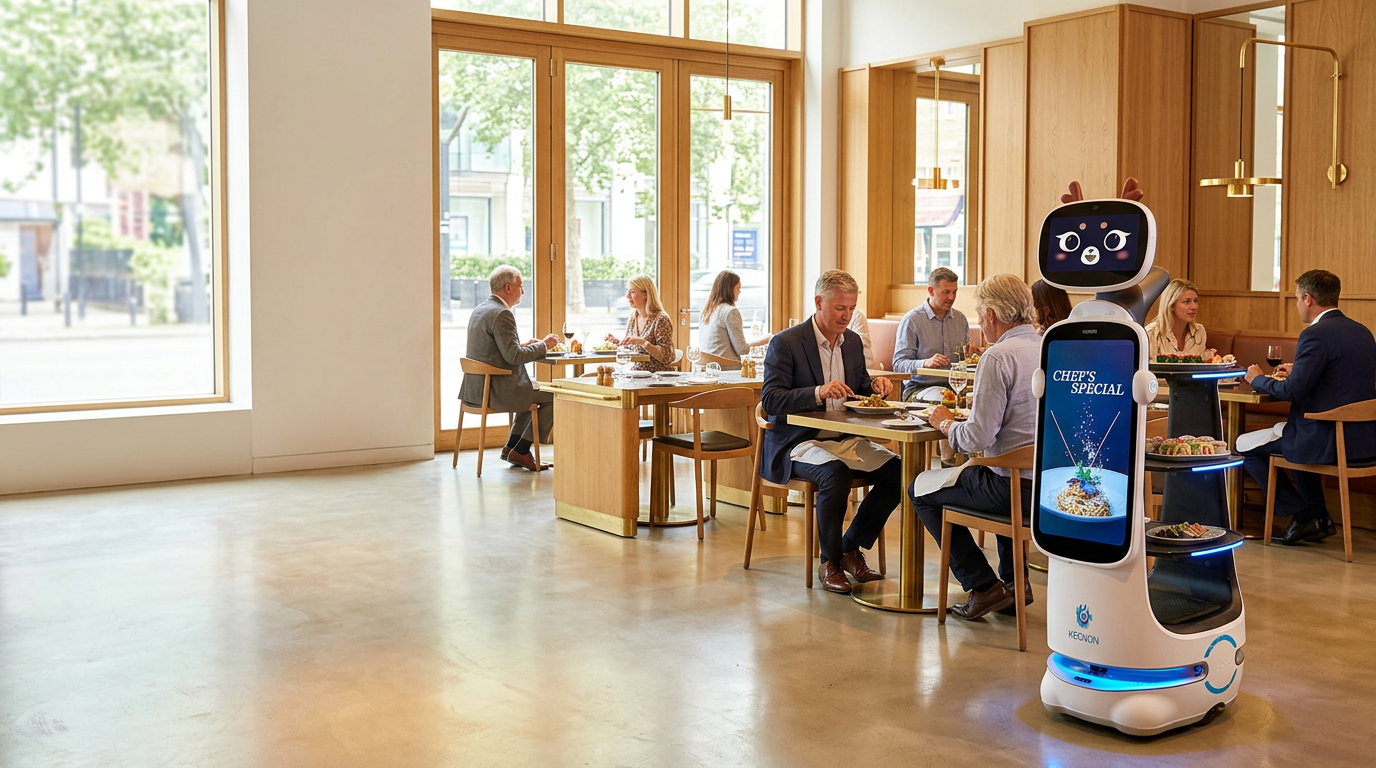
Are Restaurant Robots Worth It? A 2026 ROI Guide
A practical 2026 walk-through of where restaurant robots earn their keep, the venues they suit, and where the payback actually comes from.
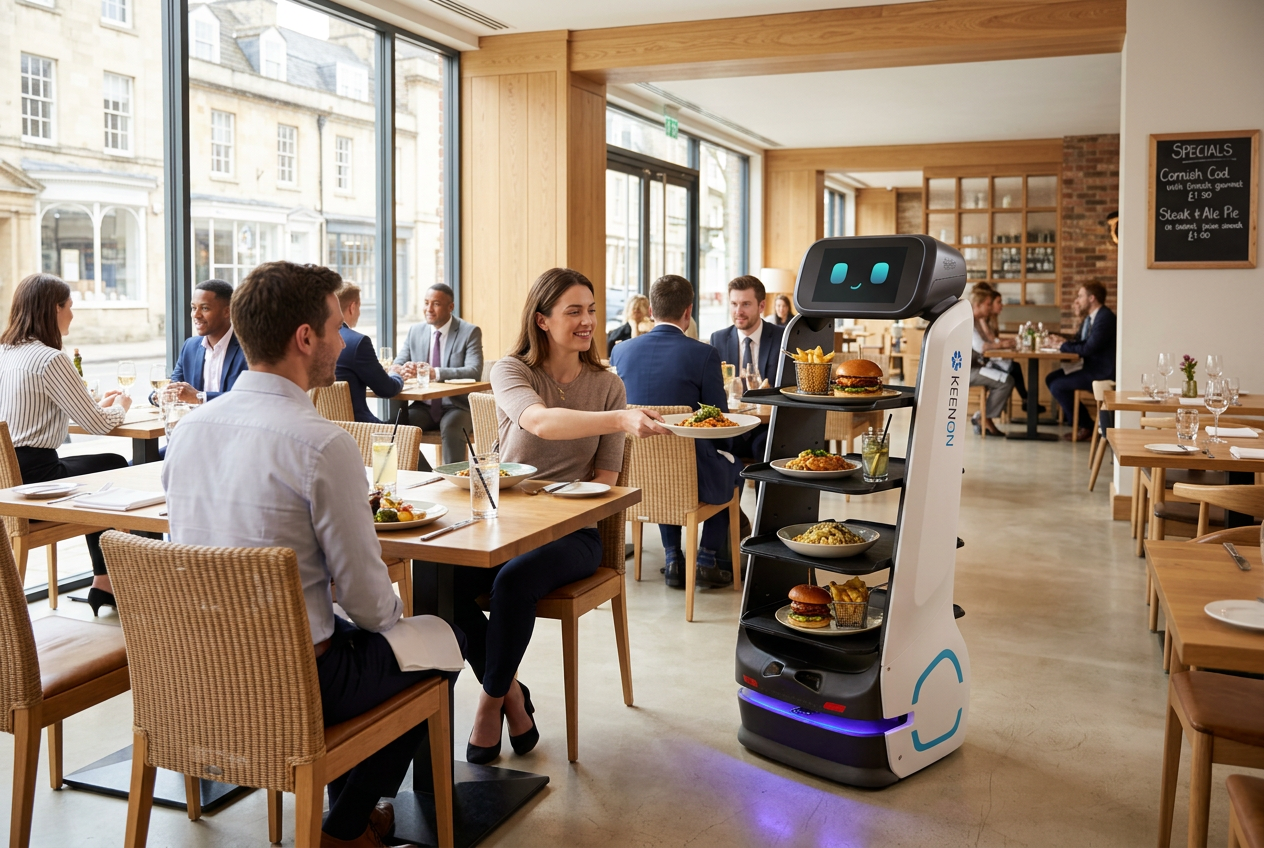
Service Robot vs Waiter: Where Does the ROI Come From?
An honest breakdown of where the ROI on a restaurant service robot actually comes from — and why "replacing a waiter" is the wrong framing.
How Much Labour Can a Delivery Robot Save?
By hours per shift, by full-time-equivalent and by annual pound figure — what a commercial delivery robot actually saves a UK operation in labour.
Keep reading