
The Christmas Peak at Your Garden Centre: Robots in the Café, the Aisles and the Plant Area
How service, cleaning and logistics robots can support garden centre teams through the Christmas peak — in the café, the aisles and the plant area.
Quick answer
The Christmas peak puts three pressures on a garden centre: café demand, floor contamination and stock movement. A DINERBOT T9 or T10 can run café food and drink, a KLEENBOT C30 or C40 can handle scheduled floor care, and a Keenon S100 can move stock on assessed back-of-house routes — while staff stay responsible for customer care, advice, hospitality, safety and exceptions.
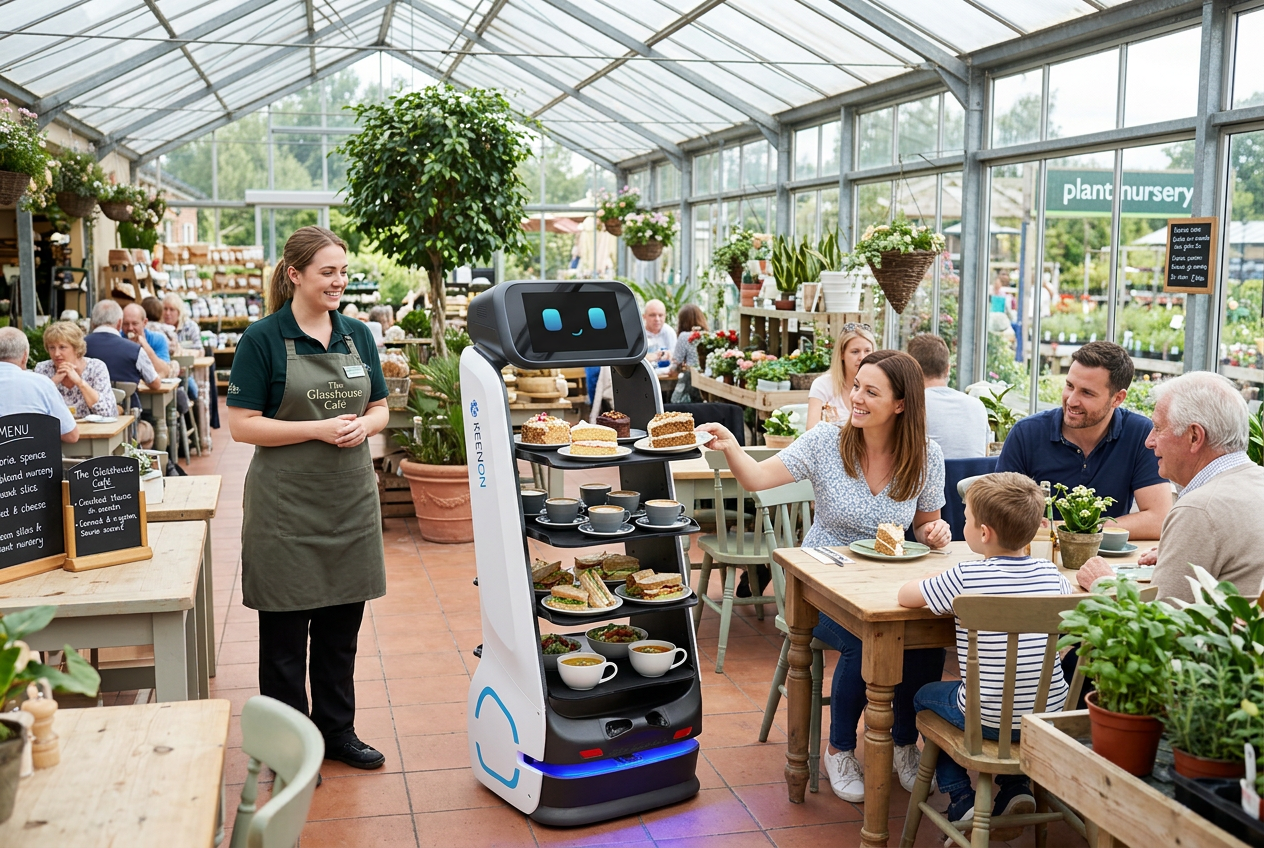
Christmas is one of the busiest periods in the garden centre calendar. Customers are buying real trees, decorations, gifts and plants while cafés handle festive menus, afternoon teas and heavier weekend trade.
At the same time, wet weather brings soil, water and grit through the entrance. Staff are moving stock between the yard, warehouse and shop floor, often while also helping customers.
That combination creates three operational pressures:
- More food and drink to run during café peak periods.
- More cleaning across wet, muddy and mixed flooring.
- More internal movement of stock, trays, boxes and supplies.
Service robots, cleaning robots and logistics robots can each support a different part of the operation. Used together, they help garden centre teams handle repetitive work while keeping people focused on customer service, plant knowledge, hospitality and exceptions.
A practical three-robot model for the Christmas peak
| Garden centre task | Suitable robot | Practical role |
|---|---|---|
| Café food and drink running | Keenon DINERBOT T9 or DINERBOT T10 | Carries orders from the kitchen or pass to tables and supports clearing runs |
| Retail, entrance and plant-area floor care | KLEENBOT C30 or KLEENBOT C40 | Provides scheduled dry or wet-and-dry floor cleaning |
| Stock and supply movement | Keenon S100 | Moves stock between back-of-house, the shop floor and suitable yard routes |
The right combination depends on the site layout, floor types, café design, stock routes and Christmas merchandising plan.
1. Supporting the festive café with DINERBOT T9 and T10
During the Christmas period, café staff can spend a large part of each shift walking between the kitchen, tables, collection points and clearing areas.
A DINERBOT can take on the carrying work. Staff load food and drinks, select the destination and meet the robot at the table or hand-off point.

DINERBOT T9: capacity for busy service
The DINERBOT T9 is suited to larger café layouts and busier service periods. Its multi-tray design can support:
- Festive meals and drinks for several customers.
- Afternoon tea or group orders.
- Café replenishment runs.
- Collection of used plates and cups.
- Repeated trips between the pass and dining area.
It is particularly useful where the main constraint is the number of journeys rather than the number of people available.
DINERBOT T10: delivery with an additional display
The DINERBOT T10 provides food and drink running with a large display for menus, seasonal promotions or collection instructions. In a garden centre café, this could support the promotion of festive drinks, cakes, Christmas lunches or gift vouchers while the robot completes its normal route.
The T10 is also designed for narrower access than the T9. However, the site survey should assess more than the clear width of an aisle. Seasonal displays, chairs, queues, prams and customers all affect the usable route.
What the robot does not replace
The café team remains responsible for:
- Greeting and advising customers.
- Handling hot, unstable or unusual items.
- Checking food presentation.
- Managing allergies and special requests.
- Clearing exceptions and responding to customers.
- Maintaining food safety procedures.
The robot handles repeatable transport. People continue to provide hospitality.
2. Cleaning retail aisles, entrances and indoor plant areas
Garden centre floors face a different challenge from many retail environments. Soil, compost, grit and water can be tracked in repeatedly, particularly around:
- Main entrances.
- Real Christmas tree sales.
- Outdoor plant areas.
- Indoor plant areas and glasshouses.
- Trolley routes.
- Café entrances.
- Checkout approaches.
A single clean at the end of the day may not be enough during wet weather. Short, planned cleaning cycles can help control the most heavily soiled areas while the centre remains open.
KLEENBOT C30 for dry cleaning and mixed flooring
The KLEENBOT C30 is a dry-cleaning robot that sweeps, vacuums and dust-mops in one pass.
It may suit retail areas that include:
- Hard floors.
- Short-pile carpet.
- Mixed flooring.
- Dry soil and debris.
- Larger aisles that need repeatable vacuuming.
The C30 can be programmed for retail aisles, café approaches and areas where dry cleaning is more appropriate than washing. It can also run after closing, leaving staff to concentrate on edges, corners, displays and detailed cleaning.

KLEENBOT C40 for larger hard-floor areas
The KLEENBOT C40 is designed for wet and dry floor care. It can sweep, vacuum, scrub and dry, making it more suitable for larger hard-floor areas that need washing as well as debris removal.

For a garden centre, the C40 may be considered for:
- Main concourses.
- Large entrance areas.
- Hard-floor retail zones.
- Indoor plant areas.
- Café approaches.
- Overnight cleaning windows.
Its stated coverage capability makes it relevant where a large floor needs to be completed between closing and opening. The actual route will depend on obstructions, thresholds, drainage, floor finish and available operating time.
Wet and muddy conditions require planning
A cleaning robot is not a substitute for dealing with heavy mud, standing water or sudden spills.
Before deployment, the site assessment should consider:
- How much soil and water enters at each doorway.
- Whether entrance matting can reduce contamination.
- Where the robot can operate safely around customers.
- Whether there are ramps, thresholds or drainage channels.
- Where the robot can be charged in a dry, protected location.
- Which areas still need manual spot cleaning.
- How wet-floor signs and temporary exclusion zones will be managed.
Staff should also follow the manufacturer's operating instructions. For example, a wet robot should not be connected to a charger. Heavy mud, standing water and unusual debris should be handled through a defined manual response process.
3. Moving Christmas stock with the Keenon S100
Christmas trading creates additional movement between the yard, goods-in area, warehouse, shop floor and café.
Typical internal movements might include:
- Boxes of decorations.
- Gift-shop stock.
- Café supplies and packaging.
- Plant trays.
- Compost or bagged products.
- Christmas tree accessories.
- Replenishment totes.
- Empty packaging and returns.
The Keenon S100 is an autonomous logistics robot designed for moving loads in the 100 kg class. It uses mapped routes and obstacle detection to move stock between defined loading and unloading points.

A garden centre deployment could use the S100 to move stock from back-of-house to a staff hand-off point near the retail area. It could also support suitable routes between goods-in, storage and the café.
The S100 is not a replacement for a forklift, delivery vehicle or trained yard operative. The route must be assessed carefully, particularly where it includes:
- Public areas.
- Uneven outdoor surfaces.
- Mud or standing water.
- Fire doors and roller shutters.
- Yard-to-building thresholds.
- Narrow gates.
- Shared vehicle routes.
- Slopes or poor visibility.
Loads should be secured on suitable shelves, platforms or containers. Staff remain responsible for safe loading, unloading and exception handling.
Robotics-as-a-Service for seasonal deployment
For a seasonal operation, Robotics-as-a-Service can provide robotics without the capital outlay.
A RaaS agreement can combine:
- The robot.
- Site assessment.
- Installation and mapping.
- Route configuration.
- Staff training.
- Maintenance.
- Software updates.
- UK-based support.
This creates a predictable monthly cost rather than requiring the full capital purchase at the beginning. Pricing depends on the robot, configuration, site requirements and support arrangements, and is set out in a written proposal after a site assessment.
There are three main deployment options:
- Robotics-as-a-Service: a managed monthly arrangement with support and maintenance included under the agreed terms.
- Outright purchase: the garden centre owns the robot and can agree installation, training and support separately.
- Hybrid ownership: the organisation purchases the equipment while using a support and maintenance package.
RaaS can be useful when a garden centre wants to start with one robot, prove the operational value and expand later. A first deployment might focus on the café, the main entrance or a defined stock route.
A practical deployment plan
A sensible Christmas preparation programme should include:
1. Survey the whole operation
Café, retail floor, plant area, entrances, stockrooms and yard.
2. Measure real routes
Include doors, thresholds, queues, seasonal displays and trolley traffic.
3. Select the first repetitive task
Choose a route where staff time and frequency can be measured.
4. Run a live demonstration
Test the robot on the actual floor with staff and typical obstacles.
5. Map seasonal layouts
Repeat the route check after Christmas merchandising is installed.
6. Train every relevant shift
Cover loading, starting routes, alerts, cleaning tasks and manual recovery.
7. Set clear measures
Record café runs, cleaning cycles, staff walking time, stock movements, exceptions and downtime.
8. Review after the peak
Compare the results with the original business case before expanding.
Conclusion
The Christmas peak is not one operational problem. It is the combination of café pressure, floor contamination and additional stock movement.
That is why a garden centre should consider the full robotics range:
- DINERBOT T9 or T10 for café food and drink running.
- KLEENBOT C30 or C40 for retail, entrance and plant-area floor care.
- Keenon S100 for structured back-of-house logistics.
These robots are practical tools for supporting existing teams. With a proper site survey, staff training, clear routes and UK-based support, they can help garden centres manage festive demand while keeping people focused on the parts of the customer experience that require people.
Last reviewed:
Frequently asked questions
Can robots work in a busy garden centre?
Yes, provided routes, operating speeds, exclusion zones and staff responsibilities are planned properly. Robots can work around people, but they still need clear routes and human support when aisles are blocked or conditions change.
Can a DINERBOT clear café tables?
It can support clearing and return runs where plates, trays and cups are loaded safely. Staff should continue to handle fragile, hot, unstable or unusual items and complete the final table service.
Which cleaning robot is better for a garden centre: the C30 or C40?
The C30 is suited to dry cleaning across mixed floors, short-pile carpet and hard surfaces. The C40 adds wet scrubbing and drying for larger hard-floor areas. A site assessment should determine which floor types and cleaning tasks apply.
Can the C40 clean mud and water from the plant area?
It can support planned wet-and-dry cleaning on suitable hard flooring, but heavy mud, standing water and unusual debris still require manual assessment and intervention. Entrance matting and spot-cleaning procedures remain important.
Can the S100 operate in the outdoor yard?
That depends on the specific surface, weather exposure, route and operating conditions. Outdoor routes must be assessed rather than assumed to be suitable. Many deployments begin with controlled back-of-house routes.
Will robots replace Christmas staff?
No. Robots support the team by taking on repetitive carrying, cleaning and stock movement. Staff remain responsible for customer care, advice, plant knowledge, hospitality, food handling, safety and exceptions.
How much does a garden centre robot cost?
Pricing depends on configuration, installation requirements and support arrangements. Fresh Mango Robotics provides a written proposal after assessing the site and can compare outright purchase, hybrid ownership and RaaS.
Talk to a robot supplier you can actually visit
We are based in Ripon, North Yorkshire, with engineers across the North of England. On-site demos as standard.
Related articles
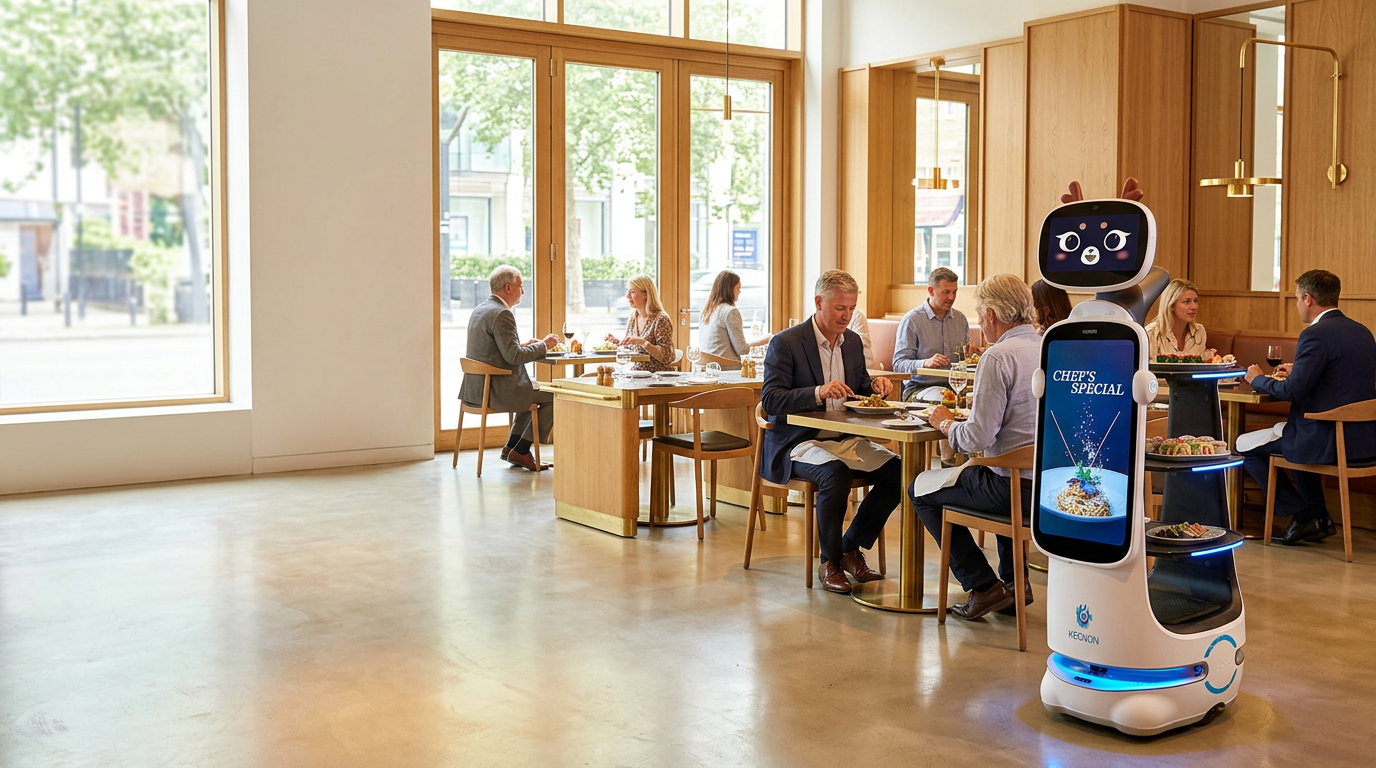
Peak Times, Fewer Hands: How Restaurants Keep Service Flowing When Staffing Dips
Sickness, vacancies and rota gaps hit hardest at peak service. Here is how Keenon T9, T10 and T11 food-running robots absorb repetitive tray transport so the available team stays close to guests.
What Happens in a Robot Site Survey? A Fresh Mango Engineer Walks You Through It
A Fresh Mango Robotics engineer explains how a real site is assessed for routes, floors, lifts, utilities, safety, installation and staff training.
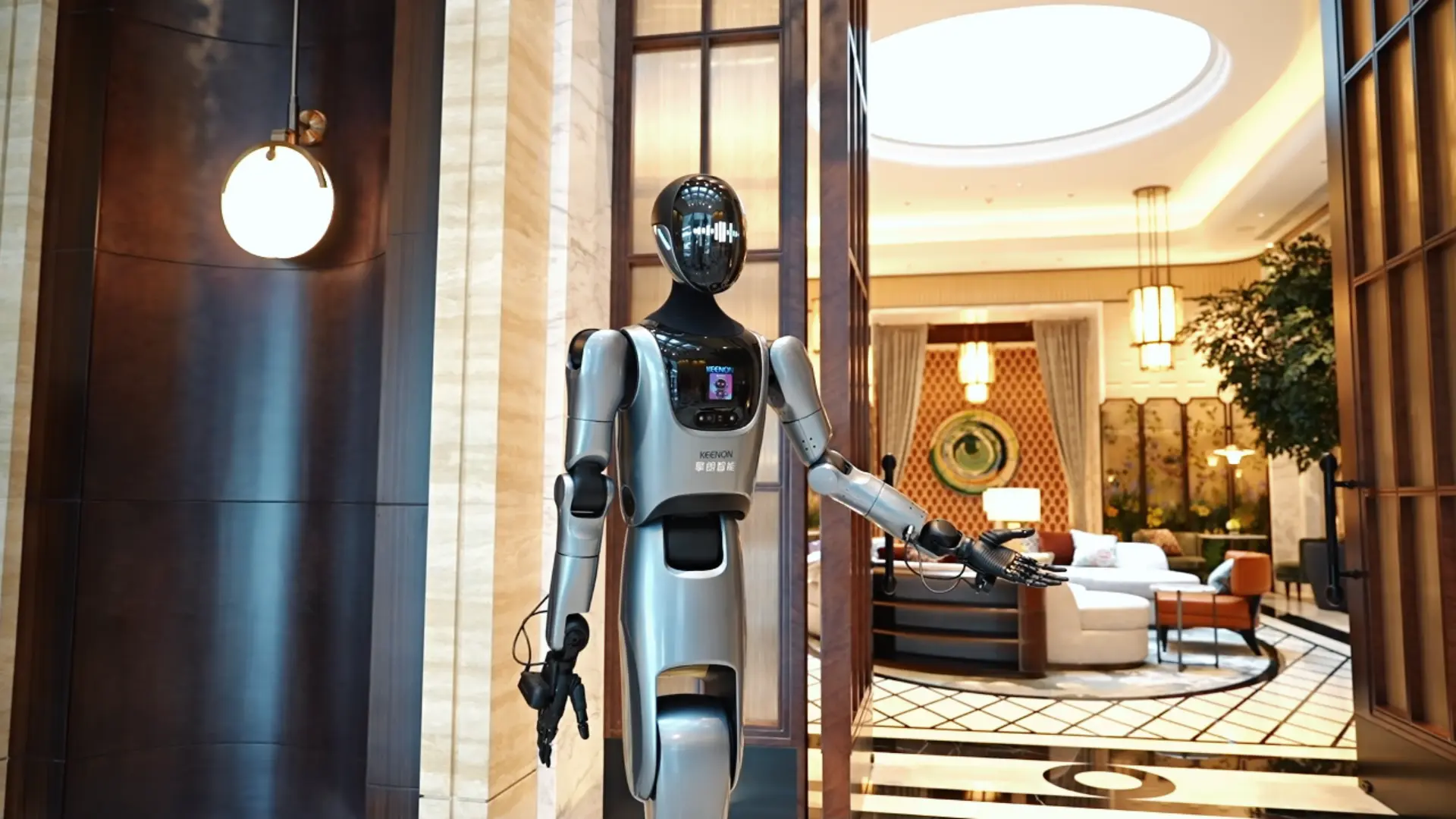
Beyond Humanoid Hype: Where Service Robots Actually Earn Their Keep in 2026
Humanoids attract attention, but the robots that earn their keep are the ones matched to a real task. A practical guide to choosing the job before the robot.
Keep reading