
Best cleaning robots for care homes
In a care home, every hour spent on floor cleaning is an hour not spent with a resident. Autonomous floor care shifts the repeatable work off the rota and produces the cleaning record that inspection expects.
Short answer
Daily
Evidenced corridor and dining-room clean
1.5–3 hrs
Cleaning hours displaced per day
12–24 months
Typical payback period
Common cleaning challenges
Cleaning competing with care
When staffing is short, floor cleaning is the first task to slip and the first thing an inspector notices.
Infection control evidence
You need to show what was cleaned, when and how often — not simply that it was scheduled.
Noise and resident wellbeing
Loud machinery in corridors is disruptive, particularly on dementia units.
Slip risk
Wet floors in resident areas are a serious falls risk and a claims exposure.
High turnover in domestic roles
Constant retraining means an inconsistent standard.
Recommended robot types
KLEENBOT C40
Wet-and-dry scrubbing for corridors, dining rooms and communal lounges, with controlled water application that leaves floors drier.
SpecificationsKLEENBOT C30
Multi-function vacuum, mop and sweep for homes with a mix of carpet and hard flooring in communal areas.
SpecificationsKLEENBOT C20
Compact cleaning for smaller homes and tighter circulation space where a full-size machine cannot turn.
SpecificationsBUTLERBOT W3
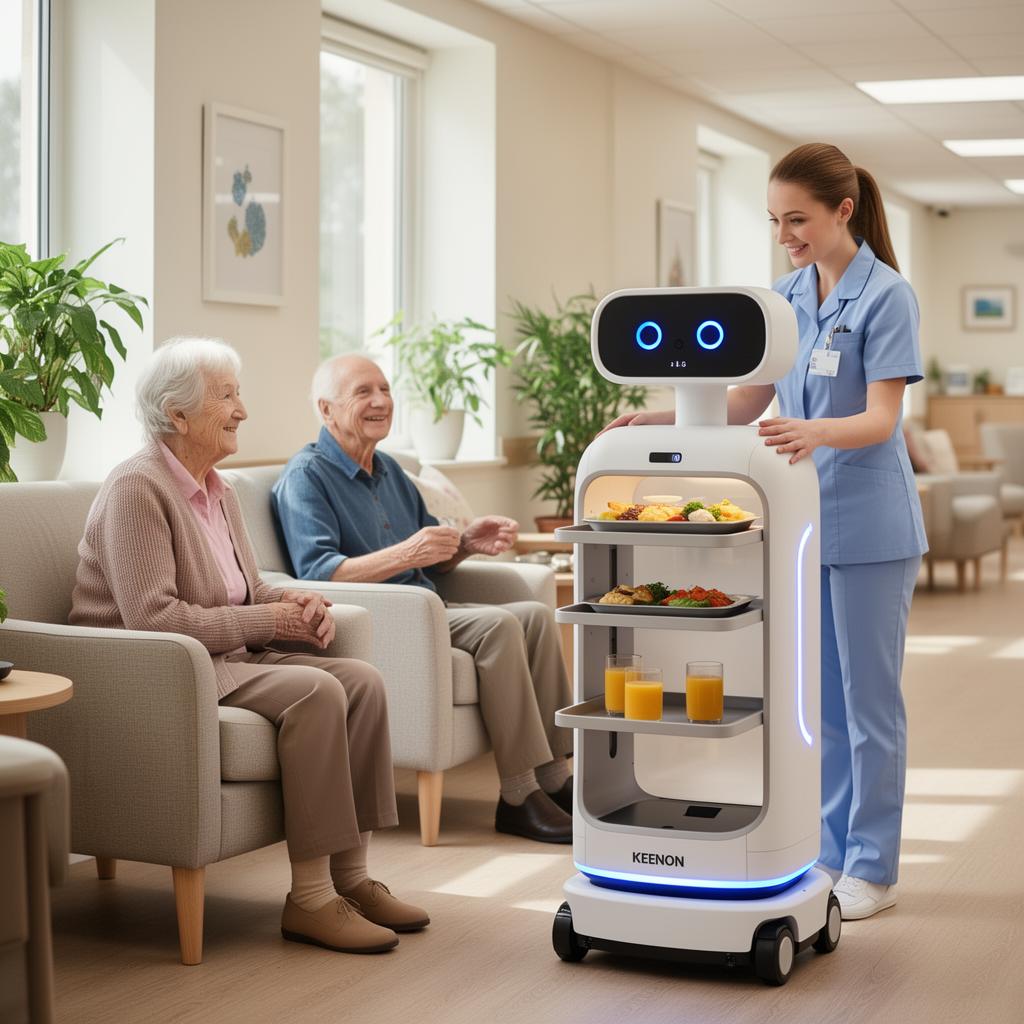
Deployed alongside for meal, linen and supply transport with lift integration — the biggest single time saver in most homes.
SpecificationsBenefits
- Documented, per-run cleaning records that support CQC evidence and infection-control audit.
- Care hours protected — domestic and care staff stay on resident-facing work.
- Controlled water application, so corridors dry faster and falls risk drops.
- Consistent standard regardless of turnover in domestic roles.
- Quiet operation suitable for corridors during waking hours.
Typical deployments
Single 60-bed home
C40 covering ground-floor corridors, dining room and lounges on a morning and evening schedule.
Multi-floor home with lift
C40 on the ground floor with lift integration for upper corridors, plus a W3 running meals and linen.
Care group rollout on RaaS
Identical machine and schedule at each home, funded from the existing domestic budget with no capital case per site.
Frequently asked questions
Are cleaning robots safe around care home residents?
Yes. They use LiDAR and 3D vision to detect people, walking aids and wheelchairs, slow down in occupied areas and stop rather than push through an obstruction. They run at low noise levels suitable for corridors during waking hours.
Do cleaning robots help with CQC inspections?
They help with evidence. Each run logs the area covered, the route, the duration and the time, so infection-control leads can demonstrate exactly what was cleaned and how often, rather than relying on a signed schedule.
What is the best cleaning robot for a care home corridor?
The KLEENBOT C40 is the standard recommendation — wet-and-dry scrubbing with controlled water application so corridors dry quickly, which matters where residents are mobile and falls risk is a live concern.
Can a cleaning robot work on a dementia unit?
Many homes do run them on dementia units, at low speed and low noise, usually outside the most sensitive periods of the day. We agree scheduling and no-go zones with the home during the survey rather than applying a standard route.
Keep reading
Related guides
See the right machine running in a care home like yours
Book a demonstration on your own floor, or a survey that measures the real area and models the labour displaced.
No hard sell. No minimum commitment. Real engineers, UK-based support.