
Best cleaning robots for warehouses
Start with the floors your team cleans repeatedly, the debris they remove and when the aisles are actually clear. A demonstration establishes whether a robot can take on that work without disrupting picking or dispatch.
Short answer
Route tested
Usable coverage checked on site
Staff involved
Preparation and daily checks agreed
Site assessed
Traffic and exclusions reviewed
Common cleaning challenges
Usable area, not total area
Stored pallets and blocked aisles reduce the floor a robot can reach. Assess the normal working layout, not an empty floor plan.
Floor condition and soiling
Check joints, slopes, damaged surfaces and the cleaning method needed. Test representative dust and marks; do not assume every stain will lift.
Forklifts and pedestrians
Agree separated routes, exclusion zones and cleaning windows with the site safety lead. Sensors are not a substitute for traffic management.
Charging and service access
Reserve accessible docking space and check power, network and any model-specific water or drainage requirements.
Staff checks still matter
Assign responsibility for debris removal, machine care, faults and inspection of the cleaned floor.
Recommended robot types
KLEENBOT C55
Consider for large, accessible hard-floor routes. Confirm floor compatibility, soiling and usable coverage at your site.
SpecificationsKLEENBOT C40
Consider for hard-floor cleaning in back-of-house and smaller warehouse routes; test the required cleaning mode and finish.
SpecificationsS300
Goods transport, not floor cleaning. Assess separately if the repetitive task is moving loads between zones.
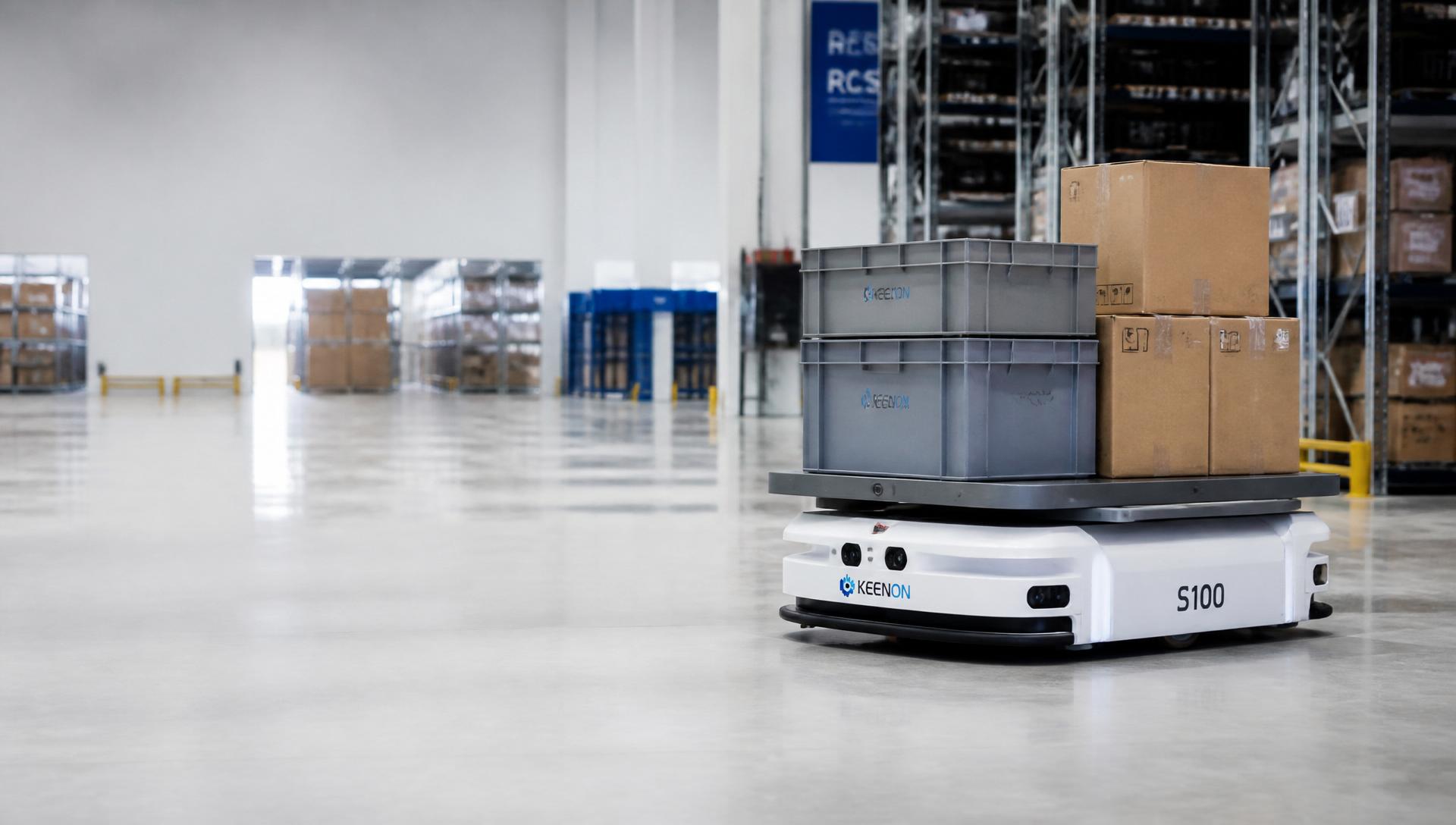
SpecificationsS100
Internal load movement, not scrubbing. The load, handover points and route need a separate assessment.
SpecificationsBenefits
- Routine floor coverage can run while staff handle detail cleaning and other duties.
- Agreed routes and schedules make repeat cleaning easier to plan.
- Demonstrated usable coverage gives a sounder basis for a proposal than headline capacity.
- Time released is assessed against your current task and staff costs, not a guaranteed payback.
Typical deployments
Aisles between shifts
An illustrative setup: clean accessible aisles in an agreed quiet window, with stock kept off the route and loading edges excluded.
Warehouse and welfare areas
An illustrative setup: separate routes for warehouse hard floors and back-of-house spaces, using the model and cleaning mode suited to each.
Changing storage layouts
An illustrative setup: review mapped routes when racking, stock positions or traffic arrangements change rather than assume the old map still fits.
Frequently asked questions
What is the best cleaning robot for a warehouse?
Start by comparing the KLEENBOT C55 for large accessible floor areas and the C40 for back-of-house and smaller routes. There is no universal best model: floor finish, soil, aisle access, traffic and cleaning windows determine suitability. A demonstration checks the proposed machine on your actual floor.
Can a cleaning robot run while forklifts are operating?
Only where the site assessment and traffic arrangements support it. Agree separation, exclusions and quiet operating windows with your safety lead. Obstacle detection alone does not make a shared forklift route suitable; busy crossings may need excluding or a different schedule.
How much floor area can a warehouse cleaning robot cover?
Usable coverage depends on the cleaning mode, soiling, accessible floor, turns, interruptions and charging or servicing time. Measure a representative route during the demonstration and compare it with your required cleaning window. Published maximum capacity is not a site-specific guarantee.
What warehouse cleaning still needs staff?
Staff clear pallet fragments, shrink wrap, straps and bulky debris, respond to spills, clean inaccessible edges and stairs, maintain the machine and inspect the finish. Specialist contamination and heavy deposits need an agreed cleaning method, not an assumption that a standard robot will handle them.
What should we prepare for a warehouse demonstration?
Share your floor plan, floor finishes, typical soiling, shift pattern and traffic routes. Include a representative aisle and turning area, a proposed charging location and your cleaning and safety leads. We assess restrictions and show the proposed cleaning task before preparing a written recommendation.
Keep reading
Related guides
See the right machine running in a warehouse like yours
Book a demonstration on your own floor, or a survey that measures the real area and models the labour displaced.
No hard sell. No minimum commitment. Real engineers, UK-based support.
Not ready for a visit? Send us 2–3 photos of your site to freshmango@freshmangorobotics.co.uk for an initial assessment.