
What are logistics robots?
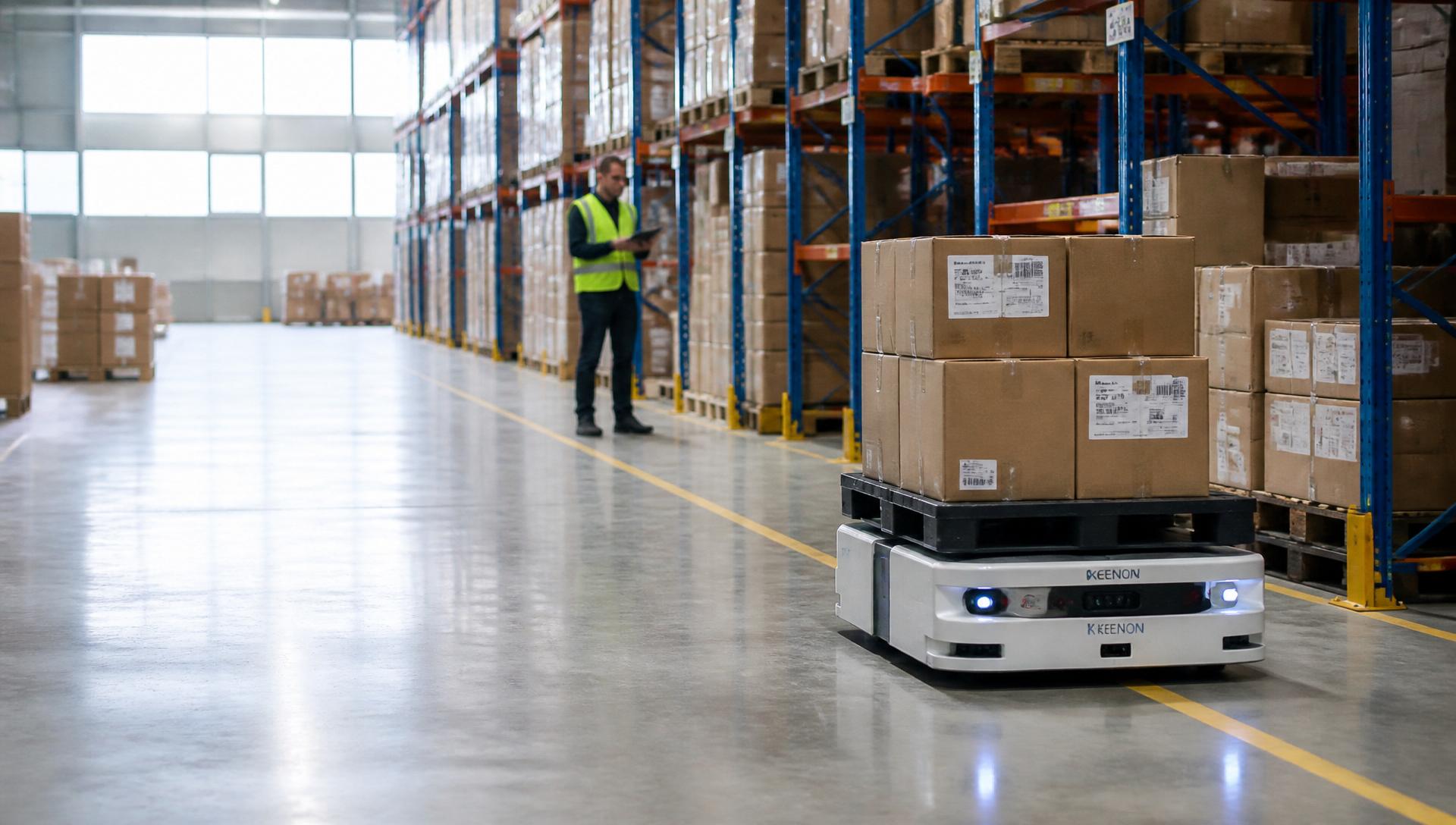
Direct answer
Key facts
- Moves goods between fixed internal points on mapped routes.
- Payload models range from tote-scale to heavy cage and pallet transport.
- Operates safely alongside people and forklift traffic with mapped no-go zones.
- Called on demand or run to a fixed schedule.
- Typical UK uses: pick face to dispatch, stores to ward, kitchen to unit, production to QA.
- Best case is high journey volume rather than large floor area.
Where logistics robots pay back
The trigger is journey count, not square metres. If staff make the same internal trip dozens of times a day, that is a route a machine can take over.
- Warehouse: pick face to packing, packing to dispatch, consumables replenishment
- Healthcare and care: linen, meals, waste and supplies between service areas
- Manufacturing: components to line, finished goods to QA or stores
- Hospitality: back-of-house stock and linen moves between floors with lift integration
What they do not do
A logistics robot does not pick, pack, decide or lift onto racking. It transports. Loading and unloading is either manual or handled at a fixed station, and the commercial case has to be built on transport time alone — which, in most operations, is more than enough.
Related questions
What is a logistics robot?
An autonomous mobile robot that transports goods inside a building between fixed points — totes, cages, pallets, linen or supplies — without a driver, following mapped routes and avoiding people and MHE.
What is the difference between a logistics robot and an AGV?
Traditional AGVs follow fixed infrastructure such as magnetic tape or wires. Modern logistics robots are autonomous mobile robots: they map the space, plan their own route and re-plan around obstacles, so no floor infrastructure is required.
Can logistics robots work alongside forklifts?
Yes, with mapped no-go zones around live MHE routes and appropriate speed limits. Route planning is agreed during the site survey rather than applied as a standard template.
How much can a logistics robot carry?
It depends on the model — from tote and consumable-scale payloads up to heavy cage and pallet movement. The right model is specified against your actual loads and journey profile during the survey.
Keep reading
Other answers
Want this answered for your site specifically?
We survey the building, measure the addressable area and give you the numbers for your operation — not an average.
No hard sell. No minimum commitment. Real engineers, UK-based support.