
How do warehouse robots improve efficiency?
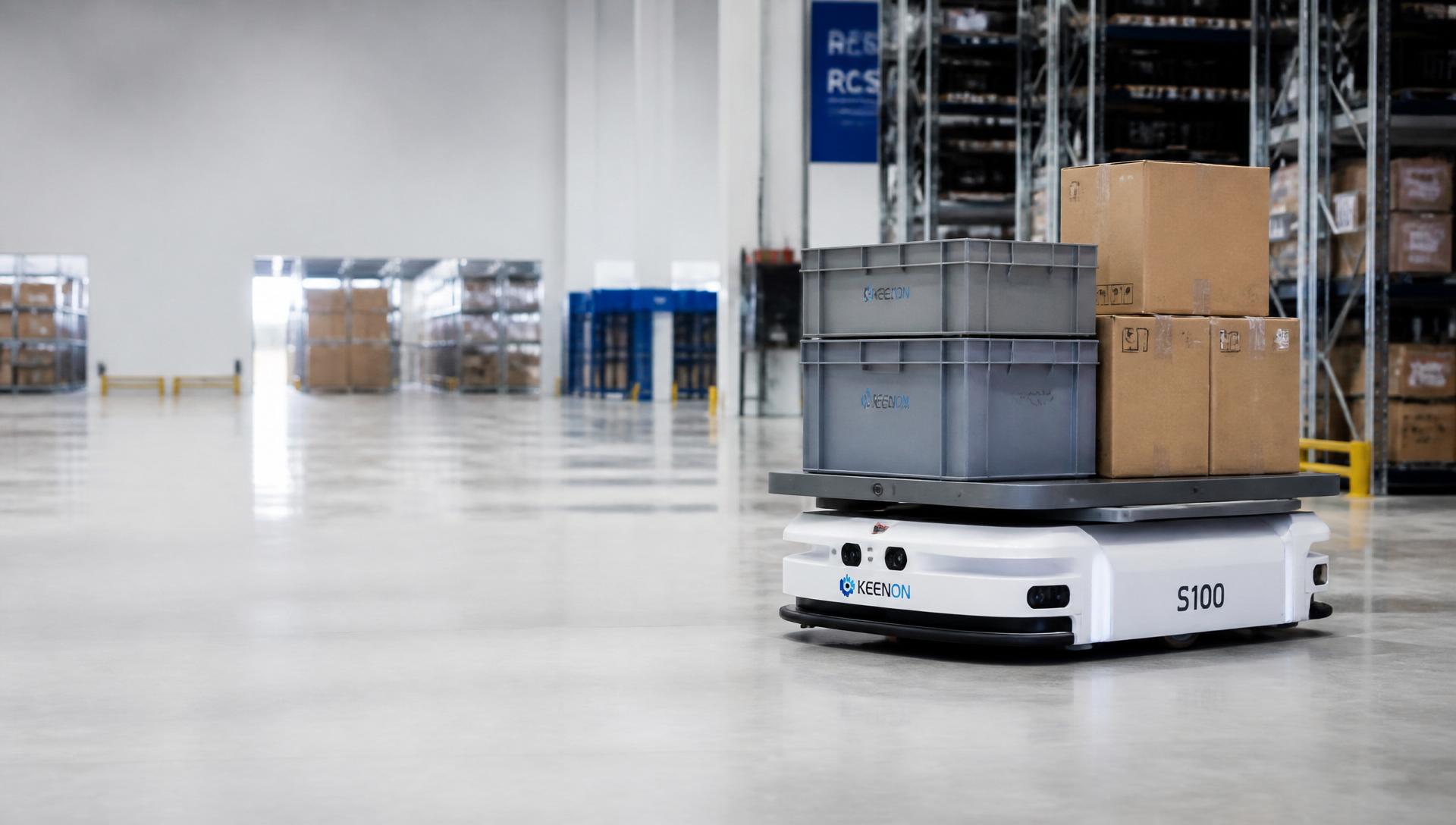
Direct answer
Key facts
- Walking and transport time returned to picking and packing.
- Throughput becomes less sensitive to staffing gaps and agency quality.
- Nightly floor cleaning runs without pulling anyone off operational tasks.
- Fewer manual handling and slip incidents in high-MHE areas.
- Per-run data on coverage, journeys and duration for continuous improvement.
- Audit evidence for BRC and customer inspections.
The three efficiency gains that actually show up in the numbers
First, displaced hours: nightly scrubbing and repeated internal transport are measurable in hours per shift and convert directly into cost.
Second, consistency: a machine does not slow down at hour seven of a shift, and does not vary with agency staff quality, so throughput planning becomes more reliable.
Third, data: coverage and journey reporting reveals where routes are inefficient, which is usually worth more over time than the initial labour saving.
What does not change
Picking accuracy, inventory discipline and layout quality are still yours to manage. Robotics amplifies a well-run operation; it does not fix a badly laid-out one, and any supplier suggesting otherwise has not walked your floor.
Related questions
How do warehouse robots improve efficiency?
By taking repeated internal transport and nightly floor cleaning off people. That returns hours to picking and packing, stabilises throughput when staffing is short, cuts agency spend, reduces manual handling risk and produces run data that makes the operation measurable.
Do warehouse robots reduce headcount?
In most UK deployments they absorb work that is unfilled, covered by agency, or done at overtime rates, rather than displacing permanent staff. The typical outcome is stopping backfill rather than making redundancies.
How quickly do warehouse robots pay back?
Warehousing typically sees the fastest payback of any sector — often 12 to 18 months on purchase — because floor areas are large, cleaning is nightly and internal journey volumes are high.
Can warehouse robots work in a 24/7 operation?
Yes, with mapped no-go zones around live pick faces and MHE routes. Scheduling is configured around your shift pattern during the site survey.
Keep reading
Other answers
Want this answered for your site specifically?
We survey the building, measure the addressable area and give you the numbers for your operation — not an average.
No hard sell. No minimum commitment. Real engineers, UK-based support.