
Are cleaning robots worth it?
The honest answer is: it depends on your floor area, your schedule and what you currently pay to cover it. Below are the conditions under which the numbers work, and the conditions under which they do not.
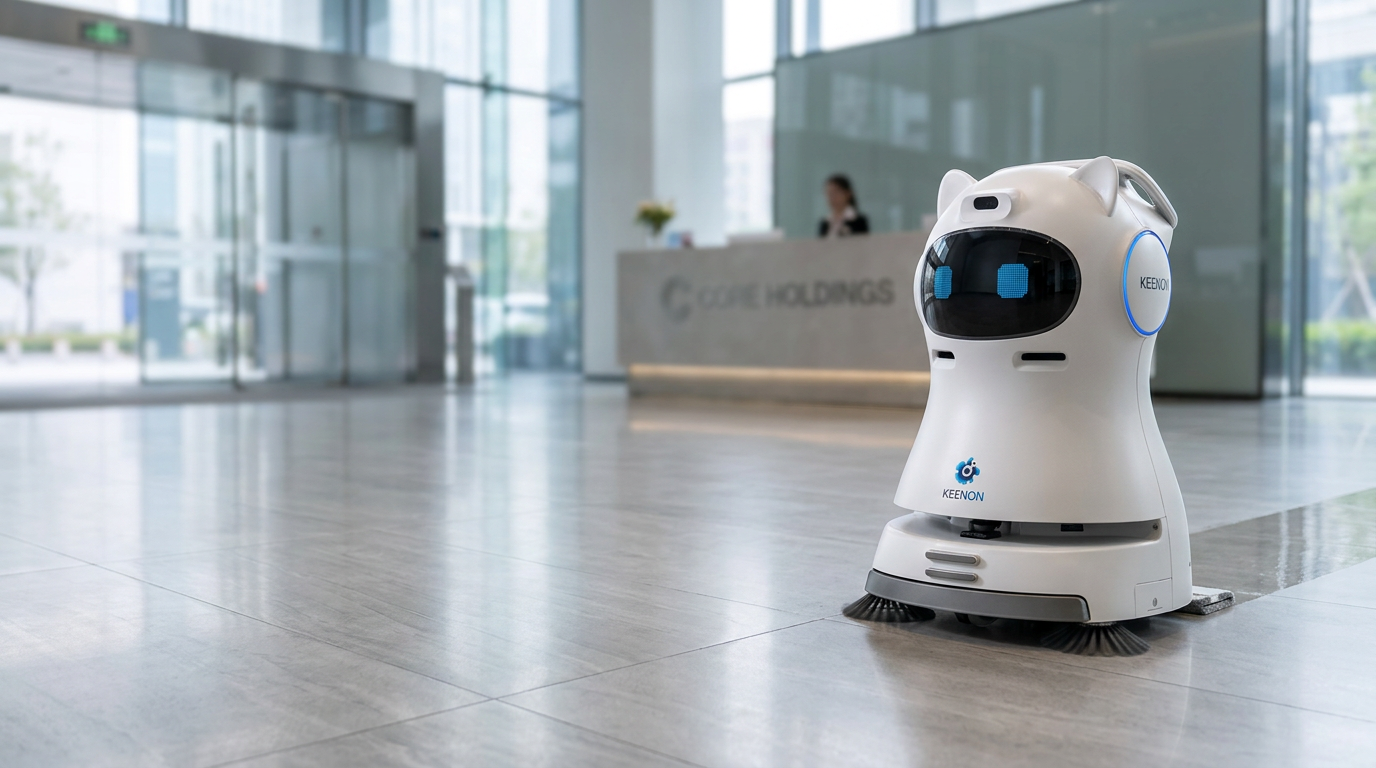
Short answer
Pros and cons
When a cleaning robot is worth it
- 500 m²+ of open hard floorEnough continuous run area for the machine to cover ground faster than a person with a scrubber.
- Cleaned daily or near-dailyFrequency is what turns a capital cost into a displaced-labour saving.
- You are paying agency or premium coverWeekend, night and bank-holiday premiums are where robotics saves fastest.
- Cleaning standards are auditedCQC, Ofsted, BRC or a client contract — the per-run reports are evidence you currently cannot produce.
- You cannot fill the shiftIf a vacancy has been open for months, the robot is not replacing anyone; it is covering work nobody is doing.
When it is not worth it
- Small or heavily cluttered floorsUnder a few hundred square metres, or with pallets and stock constantly in the aisles, coverage drops and the case collapses.
- Predominantly carpeted sitesVacuum-capable models exist, but the strongest case by far is hard floor scrubbing.
- Cleaning is a few hours a weekThere simply is not enough displaced labour to pay for a machine.
- Multi-level with no lift accessWithout lift integration the robot is confined to one floor, halving the addressable area.
- You expect it to do everythingIf nobody will do the manual finish, the perceived standard will drop and the project will be judged a failure.
Cost considerations
Displaced labour hours
The single biggest line. Count hours actually spent on open-floor cleaning, not total cleaning hours.
Fully loaded hourly cost
Wage plus employer NI, holiday, pension and any agency margin — typically well above the headline hourly rate.
Premium and cover spend
Weekend and bank-holiday uplifts, and the cost of last-minute agency cover, count in full.
Consumables and utilities
Metred dosing generally reduces solution spend; water and electricity are negligible by comparison.
Support and downtime
Bundled on RaaS, a separate budget on purchase. Do not model zero.
Risk and claims exposure
Fewer wet-floor incidents and a logged cleaning record support slip-claim defence.
Typical use cases
Distribution centre, 24/7 operation
Aisles and dock areas scrubbed on a fixed schedule without pulling anyone off pick or dispatch.
Care home corridors and dining rooms
A repeatable, evidenced clean that supports inspection, while care staff stay with residents.
School sports halls and atriums
Large areas covered after hours without paying overtime.
Hotel public areas
Lobby and corridor floors presentable before the first guest is down for breakfast.
Gym and leisure hard floors
Studio and concourse floors cleaned between peak sessions, without closing the space.
ROI examples
Yes case — 5,000 m² warehouse
- 3.5 hours nightly displaced
- 6 nights per week
- Agency cover currently used at weekends
Payback typically inside 12–18 months on purchase, cash-flow positive immediately on RaaS.
No case — 300 m² office suite
- 45 minutes of cleaning, three times a week
- Mostly carpet and washrooms
- No agency spend
There is not enough displaced labour to justify the machine. We would tell you not to buy one.
How to test it before you commit
Ask for a site survey rather than a quote. A proper survey measures the actual hard-floor area, checks obstacle density and floor type, records the current cleaning schedule and hours, and models what the machine would displace.
Then ask for a demonstration on your own floor, not a showroom. Coverage rates in a clear demo space bear little relation to a real warehouse aisle at end of shift.
Fresh Mango Robotics will tell you if the numbers do not work. A robot deployed onto a site that cannot support it becomes an expensive object in a corner, and that is nobody's idea of a reference customer.
Frequently asked questions
Are commercial cleaning robots worth the investment?
On sites with over roughly 500 m² of regularly cleaned hard floor, yes — typical UK payback is 12 to 24 months from displaced labour, reduced agency spend and lower consumable use. On small, carpeted or infrequently cleaned sites, no.
How long does a cleaning robot take to pay for itself?
Most UK deployments reach payback in 12 to 24 months. Sites with heavy agency reliance, weekend premiums or long-standing vacancies reach it fastest. On Robotics-as-a-Service the question changes: the monthly fee is usually below the cost of the hours displaced, so it is cash-flow positive from month one.
How long do commercial cleaning robots last?
With routine maintenance and correct consumable replacement, expect several years of daily service. Battery capacity and brush and pad wear are the main consumables. Support agreements and RaaS terms both cover planned maintenance.
Do cleaning robots need supervision?
No. They run mapped routes autonomously and return to dock. Staff empty and refill tanks, replace pads and clear obstructions — typically a few minutes per run.
What is the minimum site size for a cleaning robot?
Around 500 m² of hard floor is the practical threshold for a compelling business case, although compact models can suit smaller restaurants and studios where the cleaning frequency is high.
Keep reading
Related guides
Get the numbers for your own site
A free survey measures the real areas, models the labour displaced, and gives you purchase and monthly figures side by side.
No hard sell. No minimum commitment. Real engineers, UK-based support.