
Why Hospitality Robots Will Change the Way You Manage Your Hotel Staff
A practical look at how service robots like the Keenon W3 and Dinerbot T10 help UK hotel managers reallocate staff, reduce burnout, and achieve ROI within 12 to 18 months.
Quick answer
Service robots like the Keenon W3, Dinerbot T10 and C30 help UK hotel managers automate repetitive delivery and cleaning tasks, letting staff focus on guest experience. Most hotels see ROI within 12 to 18 months through labour-hour savings and improved retention.

If you are running a hotel in the UK right now, you do not need a PowerPoint presentation to tell you that staffing is a nightmare. You are living it. With over 130,000 vacancies across the sector and the National Living Wage continuing to climb, the old way of managing a team — simply throwing more hours at a problem — is dead.
The reality is that we are not just facing a temporary shortage; we are facing a structural shift. Managing a hotel in 2026 requires a different playbook. It is no longer about finding people to fill every role; it is about using hospitality automation robots to handle the repetitive, physically draining tasks so your remaining team can actually do the job they were hired for: looking after guests.
Redesigning the Rota: The 24/7 Room Service Problem
One of the hardest shifts to staff is the "graveyard" hours. Finding a night porter who is happy to spend half their shift walking corridors to deliver a single club sandwich or a fresh set of towels is nearly impossible. When you do find them, they are often overqualified and underutilised.
This is where the Keenon W3 Butler changes your management strategy. By implementing hotel room service robots, you can effectively automate the logistics of multi-floor delivery.
- Management Shift: Instead of scheduling two people on a night shift just to ensure someone is always at the desk while the other makes deliveries, you can move to a single-person "Guest Experience" model.
- The Result: The robot handles the lift integration and the corridor miles. Your staff stays front-and-centre, providing security and a human face for late arrivals.
Maximising Front-of-House Talent with the Dinerbot T10
In your hotel restaurant or breakfast room, your best staff are often stuck in the kitchen waiting for food or trekking back and forth with heavy trays. This is "dumb labour" — it adds zero value to the guest experience.
The Dinerbot T10 is designed to take over the heavy lifting. As a service robot for restaurants, it acts as a tireless runner.
When you introduce a T10, you change how you manage your floor team. Instead of "sections" defined by how many plates a waiter can carry, you manage by "interaction points." Your servers stay on the floor, talking to guests, upselling wine, and ensuring water glasses are full. They do not leave the floor because the robot brings the food to them.
This is not about replacing the waiter; it is about making the waiter more productive and less exhausted. An exhausted server is a server who makes mistakes and eventually quits.
Managing the "Invisible" Work: The C30 Scrubber
Floor maintenance is a constant, repetitive task that eats into your facilities budget. It is also one of the first things to suffer when you are short-staffed.
The Keenon C30 is a commercial cleaning robot that does not need to be managed in the traditional sense. It does not call in sick, and it does not miss the corners.
For a General Manager, the C30 changes the overnight cleaning schedule. You can set the C30 to scrub the lobby, corridors, and event spaces while your human team focuses on deep-cleaning guest rooms or high-touch surfaces that require human attention and detail.
We have seen UK hotels reduce their outsourced cleaning costs significantly by bringing this "logistics of cleanliness" in-house with a robot that delivers a consistent result every single night.
The Retention Factor: Why Robots Make Jobs Better
The biggest hidden cost in UK hospitality is not wages — it is recruitment. Replacing a staff member costs thousands in training, lost productivity, and agency fees.
When you ask staff to do the work of two people because you are short-handed, they burn out. Robots act as a pressure valve. By taking the "donkey work" away, you improve the daily work-life of your team.
Managing a team that is not physically broken by the end of their shift is much easier. You will find that staff retention improves when the job moves away from "carrying heavy things for eight hours" to "managing a fleet of high-tech assistants." It turns a mundane job into a more skilled, tech-forward role.
Honest Payback: The ROI of Hospitality Automation
We do not do "marketing fluff" at Fresh Mango Robotics. We look at the numbers.
For most UK hotels, a service robot provides a clear return on investment (ROI) within 12 to 18 months. This is not a theoretical figure; it is based on the direct saving of labour hours and the increase in F&B upsell opportunities.
When you factor in the rising National Insurance contributions and the cost of turnover, the argument for automation becomes purely pragmatic. A robot does not need a pension contribution, it does not need holiday pay, and it works for pennies an hour in electricity.
No PowerPoint, Just Results
We know that a hotel is a physical environment with real-world challenges — uneven floors, busy lifts, and demanding guests. That is why we do not do formal presentations. We prefer to show you the tech in action.
If you are struggling to staff your hotel or restaurant, the solution is not another recruitment drive. It is a shift in how you manage your existing talent.
Frequently asked questions
Can hotel room service robots replace night porters?
No — they replace the repetitive corridor walking. A Keenon W3 Butler can integrate with hotel lifts and deliver towels, toiletries and light room service to guest floors, letting a single night staff member stay at the desk while the robot handles the logistics.
Do hospitality robots replace waiting staff?
No. Robots like the Dinerbot T10 take over the heavy carrying work so servers stay on the floor, talking to guests, upselling and managing the experience. The job shifts from "plate carrier" to "fleet manager and guest host."
What ROI can a UK hotel expect from service robots?
Most UK hotels see a clear ROI within 12 to 18 months. The payback comes from direct labour-hour savings, reduced agency and turnover costs, and increased F&B upsell opportunities because staff have more time with guests.
Can a cleaning robot work overnight in a hotel?
Yes. The Keenon C30 autonomous floor scrubber can be scheduled to clean lobbies, corridors and event spaces overnight, freeing human staff to focus on detailed guest-room cleaning and high-touch surfaces.
Talk to a robot supplier you can actually visit
We are based in Ripon, North Yorkshire, with engineers across the North of England. On-site demos as standard.
Related articles
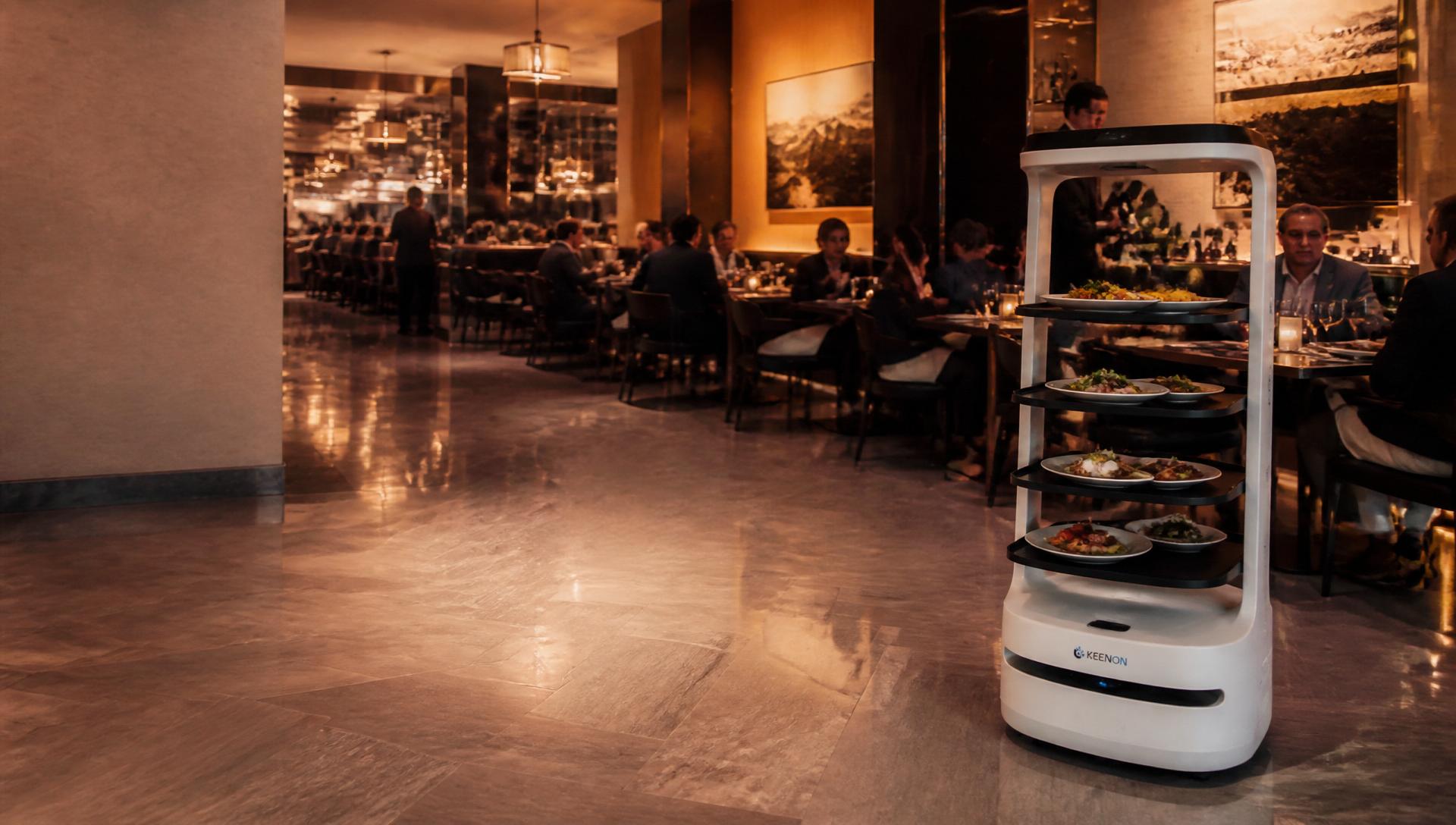
How to Choose the Best Restaurant Delivery Robot (Compared)
Honest comparison of Keenon T5, T6, T10 and W3 restaurant delivery robots for UK hospitality — specs, ROI guidance and which model actually fits your floor plan.
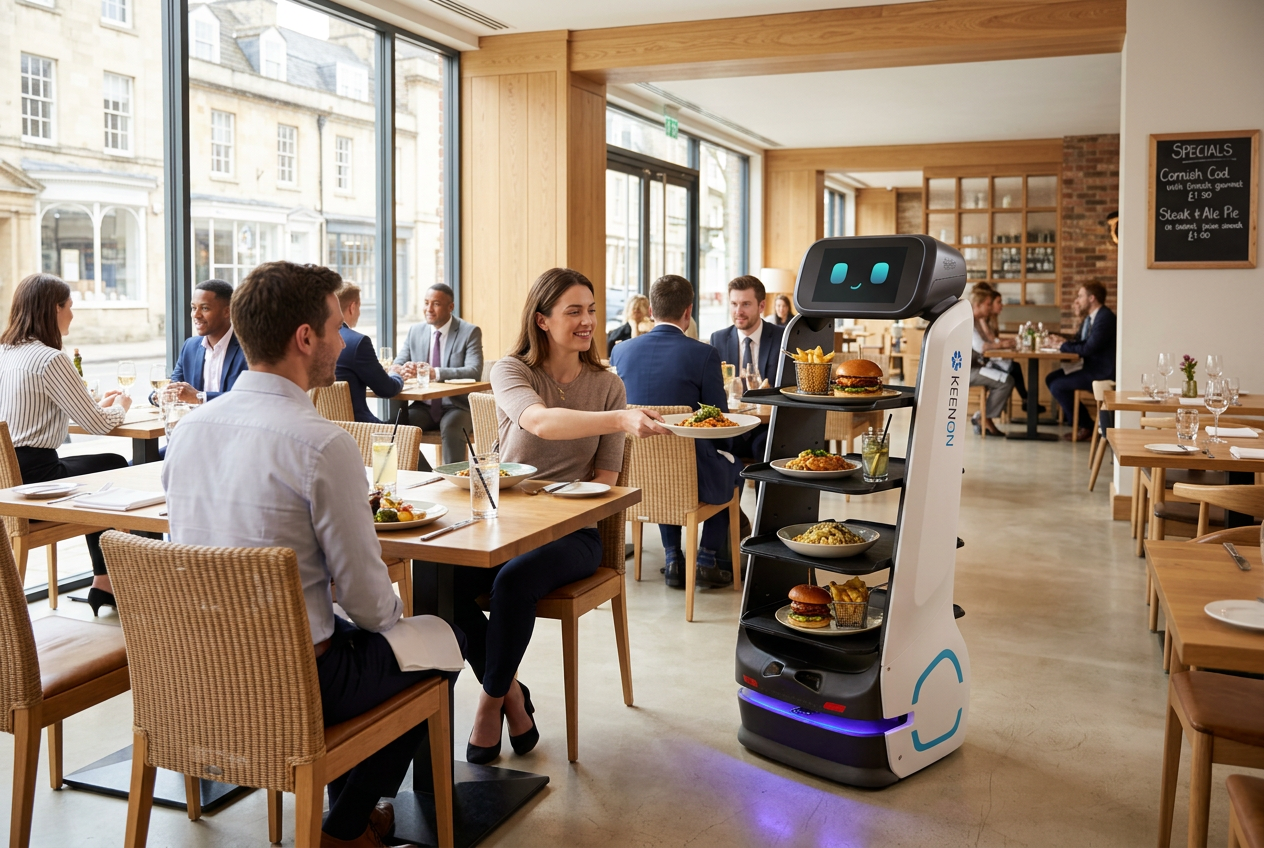
Robotic Food Runner vs. Traditional Waiter: Which Is Better For Your Restaurant?
A head-to-head comparison of robotic food runners and traditional waiters — the honest ROI, the impact on staff morale, and the efficiency numbers that actually matter.
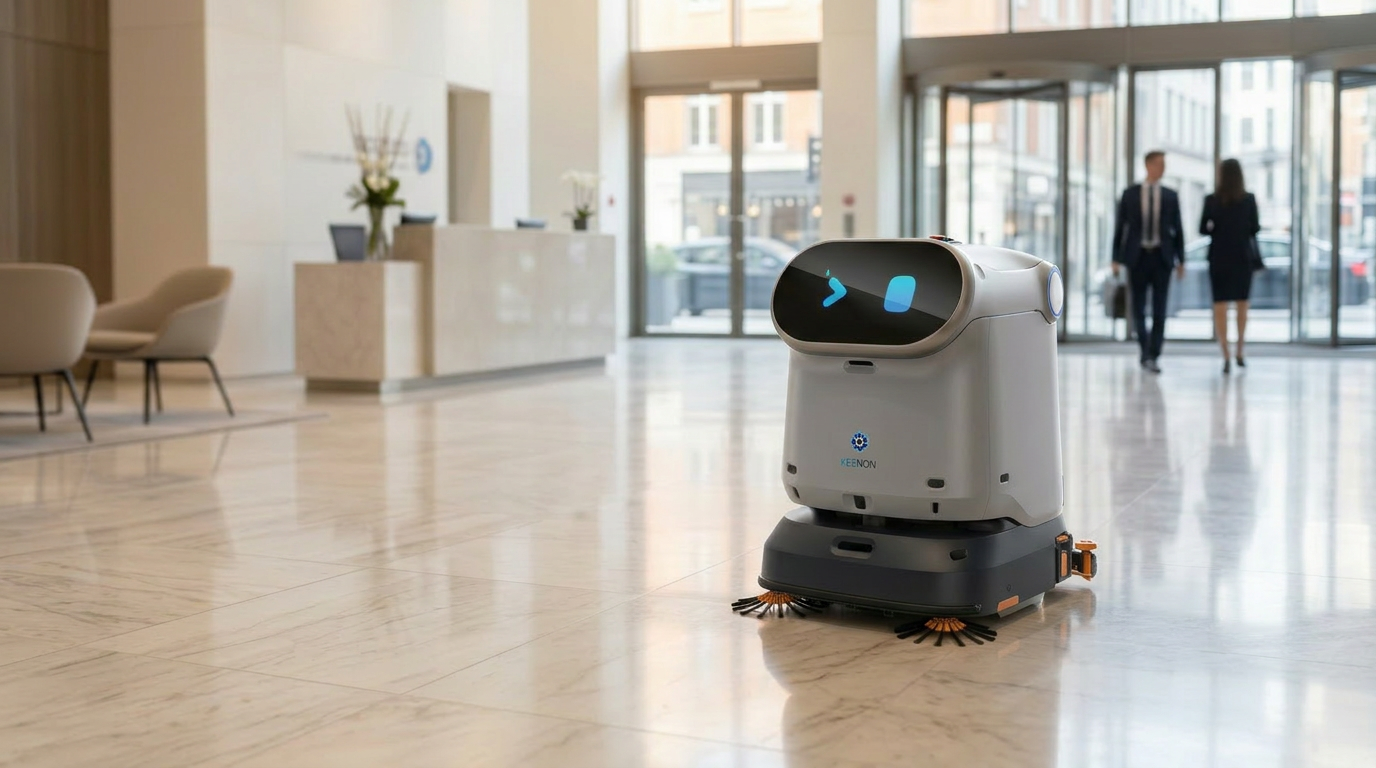
Looking For an Autonomous Floor Scrubber? Here Are 10 Things You Should Know
A practical UK buyer's guide to autonomous floor scrubbers — ten honest things to know about ROI, floor types, runtime, water, noise, safety and support before you commit.
Keep reading