
7 Mistakes You're Making with Warehouse Logistics Robots (and How to Fix Them)
The seven biggest mistakes UK warehouses make when deploying logistics robots — and the practical fixes that unlock a clear 12–18 month payback.
Quick answer
Most warehouse logistics robot deployments fail for the same reasons: buying tech before defining the problem, skipping a proper site survey, ignoring team buy-in, trusting best-case ROI numbers, underestimating WiFi coverage, forgetting local support, and neglecting floor condition. Fix those seven mistakes and a well-implemented logistics robot delivers a clear ROI within 12–18 months.

If you are running a UK distribution centre or a busy warehouse, you have likely looked at warehouse logistics robots and wondered if they actually work or if they are just expensive toys. We see it all the time — businesses get excited by the high-tech promise but stumble during implementation because they treat robots like software rather than physical machinery.
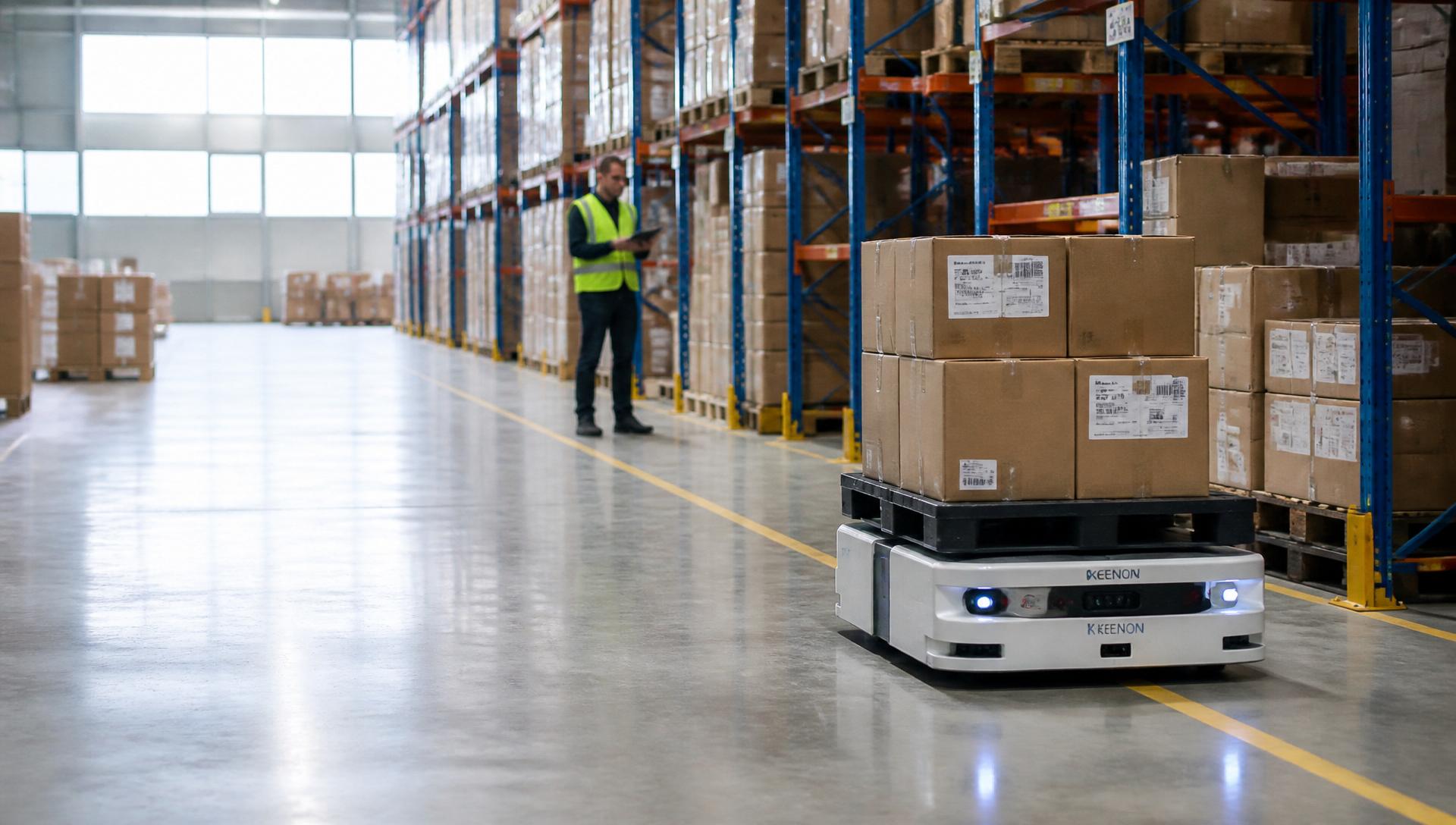
Fresh Mango Robotics does not do PowerPoints. We do site surveys, physical installations and honest talk. Robots like the Keenon S100 or L9 are designed to take over the fatiguing, repetitive hauling tasks that burn staff out. But if you get the setup wrong, you are just moving your bottlenecks from a person to a machine. Here are the seven biggest mistakes we see in UK warehouses — and how to fix them.
1. Buying cool tech instead of solving a specific problem
The most common mistake is starting with the robot rather than the problem. We have visited sites where a manager wants a robot because they saw a video online, but they have not mapped out where the team is actually losing time. If staff are walking 10 miles a day just to move a pallet from A to B, that is a problem. If they are spending four hours a shift hunting for stock, a logistics robot will not fix that — it will sit there while the human hunts.
How to fix it: identify your highest-frequency, lowest-value tasks and quantify the travel time. If 40% of a shift is spent walking empty-handed or pulling heavy trolleys, that is where the ROI lives. Target that specific movement first.
2. Skipping a proper, physical site survey
A desktop survey or a quick look at a floor plan is not enough. We have seen deployments fail because nobody checked the actual condition of the floor or the height of a specific door threshold. Warehouse logistics robots are high-tech, but they are also physical objects that have to navigate real-world obstacles.
How to fix it: insist on a boots-on-the-ground site survey. Check floor flatness, transition strips and potential blind spots. Your physical reality has to match the robot's sensors. Do not sign a contract until someone has walked your floor with a critical eye.
3. Ignoring your team's buy-in
If your warehouse team thinks the robots are there to replace them, they will not help the robots succeed. We have seen robots accidentally blocked by pallets or left uncharged because the staff were not brought into the process. These robots are tools to help your existing team do more without the physical burnout.
How to fix it: be honest. Explain that the robot is there to handle the heavy, boring hauling so staff can focus on higher-value inventory management and picking accuracy. When the team sees they are not finishing their shift with aching legs, they become the robot's biggest fans.
4. Trusting ideal-world ROI numbers
Vendor brochures often promise ROI based on the robot running 24/7 at maximum speed with zero interruptions. That does not happen in a busy UK warehouse. You have shift changes, battery charging cycles and occasional human-induced blockages.
How to fix it: look for an honest payback period. A well-implemented logistics robot should deliver a clear ROI within 12 to 18 months. If someone is promising three months, they are not accounting for the real-world ramp-up. Build your model with your actual shift patterns and SKU profiles — not the vendor's best case.
5. Underestimating WiFi and infrastructure
Autonomous robots need a stable connection to communicate with your WMS or receive call commands. Many UK warehouses have dead zones — usually behind stacks of metal racking or in the back corners of the building. If the robot loses signal it might stop or fail to update its status, leading to confusion.
How to fix it: conduct a WiFi heat map of the facility. Do not assume the signal is fine because your phone works. Robots require consistent, low-latency connectivity to operate at peak efficiency. Fix the dead zones before the robots arrive.
6. Forgetting maintenance and local support
A robot is a piece of industrial equipment. Like a forklift it will eventually need a sensor cleaned, a software update or a part replaced. If your support desk is in a different time zone or only speaks through an automated ticketing system, your robot becomes an expensive doorstop the moment something goes wrong.
How to fix it: work with a provider that has a UK-based support desk and physical engineers who can get to your site. You need someone you can call who understands the physical layout of your premises.
7. Neglecting the physical reality of the floor
The floor is the robot's road. Dust, debris and oil spills do not just look bad — they affect the robot's traction and sensor accuracy. If your warehouse floor is covered in discarded pallet wrap and wood splinters, the robots will struggle.
How to fix it: keep the environment tidy. Many of our customers pair their logistics robots with autonomous floor scrubbers. Keeping the floor clean means the logistics robots run at full speed without sensor interference. A simple change that makes a massive difference in uptime.
The bottom line
Warehouse logistics robots are not about replacing people; they are about fixing broken processes and reducing the physical strain on your workforce. If you avoid these seven mistakes, you will find that automation is not nearly as complicated as the tech experts make it sound. Know your problem, check your floors and work with people who actually get their hands dirty.
Frequently asked questions
What ROI window is realistic for a UK warehouse logistics robot?
A clear ROI within 12 to 18 months is realistic for a well-implemented deployment. Vendor claims of three-month payback usually ignore ramp-up, shift patterns and charging cycles.
Why does WiFi matter so much for logistics robots?
Autonomous robots need consistent, low-latency connectivity to communicate with your WMS and receive call commands. Dead zones behind racking cause stops and status errors.
Do warehouse robots replace staff?
No — they take over the repetitive hauling that burns staff out, freeing the team for higher-value work like inventory management and picking accuracy.
Talk to a robot supplier you can actually visit
We are based in Ripon, North Yorkshire, with engineers across the North of England. On-site demos as standard.
Related articles
How Warehouse Robots Reduce Labour Costs
The labour-cost case for autonomous warehouse robots in 2026 — internal transport, picking support and the operational wins that go beyond headcount.

How Much Does a Commercial Service Robot Cost in the UK?
Category pricing bands, monthly rental and total cost of ownership for commercial service, cleaning and logistics robots in the UK.
How a Commercial Robot Deployment Works: From Demonstration to Go-Live
What actually happens between the first demo and the robot going live in your operation — the deployment process used by Fresh Mango Robotics across the UK.
Keep reading