
How Healthcare Robots are Solving the Meal and Linen Transport Crisis in UK Care Homes
UK care homes are using Keenon T-Series and W3 Butler robots to automate meal and linen transport, reduce staff burnout and recover their investment in 12-18 months.
Quick answer
Keenon T-Series and W3 Butler robots automate meal and linen transport in UK care homes, cutting staff walking, reducing agency spend and burnout, and typically paying for themselves within 12-18 months. Fresh Mango Robotics supplies, maps and supports these systems across the UK with on-site demos and UK-based engineer cover.

The UK care sector is currently facing a staffing crisis that cannot be solved by simply "trying harder." Between rising occupancy rates, high staff turnover, and the physical burnout of care teams, the numbers simply don't add up. At Fresh Mango Robotics, we spend our time on the floors of actual care homes and hospitals. We don't bring PowerPoint presentations or theoretical "future-of-work" slides. We bring robots that work.
One of the most significant, yet overlooked, drains on care home resources is the constant transport of goods. Whether it is moving 60+ meal trays three times a day or hauling heavy linen carts between floors, your skilled care staff are often used as high-cost porters. This is where healthcare automation moves from a "nice-to-have" to a commercial necessity.
The Physical Burden: Walking Five Miles a Shift
In a typical 50-bed care home, a staff member can easily walk several miles during a single shift just delivering meals, returning trays, and moving laundry. This isn't care; it is logistics. Every minute a staff member spends pushing a heavy cart down a corridor is a minute they are not spending with a resident who might be confused, lonely, or in need of clinical attention.
The physical strain of this "donkey work" leads to fatigue and, eventually, injury or resignation. We provide commercial service robots in the UK specifically to take over these repetitive, fatiguing tasks. By automating the transport of meals and linens, you aren't replacing your team; you are giving them their time back.
Practical Solutions: The Keenon T-Series and W3 Butler
We don't believe in gimmicks. Our robots are tools designed for specific jobs. In a healthcare environment, we primarily deploy two types of systems: the Keenon T-Series (Dinerbots) and the W3 Butler.
Keenon T-Series for Meal Delivery
The Keenon T5 and T6 are the workhorses of the dining room. These robots feature multiple tiers that can carry several heavy meal trays simultaneously.

In a care home setting, the robot can be loaded in the kitchen and sent to a specific dining area or a hallway station. The staff stay at the "point of care," receiving the trays and serving the residents directly. The robot then handles the "dead miles" back to the kitchen with dirty dishes. It doesn't get tired, it doesn't need a break, and it won't drop a tray because of a lapse in concentration.
Keenon W3 Butler for Secure Transport
For multi-floor facilities, the Keenon W3 Butler is the standard. Unlike the open-shelf T-series, the W3 features secure, enclosed compartments. This is critical for transporting:
- Fresh linens and towels.
- Resident-specific deliveries or medications (within a secure chain of custody).
- Room service meals for residents dining in their rooms.
The W3 can integrate directly with your lifts, allowing it to navigate between floors entirely autonomously. This removes the need for staff to wait for elevators or push heavy trolleys across long distances.

Honest ROI: The 12-18 Month Payback Period
We believe in radical honesty when it comes to costs. A robot is an investment, and like any piece of equipment, it must pay for itself. In our experience with UK care homes, the return on investment (ROI) typically lands between 12 and 18 months.
Here is the breakdown of where those savings come from:
- Reduction in Agency Spend: By making your existing team more efficient, you can often reduce the reliance on expensive agency cover to fill gaps during peak times (like mealtimes).
- Staff Retention: Staff who are not exhausted by the end of a shift are more likely to stay. Recruitment and training carry a meaningful cost, so improved retention should be included in the business case.
- Operational Throughput: Faster meal service and more consistent linen cycles lead to better-run facilities and higher resident satisfaction.
We provide honest payback periods based on your specific site survey. If the math doesn't work for your premises, we will tell you.
No PowerPoint: Real-World Implementation
Most tech companies want to sell you a vision. We want to show you a robot on your carpet. Our process is built on pragmatism:
- Site Survey: We visit your home to check floor types, Wi-Fi dead zones, and lift compatibility.
- Physical Demonstration: We bring a robot to your facility. No slides, just the machine moving through your corridors.
- UK-Based Support: Our support desk is based right here in the UK. If there's an issue, you talk to an engineer, not a chatbot.
- Staff Training: We spend time with your team to ensure they know how to use the robot as a tool. The goal is for the robot to be a "buddy," not a burden.
Why This Matters Now
The UK care sector is under a microscope. Families want to know their loved ones are receiving "person-centred care." However, you cannot deliver person-centred care if your staff are acting as tray-runners.
Automating meal and linen transport isn't about being "high-tech" for the sake of it. It's about being sensible. It's about acknowledging that a human being is too valuable to be used for a task that a machine can do more efficiently. When the robot takes the heavy trays, the carer takes the time to listen to a resident. That is the real value of commercial service robots in the UK.
Logistics Without the Drama
We know that care home managers have enough on their plates. You don't need another complex system that requires a degree in computer science to operate. The Keenon range is designed for simplicity. Large touchscreens, intuitive interfaces, and "plug-and-play" charging stations mean that once the initial mapping is done by our engineers, your team can start using the robots within an hour.
Whether it is the T5 helping in the dining room or the W3 handling the laundry runs, these robots are designed to blend into the background. They are quiet, they have advanced obstacle avoidance to keep residents safe, and they are built to work 24/7.
Ask Us Anything
We don't do hard sells. We prefer to start with a conversation about your specific challenges. Maybe you have a long corridor that staff hate walking, or a heavy lift that slows down your laundry cycle.
If you're curious about how this could work in your home, book a demo or just give us a call. We'll give you an honest assessment of what's possible, what it costs, and exactly how long it will take to pay for itself.
"No gimmicks. Just robots that work."
Frequently asked questions
Can robots deliver meals safely in a care home?
Yes. Keenon T-Series robots carry multiple trays securely between the kitchen and dining areas, reducing manual handling while staff remain at the point of care to serve residents directly.
Can the Keenon W3 Butler use lifts in multi-storey care homes?
Yes. The W3 Butler integrates with most modern lifts via a small controller installed by our engineers, allowing it to call the lift, select floors and move between levels autonomously.
What is the typical ROI for a care home robot?
Most UK care homes see a payback period of 12 to 18 months. Savings come from reduced agency spend, lower staff turnover and faster operational throughput at mealtimes and during linen cycles.
Do care robots replace care staff?
No. Service robots take over repetitive transport tasks so carers spend more time with residents. The goal is to give skilled staff their time back, not to remove them from the floor.
Talk to a robot supplier you can actually visit
We are based in Ripon, North Yorkshire, with engineers across the North of England. On-site demos as standard.
Related articles
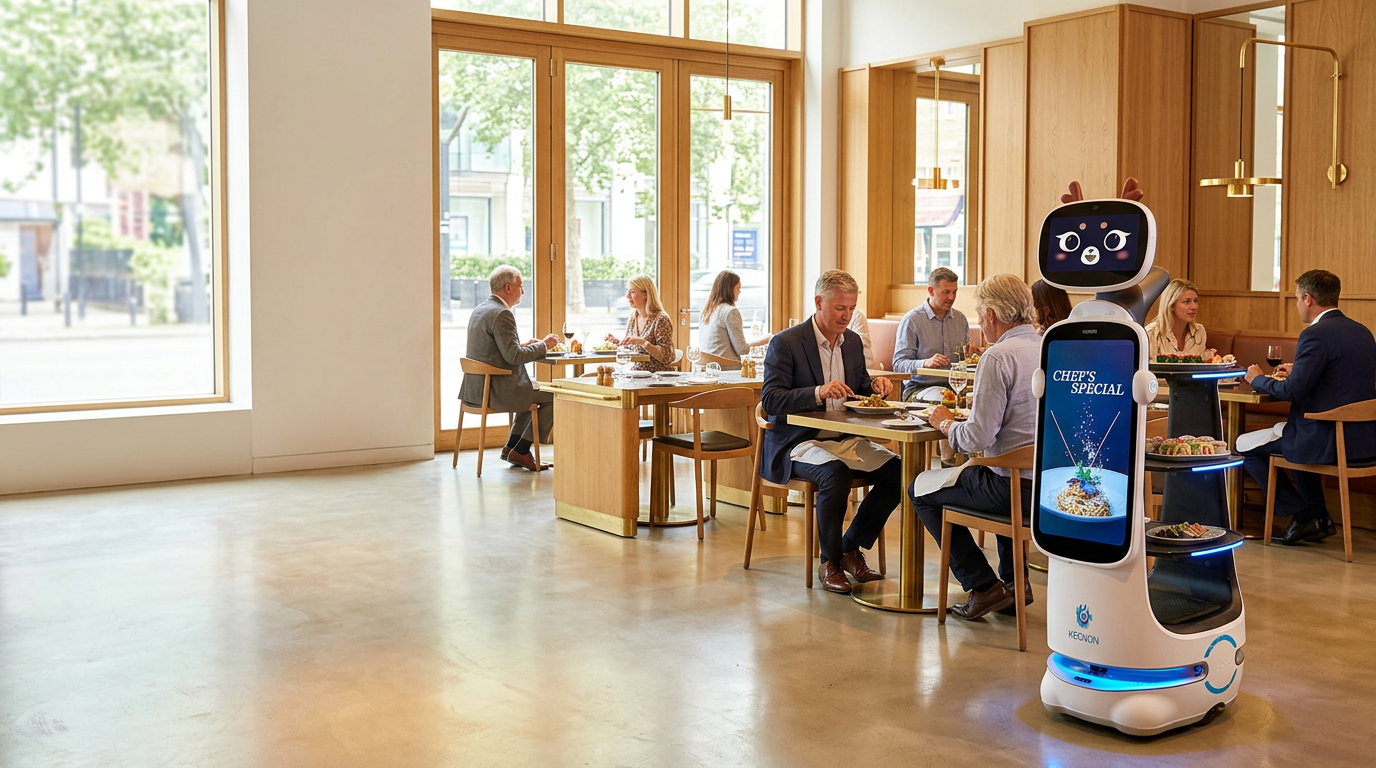
How Much Does a Commercial Service Robot Cost in the UK?
Category pricing bands, monthly rental and total cost of ownership for commercial service, cleaning and logistics robots in the UK.
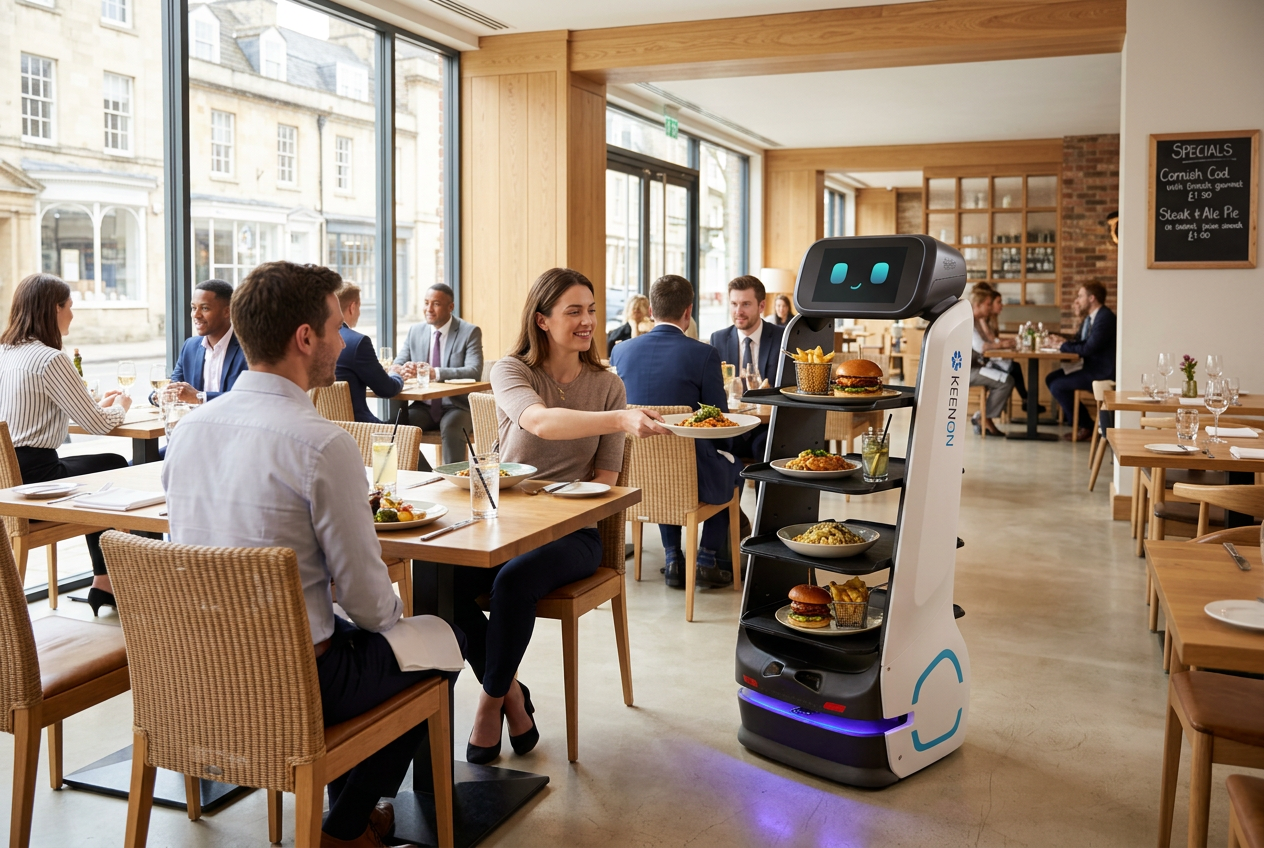
Service Robot vs Waiter: Where Does the ROI Come From?
An honest breakdown of where the ROI on a restaurant service robot actually comes from — and why "replacing a waiter" is the wrong framing.
How a Commercial Robot Deployment Works: From Demonstration to Go-Live
What actually happens between the first demo and the robot going live in your operation — the deployment process used by Fresh Mango Robotics across the UK.
Keep reading